.svg&w=384&q=75 "logo")
Pierre Gasly Loses Monaco Podium Again After ICA Ruling
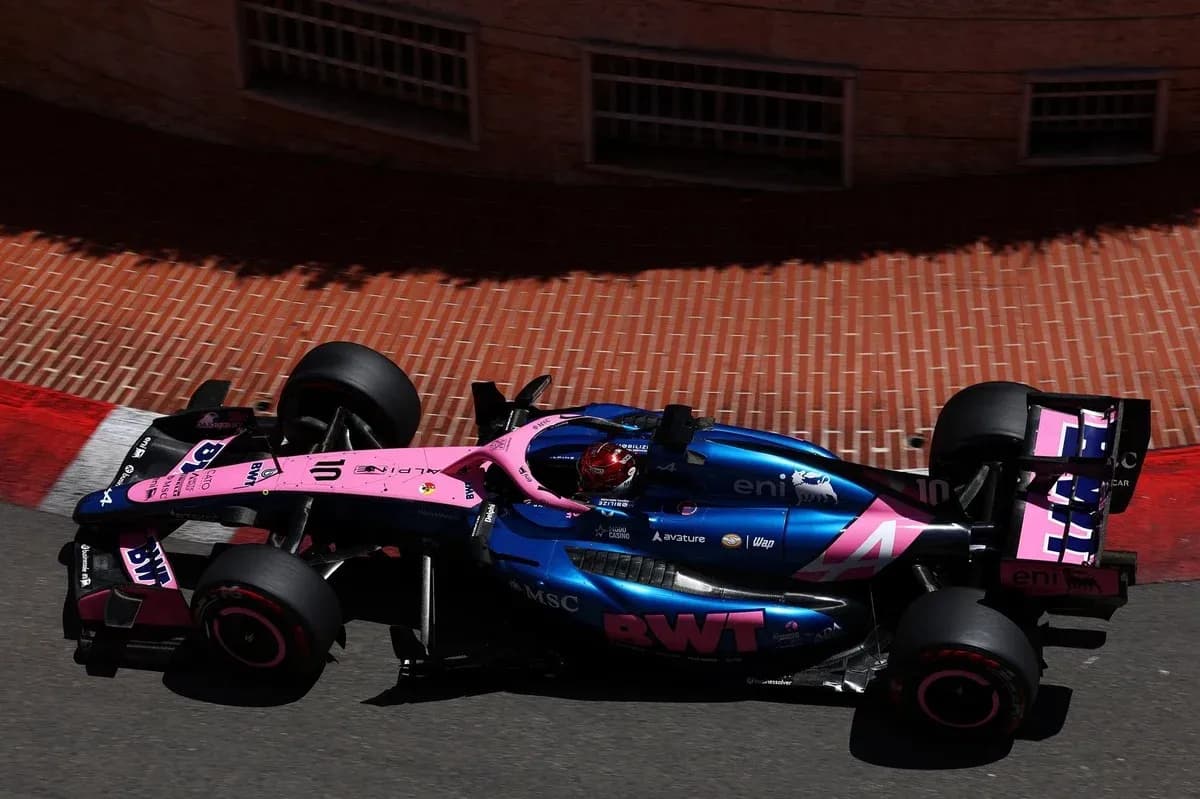
Pierre Gasly’s Monaco podium is gone. Again.
The Alpine driver has lost the third place he thought he had finally secured in the principality, after the FIA’s International Court of Appeal (ICA) ruled that his pitlane speeding penalties from the 2026 Monaco Grand Prix will stand.
What had looked like a rare high point in a bruising season for Alpine has been stripped away on legal grounds, not on track.
A podium won, lost, won… and lost again
Gasly was one of several drivers flagged for pitlane speeding during the race, after timing data in Monte Carlo threw up a string of unusual infringements. It later emerged that the first two timing loops in the pitlane were misaligned, with a 77cm discrepancy between them. In a sport that lives in thousandths of a second, three-quarters of a metre is a chasm.
Some drivers, like Oscar Piastri and George Russell, served their penalties during the race. Russell’s day got even worse when Mercedes incorrectly handled his sanction, earning him a drive-through. Gasly, though, took two five-second penalties added to his race time. That post-race addition dropped him from third on the road to seventh in the final classification.
The timing of those penalties opened a door. Because they were applied after the chequered flag, Alpine could request a right of review. The stewards agreed. On 12 June, they overturned the sanctions and handed Gasly back his podium, restoring him to third place.
But that decision only ever helped one man.
Piastri and Red Bull’s Isack Hadjar had already served their punishments during the Grand Prix and had no way to reclaim the time they’d lost. Piastri slipped from third to fourth, Hadjar from fourth to fifth. Racing Bulls’ drivers also dropped a spot in the order. The sense of imbalance was obvious.
So McLaren and Red Bull appealed to the ICA, backed by Racing Bulls and Motorsport UK. They wanted consistency. If the penalties were wrong, they argued, they should be wrong for everyone. If they were right, they should stand for everyone.
On Friday, the Court sided with them.
Court backs penalties, Hadjar back on the box
The ICA ruled that the original speeding penalties must stand. Gasly’s third place disappears once more, his classification pushed back down to seventh. Hadjar, who had already celebrated a podium in the immediate aftermath of the race before losing it in the June reversal, now officially inherits third place again.
The Court’s reasoning cut to the heart of Alpine’s argument. The team insisted Gasly never exceeded the pitlane speed limit and that the flawed pitlane measurement invalidated the evidence against him. The ICA did not buy it.
Alpine, the Court said, could not prove “with full certainty” that Gasly had actually travelled a longer distance between the timing loops than the system measured. His shorter time between the loops could just as easily be explained by “a shorter path, greater speed, or a combination of both.”
In other words: the data might be imperfect, but it was not conclusively wrong in a way that cleared the driver.
The judges also made a crucial distinction regarding the other drivers. They confirmed that the fact Piastri, Hadjar and others had already served their penalties “cannot be an obstacle to the cancellation of an illegitimate sanction, because those penalties were served at the discretion and choice of the team.”
Teams chose to take the penalties when they did. The Court would not use that strategic choice as a reason to uphold what it viewed as incorrect stewards’ decisions. To do so, it said, would itself be “inconsistent with sporting fairness.”
The net effect, though, is that the original sanctions are now fully reinstated. Gasly is out. Hadjar is in. The Monaco podium changes shape yet again, this time by decree rather than by lap time.
Alpine furious but resigned
Alpine did not hide its anger.
In a statement, the team expressed its “disappointment and frustration” with the ICA verdict, insisting it still “fully maintain[s] that Car #10 did not exceed the Pit Lane speed limit at any point during the race.”
The French outfit believes it has been “unjustly punished,” stripped of a rare top-three finish in a year where points have been hard enough to come by, let alone silverware.
There was, though, a line of acceptance. Alpine acknowledged the judging panel’s decision from the Paris hearing and stressed that the team will now concentrate on performance and a “very competitive Championship fight” rather than continuing the legal battle.
They closed by insisting this outcome “will not deter the team’s efforts and motivation in achieving its objectives by the end of the season.” Publicly at least, they are drawing a line under the saga.
FIA under scrutiny
The FIA, for its part, moved quickly to defend its stewards while promising a deeper look at its own systems.
In a statement responding to the ICA decision, the governing body noted that the Court had upheld the appeals of McLaren and Red Bull, effectively overturning the stewards’ June reversal contained in document 99 of the Monaco Grand Prix.
The federation confirmed it is now “reviewing the methodology and operation of the current Formula 1 timing system and the related regulatory matters.” It will also examine “other judicial procedures and operations including the right of review and the appeal processes.”
The message is clear: the tools and the rulebook are under review, not just the people using them.
The FIA strongly backed its stewarding panels, describing them as independent, objective and integral to global motorsport. It pointed out that stewards work in a very different environment to the ICA, without the “extensive and additional legal counsel input, arguments and evidence” available to the Court.
Stewards, the FIA said, are already engaged in “extensive professional development” and “constantly review their processes.” Every ICA decision, including this one, will be “carefully examined” by stewards to feed that process of “continuous improvement.”
The implication is uncomfortable but unavoidable: in Monaco, the system exposed a flaw, the stewards made a call, the Court corrected it, and now the sport must patch the hole.
A principality result that will not sit quietly
So the 2026 Monaco Grand Prix, months on from the chequered flag, has a final classification that feels anything but settled in the paddock’s collective memory.
Hadjar gets his podium back. Piastri and others remain stuck with penalties they served in real time. Gasly, who twice climbed to third in the standings without ever stepping on the rostrum to celebrate it properly, walks away with seventh and a lingering sense of injustice.
The FIA will now have to prove that its promised reviews of timing and judicial processes lead to something more robust than a carefully worded statement. Because the next time a 77cm discrepancy turns a race on its head, the fallout might not be confined to one Sunday in Monaco.