.svg&w=384&q=75 "logo")
Pierre Gasly's Monaco Grand Prix Podium Controversy Revisited
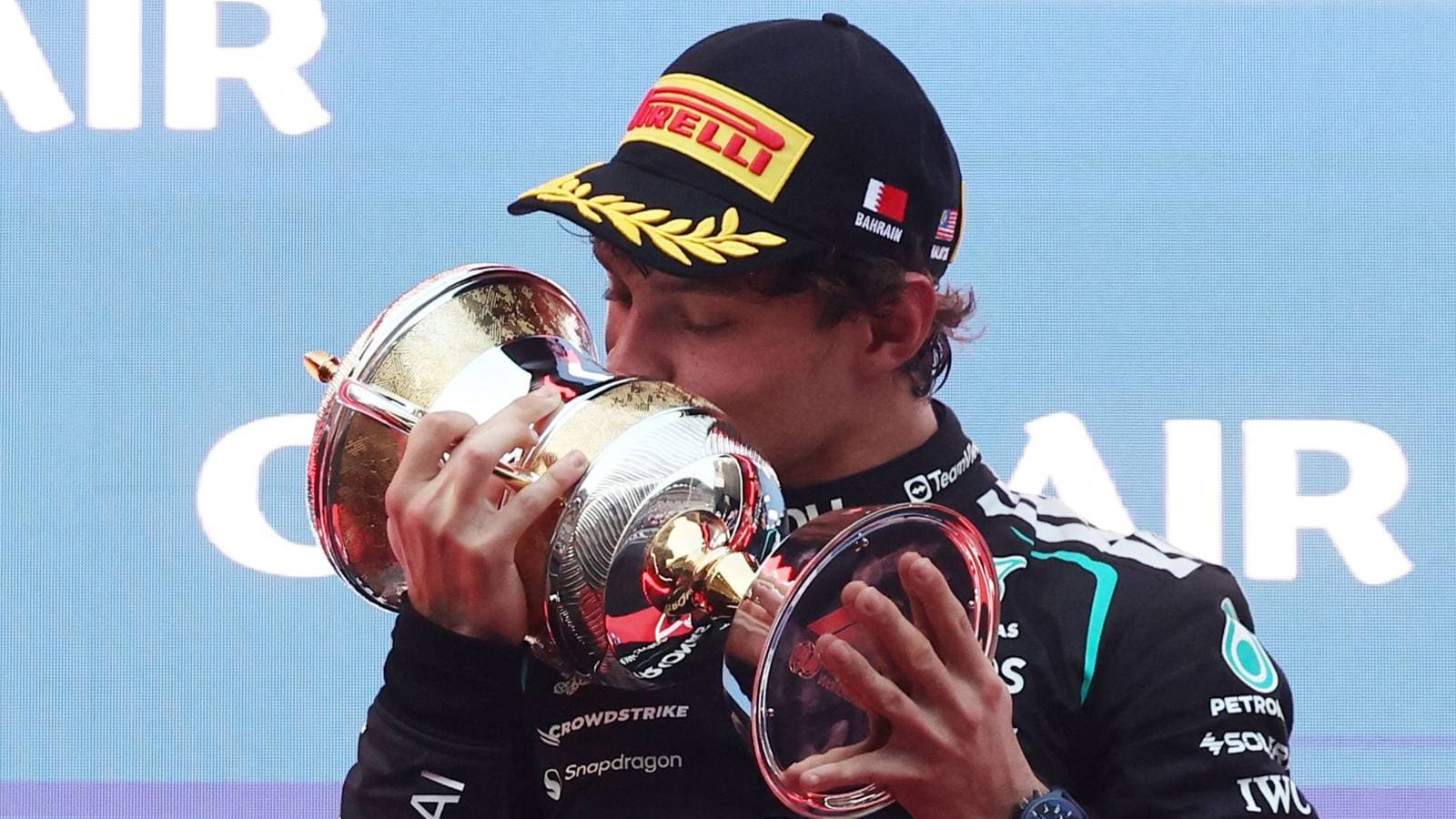
Pierre Gasly has lost his Monaco Grand Prix podium – again.
Three months after the Alpine driver stood on the rostrum in Monte Carlo, and weeks after stewards had cleared him of pit-lane speeding, the FIA’s International Court of Appeal has torn up that reprieve. The two five‑second penalties are back. Gasly drops to seventh. Red Bull’s rookie Isack Hadjar is restored to third.
A result rewritten twice. A legal fight that has now become a line in the sand for how Formula 1 is timed, policed, and judged.
How a podium turned into a legal minefield
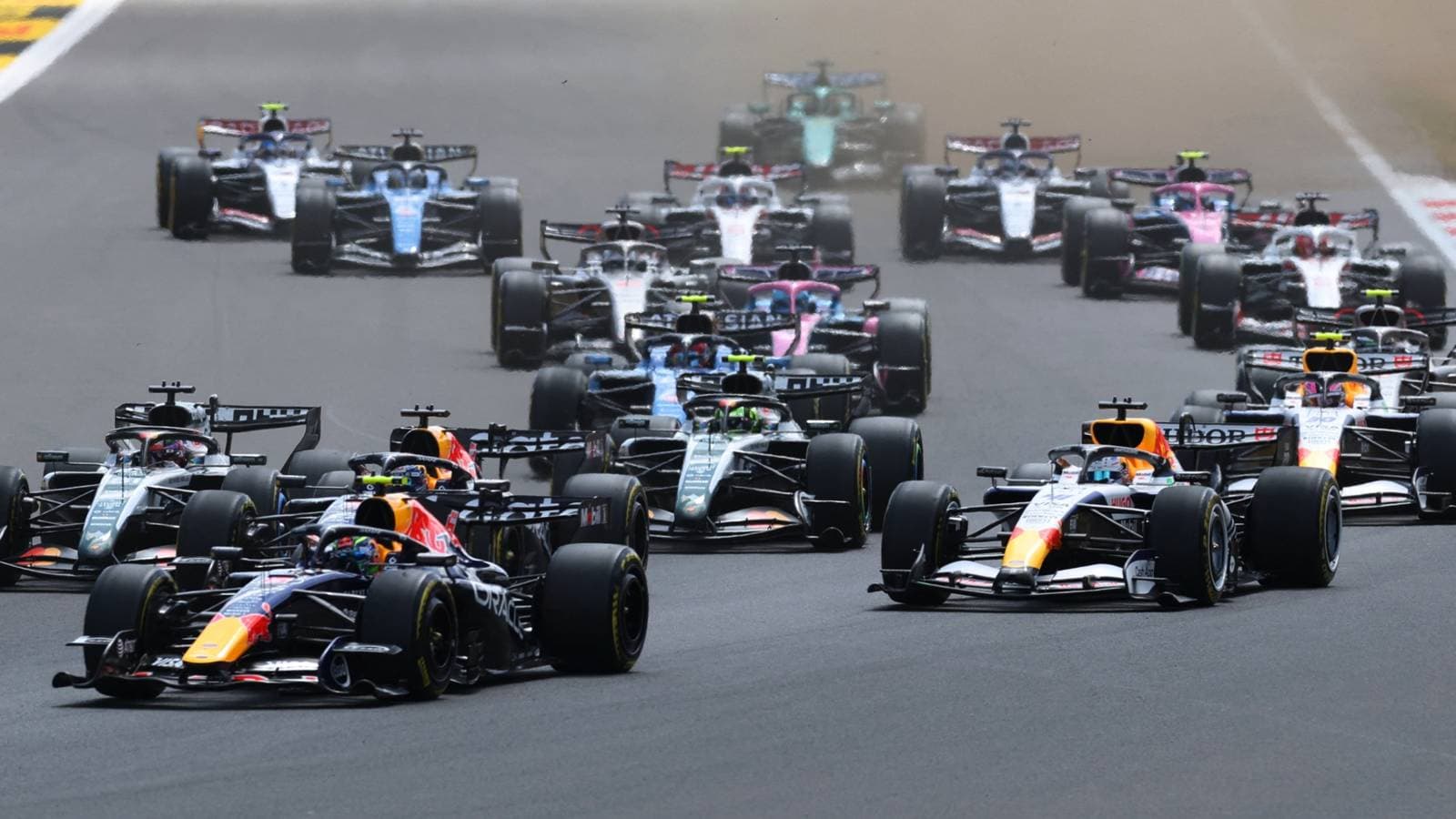
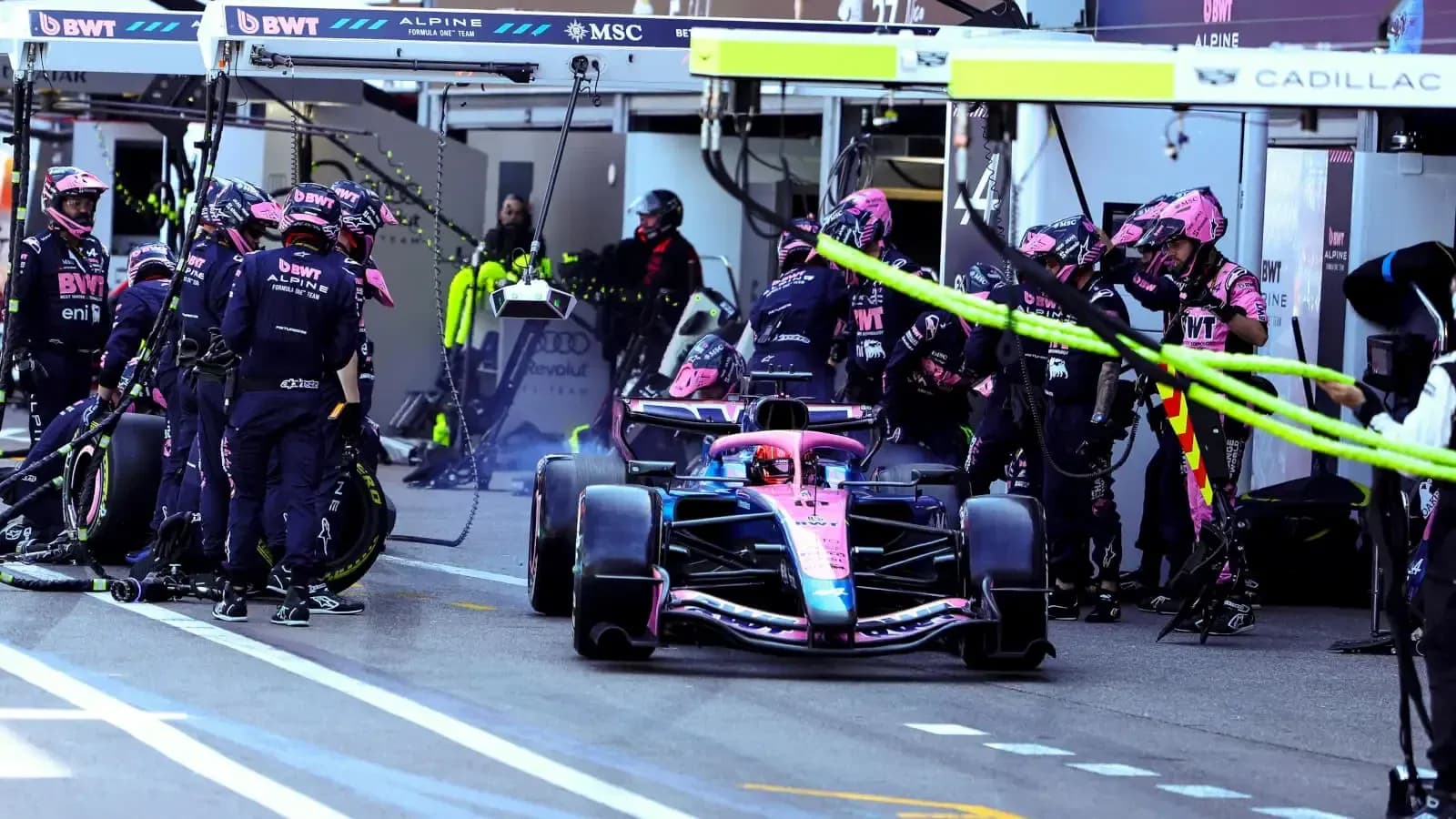
On the road in June, Gasly finished third around the streets of Monaco. Behind the scenes, his race was already complicated.
He had twice been pinged for pit-lane speeding, each infringement worth a five‑second time penalty. Applied after the chequered flag, those 10 seconds dropped him to seventh in the provisional classification.
Alpine refused to let it lie. The team argued the stewards could not actually prove Gasly had exceeded the 60km/h limit, because the pit-lane timing beams and the distance used in the calculations created uncertainty. Six drivers had been flagged for speeding; five served their penalties during the race. Alpine held Gasly’s until after the finish, then pushed for a right of review.
They won. The stewards accepted that the regulations did not explicitly say the official timekeeping system was the only valid method of measuring pit speed. With doubt over the distance used between the timing loops, and no definitive proof that Gasly had gone over 60km/h, the penalties were rescinded. The Frenchman’s third place was reinstated.
That, in turn, lit the fuse.
McLaren and Red Bull, who had seen their own drivers penalised using the same system, lodged appeals to the International Court of Appeal. Their cases were heard behind closed doors in Paris in the days after the Dutch Grand Prix. On Friday at Monza, the verdict landed.
The teams had won. Gasly’s penalties were back on the books. So was Hadjar’s podium.
McLaren and Red Bull: one benchmark, not many
At the heart of McLaren and Red Bull’s argument was a simple sporting principle: everyone races to the same yardstick.
The stewards, they said, had been wrong to overturn their original decision. The official timing system, run by FOM and used by the FIA, is the reference against which teams calibrate their pit limiters and make strategic calls. It may not be perfect, but it is the common standard.
For Monaco, that system used an average speed calculation between two timing loops at the start and end of the pit lane. The key input was a distance of 2692cm. That number, applied identically to every car, produced the speeds that triggered the penalties.
Other drivers caught speeding served their sanctions in-race. Gasly did not. Alpine then came back after the event with its own reconstruction and a different distance, and on that basis had his penalties scrubbed. To McLaren and Red Bull, that was a breach of equal treatment.
Team lawyers and FIA representatives argued that allowing one competitor to challenge the official calibration after the fact, and to replace it with their own bespoke calculation, undermined consistency – especially for a safety rule. The pit-lane speed limit exists to protect people working in the lane; its enforcement, they said, has to be predictable and uniform.
The standard of proof, they argued, had not been met when the stewards overturned the penalties. The decision contained “evidentiary errors” and was “insufficient, contradictory, and legally inadequate”.
Motorsport UK, appearing as an interested third party, went even broader. If this precedent stood, it warned, national bodies around the world could be forced into chaos – obliged to revisit accepted timing data every time a team produced an alternative post‑race calculation.
Strip away the legal language, and their position was blunt: the official timekeeping system had to be the shared benchmark. Not one rulebook for nine teams, and another for Alpine.
Alpine’s fight: the rule, the distance, and the doubt
Alpine, predictably, went back to the wording of the regulations and the numbers themselves.
The team’s stance never shifted: Gasly did not exceed 60km/h. The rules, they argued, do not say the pit-lane speed can only be measured via the official timekeeper, and in Monaco the distance used by that system was wrong.
To challenge the 2692cm figure, Alpine deployed three sets of data:
- FOM’s own GNSS data
- Leica laser measurements carried out by Alpine
- An independent survey by Ridge & Partners LLP
FOM’s data, Alpine said, showed the minimum relevant distance as 2615cm, not 2692cm. Plug that shorter distance into the same timing numbers, and Gasly’s average speed drops below 60km/h. No breach. No penalty.
The team insisted that correcting an incorrect distance did not compromise safety. It was, in their eyes, the opposite: cleaning up an illegitimate penalty. Other teams, they argued, were not treated unfairly; they simply had not pursued a right of review.
The stewards, Alpine maintained, had enough evidence to be satisfied that Gasly had stayed within the limit. The uncertainty lay not with the car, but with the measurement.
How the Court cut through it
The International Court of Appeal did not re-open the question of whether 60km/h is the right limit. It looked instead at how that limit is applied and how the sport can function around it.
The Court underlined that the 2692cm figure used in Monaco was not a literal measurement of each car’s path, but a notional distance – a calibration input for the timekeeping system. Every team set its pit limiter based on that same parameter. Every driver was judged against it.
Was 2692cm the only possible distance? No. But the Court found it was not a “calculation error”, merely one of several plausible geometric interpretations of the pit-lane layout. That mattered. Because if the distance was not objectively wrong, then Alpine’s later, alternative geometry could not be used to rewrite the benchmark for just one car.
Sporting fairness and equal treatment, the Court ruled, required that the same 2692cm standard apply to everyone. That principle, it said, is embedded in the FIA’s own statutes.
Crucially, the judges did not declare the timing system untouchable. They left the door open to challenges in cases of clear malfunction, incorrect timing, misidentified signals or other technical faults. But they drew a hard line at replacing the common calibration after the event with a different methodology for a single competitor.
“Competitors cannot be required to calibrate their cars and make technical and strategic decisions against one official benchmark during the event, only for that benchmark to be retrospectively replaced by a different geometric or measurement methodology after the event has concluded,” the Court stated.
There was another layer. Gasly’s recorded times between the loops were 1.604 and 1.602 seconds. At an average of exactly 60km/h, those times would correspond to distances of roughly 2673cm and 2670cm. FOM had not measured his actual trajectory and could not prove he had travelled those exact paths. Alpine’s reconstruction, by its own admission, was a “best estimate”, not a centimetre-perfect track.
In the Court’s eyes, that meant Alpine could not prove with sufficient precision that Gasly’s real path was short enough to guarantee he stayed under the limit. Without that certainty, the stewards had been wrong to set aside the original penalties.
So the Court granted McLaren and Red Bull’s appeals. The decisions rescinding Gasly’s two five‑second penalties were overturned. The FIA and Alpine were ordered to split the Court costs.
Monaco’s podium, once again, was rewritten.
Alpine angered, FIA on the clock
Alpine’s reaction was swift and sour. The team made no attempt to hide its frustration.
A spokesperson said Alpine “disagrees with the decision” and “fully maintain[s] that Car #10 did not exceed the Pit Lane speed limit at any point during the race”, even as it acknowledged the Court’s authority. The team believes it has been “unjustly punished” but insists its focus now is on performance and a “very competitive Championship fight”.
Behind the public statement, the options are being weighed. PlanetF1.com understands Alpine is considering its next move, with a possible escalation to the Court of Arbitration for Sport among the avenues available.
The FIA, for its part, has taken the ruling as a prompt to look in the mirror. The governing body confirmed it is reviewing the methodology and operation of the current F1 timing system and the related regulations. It will also re‑examine judicial processes, including the right of review and appeal mechanisms.
The federation backed its stewards, stressing their independence and professionalism, while noting the different environments in which stewards and the Court operate. The ICA, it pointed out, has access to broader legal counsel and more extensive evidence. Every ICA decision, the FIA said, is studied by stewards as part of a “continuous improvement” process.
A Monaco podium that changed hands twice. A rookie promoted, a race winner demoted, and a sport forced to confront how it measures something as basic as speed in a straight line.
The legal battle may not be over if Alpine decides to push on to CAS. Even if it stops here, the message from Paris is unmistakable: in Formula 1, you can argue about the geometry, you can question the numbers, but you cannot rewrite the yardstick for one car after the flag has fallen.