.svg&w=384&q=75 "logo")
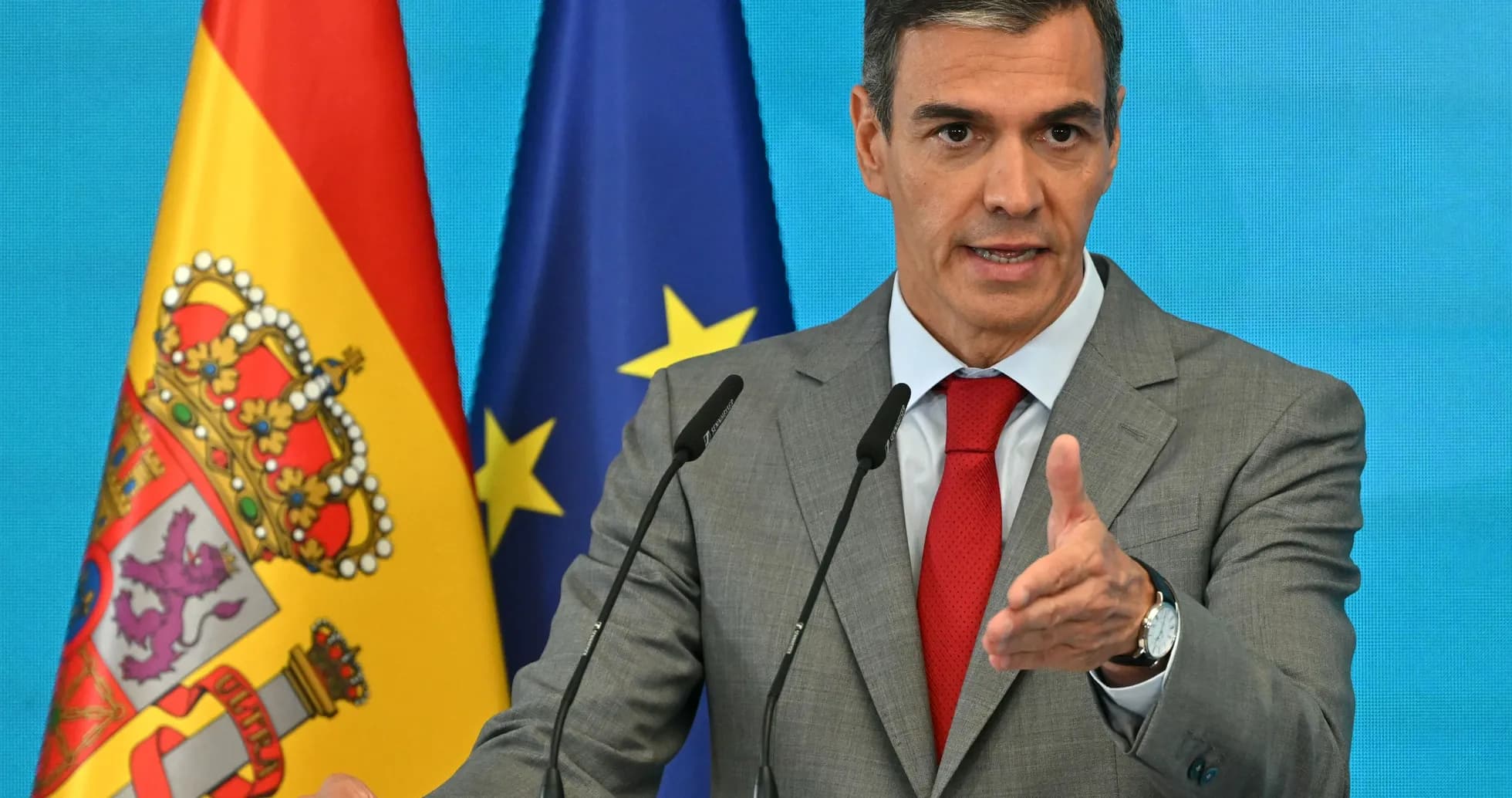
Pedro Sanchez insists the 2030 World Cup final must be in Spain
Pedro Sanchez draws a line in the sand: the 2030 World Cup final, he insists, must be played in Spain.
The Spanish Prime Minister has moved the battle for football’s biggest occasion from the back rooms of FIFA politics into the glare of national debate, vowing his government will do “everything in its power” to keep the showpiece out of Morocco and on Spanish soil.
Speaking to Spanish network SER on Monday, Sanchez left little room for ambiguity. Asked whether FIFA president Gianni Infantino could push the final across the Strait of Gibraltar, he replied that his government “will work to ensure that the final is held here”, before delivering the line that cuts to the heart of Spain’s ambition: “the time has come for Spain to win the World Cup on its own soil”.
This is no vague appeal to sentiment. Sanchez is leaning hard on recent history.
Spain, long defined by the golden generation of 2010, have now become a modern World Cup force again. They claimed their first title in South Africa 14 years ago, then climbed back to the summit this summer at the tournament shared by the United States, Mexico and Canada. Two stars on the shirt, two triumphs outside their borders. In the Prime Minister’s eyes, that pedigree strengthens the argument that La Roja deserve to chase the third at home.
The latest title, sealed on 19 July, came with all the drama a politician could wish to invoke. Spain edged Argentina 1-0 after extra time, Ferran Torres delivering the decisive goal to crown a campaign that revived memories of 2010. For Sanchez, that continuity of success is part of the case: a country that wins the World Cup should not just co-host the next one. It should stage its climax.
Spain will share the 2030 World Cup with Portugal and Morocco, in a tournament already shaped as much by symbolism as by sport. To mark 100 years since the first World Cup, Uruguay, Argentina and Paraguay will each host an opening match on home soil, a nod to the 1930 edition in Uruguay, when every game took place in Montevideo.
That commemorative gesture has scattered fixtures across continents. The one match that still truly defines a World Cup, though, remains without a confirmed address.
And that is where the politics have sharpened. What began as a logistical question — which stadium, which city, which country — has turned into a contest of national will. Morocco’s claim is strong: a rising football nation, fresh from a historic run to the semi-finals in 2022 and eager to capitalise on its growing influence within the game. Spain, for its part, is no longer content to leave the lobbying to its federation.
By going public, Sanchez has dragged the Spanish government into the heart of the race. This is now a state-backed push, not just a footballing wish. The message is blunt: the final, the trophy lift, the defining images of 2030 — they belong in Spain.
FIFA will decide where the world looks on that night. Spain has made it clear it expects that gaze to fall on its own turf.