Netball’s Quiet Revolution: First Nations Players Driving Change
For decades, netball has been the game that fills Australian courts and community halls, the go-to team sport for girls and women. Yet at the very top, one truth has lingered stubbornly: the sport has barely reflected the First Nations talent that feeds it.
Only three Indigenous women have ever worn the Diamonds dress — Marcia Ella-Duncan, Sharon Finnan-White and, after a 22-year silence, Donnell Wallam. Three names across generations of national teams in the country’s biggest female participation sport.
That number has become impossible to ignore. And in the last few years, it has started to have consequences.
Wallam’s exit lights a fuse
When Wallam left Australia for New Zealand in 2024, it was more than a simple transfer. On her way out from the Queensland Firebirds, she made it clear why she was crossing the Tasman, pointing to New Zealand clubs’ “respect for inclusion and culture” as a key factor.
The message landed hard.
As allegations of a “toxic culture” at the Firebirds spilled into public view, Netball Australia could not look away. The governing body launched an investigation and began reshaping the sport’s approach to what it calls “cultural safety” for First Nations athletes.
The response has been significant. Structural, not symbolic.
At the centre of it is Ali Tucker-Munro, a former Diamonds squad member who now serves as Netball Australia’s General Manager First Nations. Under her watch, Australia has its first official First Nations team, the Black Swans. A First Nations Tournament now sits on the calendar as a national championship, currently underway in Melbourne. The Spirit Series, launched in 2026, has already seen the Black Swans go unbeaten against Pacific neighbours.
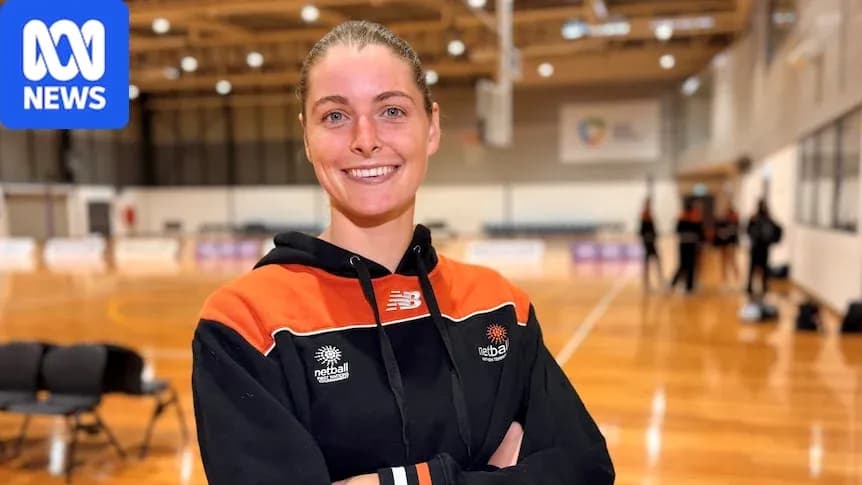
Speaking at the State Netball and Hockey Centre, Tucker-Munro stood alongside two of the players this shift is designed to serve — defenders Gabby Coffey and Scarlet Jauncey — and made it clear: visibility is changing, but the job is nowhere near done.
A defender on the edge of the elite
Coffey is 26, a Northern Territory representative, and a case study in how hard it remains for Indigenous players to break through.
She spent four years as a training partner with the Melbourne Vixens, hovering just outside the Super Netball spotlight, before deciding to move to the UK to chase court time. Two seasons with Birmingham followed. Then, a return to Alice Springs.
She had read the situation at the Vixens clearly.
“I knew there wasn’t much movement in their defensive end, and the same with a lot of defensive ends around Australia,” she told ABC Sport.
The pathway was blocked. Not by a lack of ability, but by a lack of opportunity.
Coffey still hasn’t given up on a professional contract. Yet she speaks with the calm of someone who understands her role may also be to clear the path for others, to help the next wave of First Nations athletes find what she has spent years chasing.
Her story starts a long way from the slick courts of Super Netball.
Growing up away from mob, held by another
A Wiradjuri woman raised in Alice Springs, Coffey grew up away from her own mob and country, but never without culture.
“When you grow up on other Indigenous land and tell people you’re Indigenous, they pull you into their culture,” she said of the Arrernte community that embraced her.
Her family, she recalls, felt “super lucky and blessed” to grow up in the centre of Australia, where culture is deeply sacred and fiercely traditional.
Netball, though, demanded a move.
Determined to push herself, Coffey followed the advice of coach Gillian Lee and headed south to Melbourne. The step was necessary for her career. It was also brutally hard.
“It was really hard being away from home,” she said.
The Vixens environment gave her support, but she knows not everyone is so fortunate.
“There’s a lot of girls who do get those opportunities to move and then don’t last because there’s just not that support in place.”
For players from the Northern Territory, the challenges stack up quickly. Distance. Cost. Limited time together.
“Even with competitions like these, we don’t get together until we’re here, and we’re training away from each other, so it can be quite a challenge,” she said.
‘If you can’t see it, you can’t be it’
Ask Coffey what needs to change, and her answer is simple.
Role models.
“If you can’t see it, you can’t be it,” she said, noting there are only two Indigenous players currently in Super Netball.
Her own experience — years as a train-on player without cracking a full contract — underlines how steep the climb remains. The league is world-class and fiercely competitive. International stars flood in.
“We get a number of internationals [coming to Super Netball], which I think makes the game better and more exciting, and I don’t think [that] should be restricted,” she said.
She doesn’t want the standard lowered or the doors closed. She wants the doors widened.
“I do think there should be more focus on bringing Indigenous girls into the elite level.”
Netball Australia’s plans to introduce two new teams into the competition loom as a crucial test. More teams mean more list spots, more contracts, more chances. Coffey believes a New Zealand team in the league could also ease the squeeze on Australian players fighting for deals.
But more teams alone won’t fix the deeper issue. The environment they walk into matters just as much as the number of jerseys available.
Jauncey, the next generation, and the power of seeing Wallam
On the other side of the country, Scarlet Jauncey is living a similar story at a slightly different stage.
The Yaruwu defender from Rubibi/Broome has spent the past year as a training partner with the West Coast Fever, squaring up at practice against names like Jhaniele Fowler-Nembhard and having to pinch herself in the process.
She agrees with Coffey: international talent is not the problem.
“We’re happy to be playing against the best in the world, that’s what we want,” she said.
Like many young Indigenous netballers, Jauncey grew up idolising Wallam. Watching Wallam break through and then speak out has given this generation something they rarely had — a player who looks like them, plays like them, and stands where they want to stand.
“I think it just gives us something to strive towards, knowing that we can be in that space,” Jauncey said.
In 2025, she captained the Black Swans. Suddenly, she wasn’t just looking up. Others were looking at her.
“It was the best tournament I’ve played in, the best teams I’ve been with,” she said.
The impact of that environment — surrounded by First Nations teammates, competing at a high level, grounded in shared culture — is hard to quantify but easy to feel.
“I think just being able to come to First Nations tournaments and having that connection with each other has been really great.”
Coffey, too, talks about the effect in visceral terms.
The experience, she said, gave her “goosebumps”.
“I think it gives not only myself, but a lot of players so much power and push to keep going and play at the highest level.”
Building cultural safety, not just pathways
When Tucker-Munro hears those reactions to the Black Swans, she smiles. These are not side projects. They are central to the sport’s future.
The Black Swans, the First Nations Tournament, the Spirit Series — they are designed to do more than hand out bibs. They are meant to light a fire.
“These tournaments are aspirational in terms of trying to inspire the next generation of our kids — who we know love sport and netball in particular — to trial for their respective state and territory,” she said.
The goal is clear: kids watching this week in Melbourne should want to take the next step, into Super Netball, into Diamonds squads, into the highest levels of the game.
But aspiration without safety can be cruel.
Tucker-Munro is blunt about the weight First Nations athletes carry.
“First Nations people come into these spaces with our culture and community on our back, as well as cheering us on, so you want to do them proud,” she said.
The journey, especially for those who relocate far from home, is tough. The question is no longer just how to get them into elite environments, but how to make those environments safe enough for them to stay and thrive.
Since her appointment, Netball Australia has established a First Nations Cultural Council and run a cultural safety review in collaboration with community. The review looked beyond players, taking in coaches, umpires and the broader netball workforce.
The barriers, Tucker-Munro concedes, are “multi-faceted”: money, geography, access. Talent alone is not enough when the cost of travel is high and the nearest elite program is thousands of kilometres away.
“For too long our voice has been very silent,” she said.
That silence is what she is determined to break.
“We’re not a homogenous people, so it’s really important that we make sure we’re hearing the voices of many.
“One thing we’re really big on in our community is not to do things for us or to us, you’ve got to do it with us.”
The intent, she insists, is real. The goodwill is there. The question now is whether a sport built on participation can finally build an elite system that reflects the First Nations players who have always loved it — and whether the next Indigenous Diamonds star will come through a pathway designed not just to find her, but to keep her.