.svg&w=384&q=75 "logo")
NBA Strips Clippers of Future Draft Picks Over Salary Cap Violations
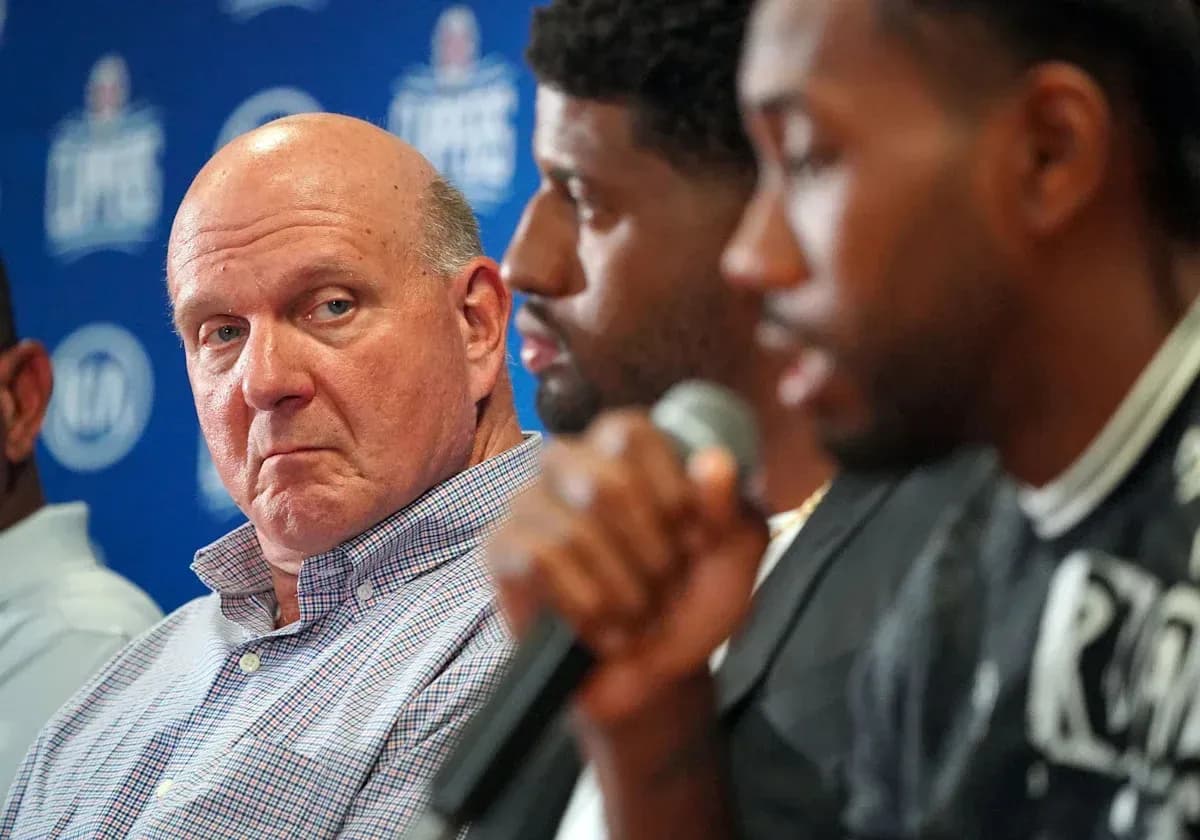
The NBA dropped a hammer on the Los Angeles Clippers on Wednesday, stripping the franchise of five future first-round draft picks and fining owner Steve Ballmer $30 million after ruling the team violated the league’s salary-cap circumvention rules in its dealings with Kawhi Leonard.
Leonard was fined $700,000. The cost to the Clippers runs far deeper.
The league seized the Clippers’ first-round picks in the 2029, 2030, 2031, 2032 and 2033 NBA Drafts, an extraordinary penalty that will shape the franchise’s future long after Leonard has played his last game.
A “pattern of misconduct”
In its announcement, the NBA said the punishment stemmed from “violating the salary cap circumvention rules” and detailed what it called “a pattern of misconduct and multiple significant rules violations by the Clippers organization, a prior offender of the salary cap circumvention rules.”
That phrase — “pattern of misconduct” — is not language the league uses lightly. It signals that this was not viewed as a technicality or a one-off misstep, but as a sustained effort to get around the rules.
The case centered on an agreement between Leonard and Aspiration, a now-bankrupt financial company in which Ballmer was heavily invested. Journalist Pablo Torre first brought the arrangement into the spotlight on his podcast, “Pablo Torre Finds Out,” revealing that Leonard had a $28 million deal with Aspiration that, in practical terms, required little from the All-Star forward.
The implication was clear: that Ballmer’s investment in Aspiration and the $28 million paid to Leonard functioned as a backdoor way to supplement Leonard’s Clippers contract and dodge the cap.
On the day Torre’s story initially broke, the Clippers and Ballmer pushed back hard, calling the allegation that Ballmer used Aspiration to funnel money to Leonard “absurd” and insisting the club had done nothing wrong.
“There is nothing unusual about team sponsors doing endorsement deals with players on the same team,” the team said at the time, adding that neither Ballmer nor the organization had “any oversight of Kawhi's independent endorsement agreement with Aspiration.”
The NBA opened a formal investigation later that day. Months later, the findings left the Clippers with one of the harshest draft penalties in recent memory.
Leonard accepts responsibility, denies intent
Leonard, who has since been traded back to the Toronto Raptors in a deal that was temporarily frozen while the NBA completed its probe, responded publicly shortly after the league’s announcement.
“Integrity and respect for this game are fundamental to who I am,” Leonard wrote. He said he accepted “full responsibility for lapses in judgment by people within my inner circle” and expressed regret for the distraction caused to fans and his family.
At the same time, he insisted he entered his Clippers contract and the agreements at issue “in good faith,” saying he had “no knowledge of any intent on anyone's part to circumvent the salary cap.”
Leonard framed the moment as a closing of a chapter. “For 15 years, my priority has been giving everything to my family, the game, and those I share the court with,” he wrote, adding that as he returns to Toronto, he is focused on controlling what he can and “moving forward with a clean slate.”
A saga years in the making
This was not the first time Leonard’s arrival in Los Angeles had drawn the league’s scrutiny.
Back in 2019, shortly after Leonard chose the Clippers in free agency, the NBA investigated allegations that his camp — specifically his uncle, Dennis Robertson — had sought impermissible benefits during negotiations. According to a 2019 report by The Athletic, Robertson asked interested teams for part ownership, a private plane available at all times, a house and guaranteed off-court endorsement money if Leonard signed.
Those alleged requests, The Athletic reported, were made to both the Los Angeles Lakers and the Toronto Raptors. After months of digging, the NBA announced it found no evidence the Clippers had actually granted illegal benefits during that free-agency period.
This time, the league reached a very different conclusion.
Torre kept the pressure on throughout last season, rolling out a series of podcast episodes that laid out documents and timelines suggesting Clippers-linked money flowed into Aspiration and helped fund the $28 million Leonard deal. His final deep dive came at the end of September, followed by a compilation video in December that stitched together his coverage across six episodes.
NBA commissioner Adam Silver, speaking at a Board of Governors meeting in September as the storm gathered, made it clear he would not act on optics alone. “If there was the mere appearance of impropriety, I would be hesitant to act,” he told reporters then, signaling the league would need hard evidence before it moved.
On Wednesday, the league made plain that it believes it found exactly that.
Clippers’ denials meet the league’s verdict
Even as the investigation unfolded, Ballmer stayed defiant. At a Sports Business Journal event in September, he said he was “quite confident” the Clippers “abided by the rules” and even welcomed the probe, saying it would “get the facts out there.”
The facts, as the league now sees them, have left his franchise without control of its own first-rounders for half a decade.
The punishment also lands at a delicate competitive moment. The Clippers, built around Leonard and James Harden, stumbled badly out of the gate last season, starting 5–16 as Leonard missed 10 of those games with ankle and foot injuries. They went 2–8 in that stretch.
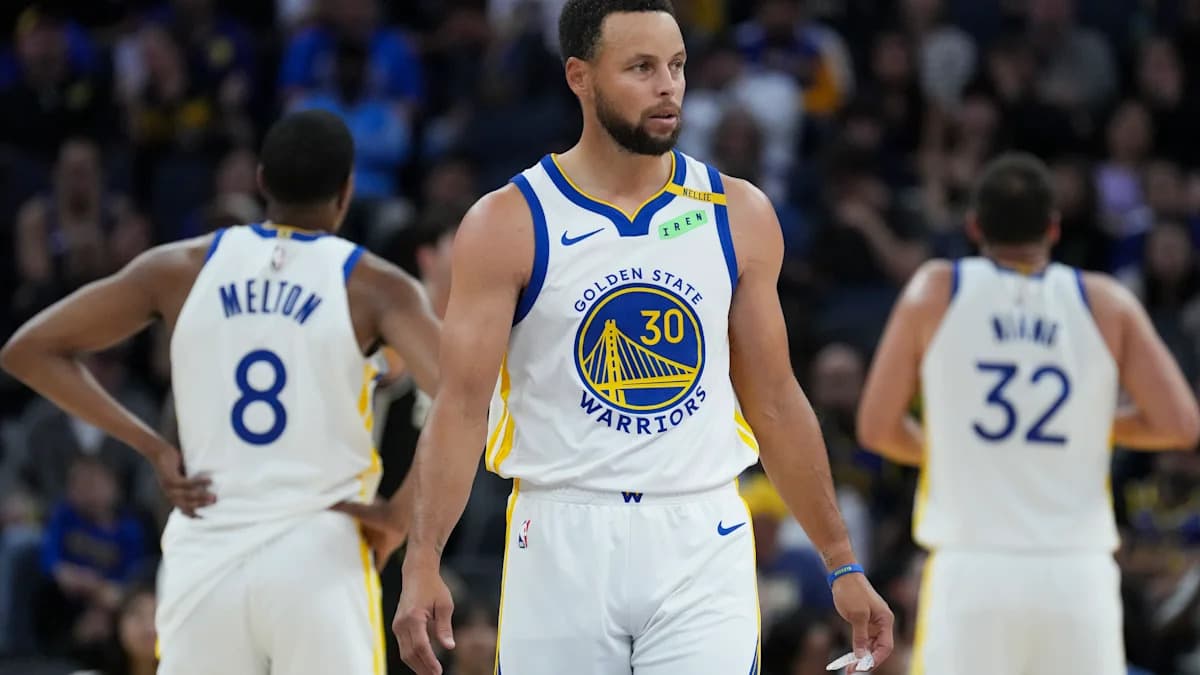
Once Leonard returned consistently, the team finally resembled the contender it was supposed to be. Leonard delivered one of the best seasons of his career, averaging 27.9 points per game — a career high — and earning MVP votes for the first time in four years. The surge came too late. The Clippers finished 42–40 and lost in the play-in tournament to the Golden State Warriors.
The franchise, stuck between expensive star power and modest results, now faces that same crossroads without the draft capital that usually softens a fall.
Trade to Toronto delayed, then cleared
The investigation didn’t just hit the Clippers’ future; it stalled Leonard’s present.
In June, the Clippers agreed to send Leonard back to the Raptors in a blockbuster trade. The timing immediately raised a question: could the deal go through while the league was still investigating whether Leonard’s time in Los Angeles involved impermissible benefits?
Both teams soon acknowledged the uncertainty. The Raptors revealed the NBA had told them they would “assume the risk of any potential outcome of the investigation impacting Kawhi.” Toronto chose to wait.
“The league office informed us that, as a result of the ongoing investigation involving the Clippers, we would assume the risk of any potential outcome of the investigation impacting Kawhi. In light of this we will wait until the league's investigation is complete,” the Raptors said in a statement.
The Clippers, again, used the moment to assert their innocence.
League insiders still expected the trade to eventually be completed. ESPN’s Shams Charania reported at the time that Leonard’s punishment was not anticipated to be severe enough to block the move. The only real question was when the NBA would close the file.
That answer arrived before the Board of Governors meeting in July, clearing the way for Leonard’s return to Toronto and the formal end of his Clippers tenure.
A franchise stripped bare of tomorrow
For the Clippers, the damage now stretches across two fronts: a star gone and a future mortgaged.
Leonard was heading into the final year of his contract, the centerpiece of a roster that had failed to break through and was now shadowed by an NBA investigation. With the team hovering in neutral and the league circling, the Clippers chose to move on, dealing away the player they once bent their entire organization to acquire.
They now move forward without Leonard, without the picks that usually anchor a rebuild, and with the league’s most serious accusation — “a pattern of misconduct” — stamped onto their record.
The question isn’t just how they recover.
It’s how long the bill for the Kawhi Leonard era will keep coming due.