.svg&w=384&q=75 "logo")
Monza Crowd Reacts to F1’s Grid Gigs and Pre-Race Shift
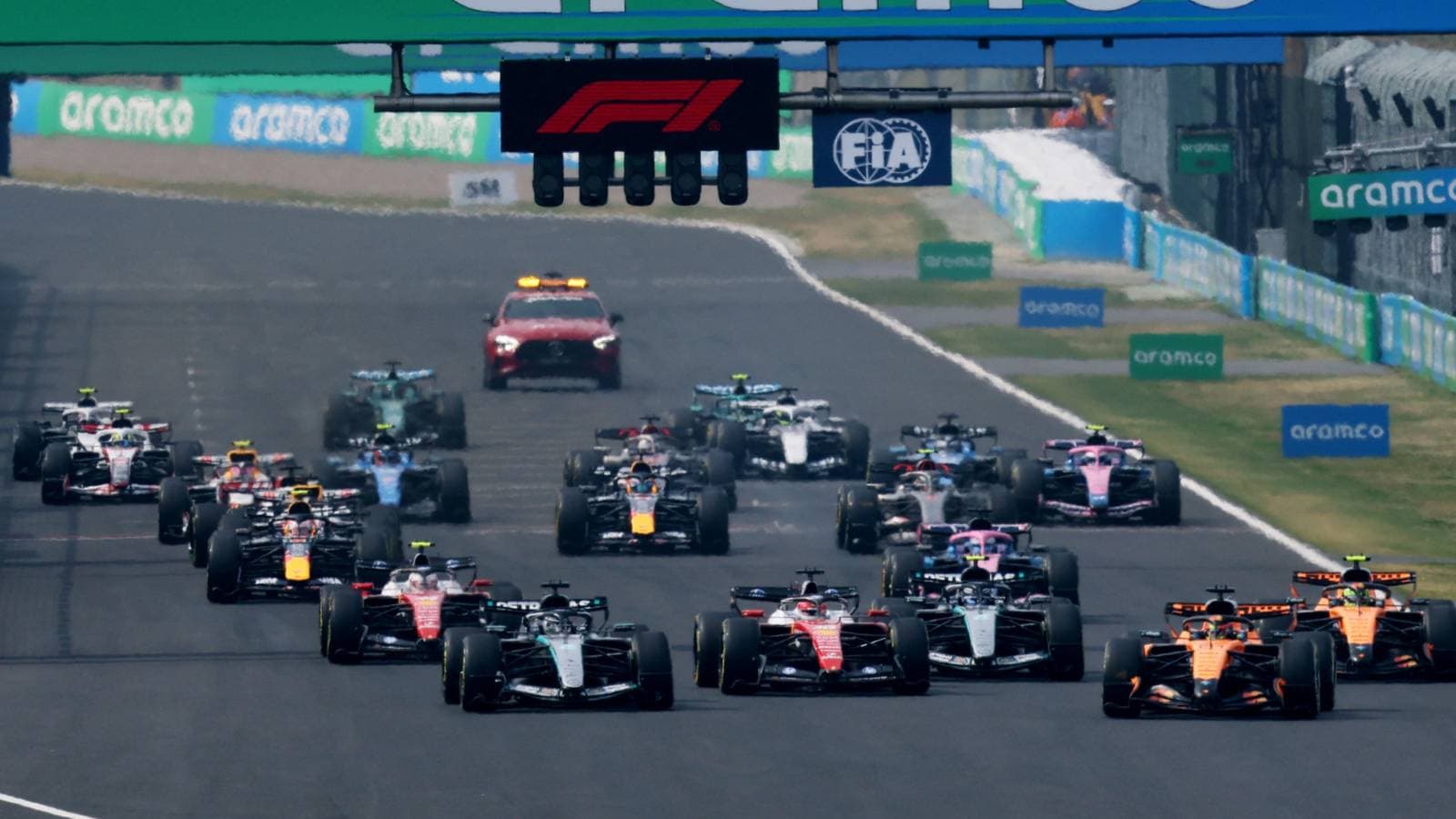
The tifosi came to Monza for noise of a very specific kind: V6 engines snarling through the trees, air horns, and that familiar pre-race hum as tension tightens on the grid. Instead, for a few minutes, Formula 1 pressed pause on the usual build-up and turned the Temple of Speed into a concert venue.
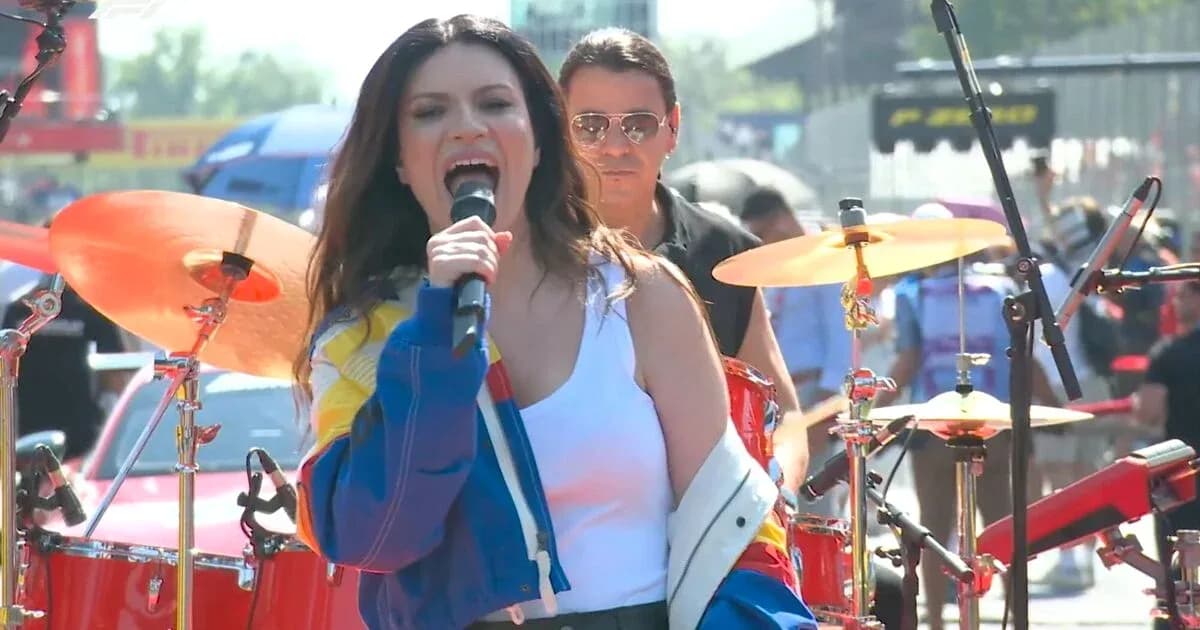
Laura Pausini, Italy’s Grammy-winning pop icon, took centre stage as F1’s Grid Gigs returned at the Italian Grand Prix. Backed by a live band and a full production set-up, she delivered a two-song performance in Italian and Spanish in front of packed grandstands.
This time, though, it wasn’t just a trackside show. Sky Sports F1 cut away from its pre-race coverage to air the performance in full, dropping the usual last-minute analysis, grid walks and technical chatter that fans expect in the final stretch before lights out.
That’s where the fault line opened.
A show of two halves
In the stands and online, plenty of fans lapped it up. For some, the blend of Italian pop royalty and one of motorsport’s most historic venues felt like a perfect fit.
“Make F1 grid gigs a permanent fixture please – that was absolutely brilliant and I thoroughly enjoyed it,” one viewer wrote, echoing a wave of praise for Pausini’s set. Another admitted they had been unconvinced by earlier Grid Gigs outings, but said her performance “can persuade me”.
The concept itself is not new. F1 launched Grid Gigs in Austin last year, where country singer Drake Milligan performed before the United States Grand Prix. It resurfaced in Las Vegas with former One Direction star Louis Tomlinson and then in Miami in May, where Colombian singer-songwriter Manuel Turizo took the mic.
Monza, though, was billed by F1 as its “biggest ever” Grid Gigs show, headlined by Pausini – the only Italian artist ever to win a Grammy. The event was always intended to be big, bold and broadcast: the announcement confirmed it would be live-streamed across F1’s social media platforms.
What the press release did not spell out was that TV rights holders would also be expected to carry it in full. When Sky’s cameras stayed with the stage instead of the garages, that’s when tempers frayed.
‘Was Sky F1 forced to show this?’
As the music played, social media lit up with a very different kind of feedback. A section of the audience wanted tyre talk, strategy debates and last-minute interviews, not a concert.
“If ‘Grid Gigs’ are going to be a thing in the future, I might have to rethink when I start watching this coverage,” one fan wrote, summing up a growing frustration with the timing rather than the artist.
Another wondered aloud: “Was Sky F1 forced to show this?”
They weren’t alone. “Have FOM forced Sky F1 to show this Grid Gigs thing, I wonder? I’m pretty sure they’ve never bothered with it in the past,” another viewer asked, questioning whether the broadcaster had any real choice in the matter.
The performance itself divided opinion just as sharply. Some branded it “embarrassing” and “drivel”, unimpressed by the intrusion into the race narrative. Others fired back with glowing reviews, calling it “amazing” and “emotional”, delighted to see an Italian star given a grand stage at her home Grand Prix.
The split wasn’t about Pausini’s pedigree. She has already sung to a vast global audience this year, appearing at the World Cup final in New Jersey alongside Robbie Williams and Nicole Scherzinger to perform their ‘FIFA Anthem’, Desire. Few questioned her ability to handle a stage of this size.
The real argument sat elsewhere: what belongs in the final minutes before a race?
Where does the show stop and the sport begin?
F1 has spent years pushing itself further into the entertainment space, building on the success of Drive to Survive, expanding its footprint in the United States and turning race weekends into full-scale events. Grid Gigs fit neatly into that strategy.
But Monza exposed the tension at the heart of it. For some fans, especially the hardcore who tune in early for every session, the pre-race window is sacred. It’s when storylines crystallise, when the last scraps of information drop, when broadcasters earn their money by framing the battle to come.
Cutting into that with a concert – however polished, however prestigious the artist – feels, to that group, like the sport giving way to spectacle at the worst possible moment.
For others, the same move signals progress: a global series leaning into its status, bringing in major music acts, and treating the grid as a stage in every sense.
F1 will point to the crowds, the social numbers and the calibre of performers as proof the concept works. The question now is how far it is willing to push the showbiz envelope into the heart of the race weekend – and how much of that core pre-race window broadcasters, and fans, are prepared to give up.