.svg&w=384&q=75 "logo")
Monaco Grand Prix Result Overturned: McLaren and Red Bull Win Case
McLaren and Red Bull have won their case – and the Monaco Grand Prix result has been rewritten once again after a messy pit-lane speeding saga that refused to die quietly.
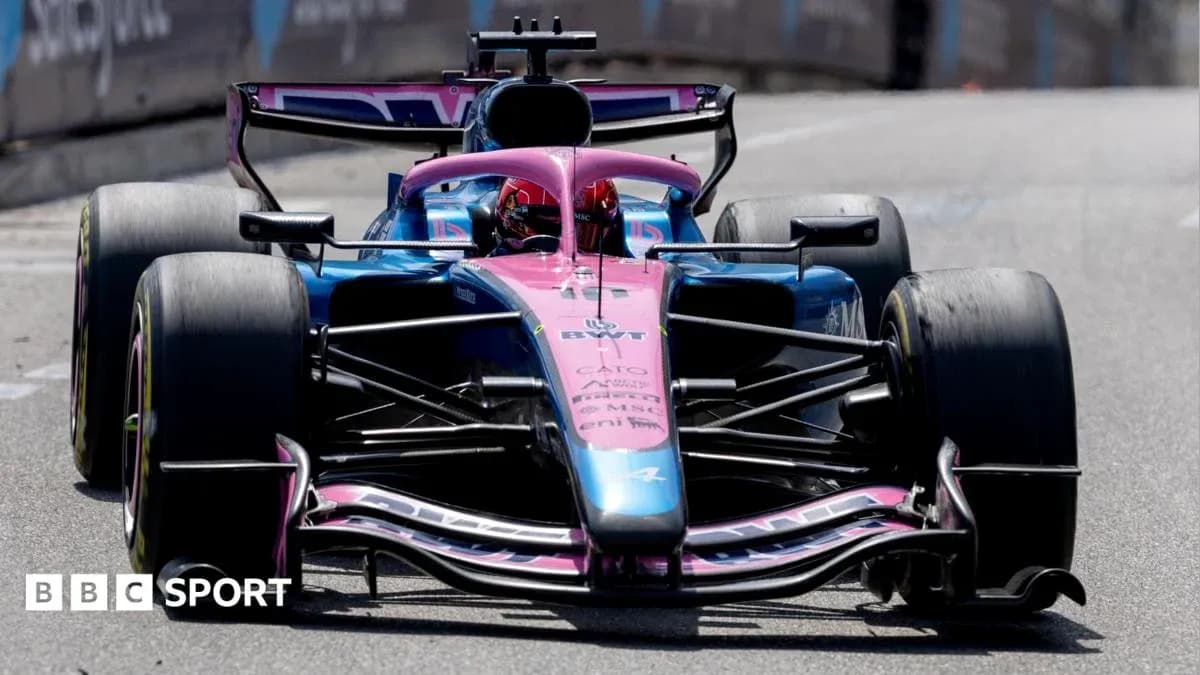
Pierre Gasly, who had been promoted to third after Alpine’s successful appeal in the days following the race, has now lost that podium. The Frenchman, third on the road in Monte Carlo, drops back to seventh – the position he originally held in the official classification.
Isack Hadjar is restored to third place for Red Bull, with McLaren’s Oscar Piastri back up to fourth. Racing Bulls pair Liam Lawson and Arvid Lindblad move into fifth and sixth, completing a reshuffled order that underlines just how far the ripples of this controversy have spread.
A 77-centimetre storm
At the heart of the dispute sits a number that would usually be irrelevant in Formula 1: 77 centimetres.
That was the discrepancy between the officially measured distance of the Monaco pit lane and the shortest legal line a driver could take. Alpine’s original appeal showed that, using this shorter route as the reference, Gasly had not actually exceeded the pit-lane speed limit. On that basis, his two five-second penalties were overturned and his podium was born.
But that ruling opened a door McLaren and Red Bull were never going to leave ajar.
They argued that the sport could not change the reference measurement after the fact, once teams had calibrated their systems and raced according to the parameters given before the weekend. Their case was not just about Gasly. It was about the principle that the goalposts cannot move on a Sunday night.
The court of appeal agreed.
Fairness, but not after the flag
The judges concluded that the parameters used to police the pit-lane speed limit could not be altered mid-event or retrospectively. Once competitors had been informed of the official pit-lane distance, that figure had to stand for the duration of the grand prix.
The existence of a shorter possible line did not, in their view, invalidate the official measurement. It simply revealed that the pit lane could be measured in more than one way – and that the time to argue about that was before the race, not after it.
Their written finding was blunt on the core issue of sporting justice: what “sporting fairness absolutely precludes” is the replacement, after the race, of the “common event-wide calibration parameter” with a different geometric or measurement approach in order to re-adjudicate a result.
In other words: you race to one rule, you get judged by that rule. Not by a new one discovered on Monday.
Collateral damage up and down the grid
The Monaco penalties had never only been about Gasly. A string of drivers were caught up in the pit-lane clampdown, among them Mercedes’ George Russell, who fell out of the points after being penalised for not correctly serving an earlier pit-lane speeding penalty.
Those sanctions still stand. The court’s decision restores the original framework: the official pit-lane distance, the original speed calculations, the initial penalties. The Alpine victory in Paris is undone; the broader architecture of race control’s authority is reinforced.
For McLaren, the stakes were very real. Piastri had served a five-second pit-lane speeding penalty in Monaco and lost two points as a consequence of the post-race reshuffle that elevated Gasly. The team’s appeal leaned heavily on sporting equity – if the measurement changed for one, it had to change for all, or not at all.
Now, Piastri gets those points back. Hadjar regains a career-defining podium. Lawson and Lindblad each climb a place. A chain of results, distorted by a legal quirk, snaps back into shape.
Alpine left aggrieved – and defiant
Alpine, unsurprisingly, are far from satisfied.
In a statement, the team insisted they “fully maintain that car 10 (Gasly) did not exceed the pit-lane speed limit at any point during the race”, and made clear they “disagree with the decision”. They also described themselves as “unjustly punished”, even as they acknowledged the authority of the judging panel in Paris.
The words carry the frustration of a team that did the hard work on track, found a legal opening off it, and still came away empty-handed.
Yet Alpine also struck a pragmatic note, stressing that their focus now turns back to performance and a “close and very competitive championship fight”. They have lost a podium, but not their sense of the bigger picture.
A warning for the rulebook
Monaco’s pit-lane saga has exposed an awkward truth for Formula 1: at this level, even a 77-centimetre discrepancy can decide who stands on the podium and who slips into the pack.
The court’s ruling draws a hard line. Measurements, once declared, are binding for that event. The temptation to revisit them after the chequered flag, no matter how compelling the technical argument, has been firmly shut down.
The message to teams and officials alike is clear: argue the geometry on Thursday, not in the courtroom weeks later. Because once the cars roll and the speed traps are set, the numbers are no longer up for debate – only the racing is.