Martin Demichelis Faces Communication Challenges at RB Leipzig
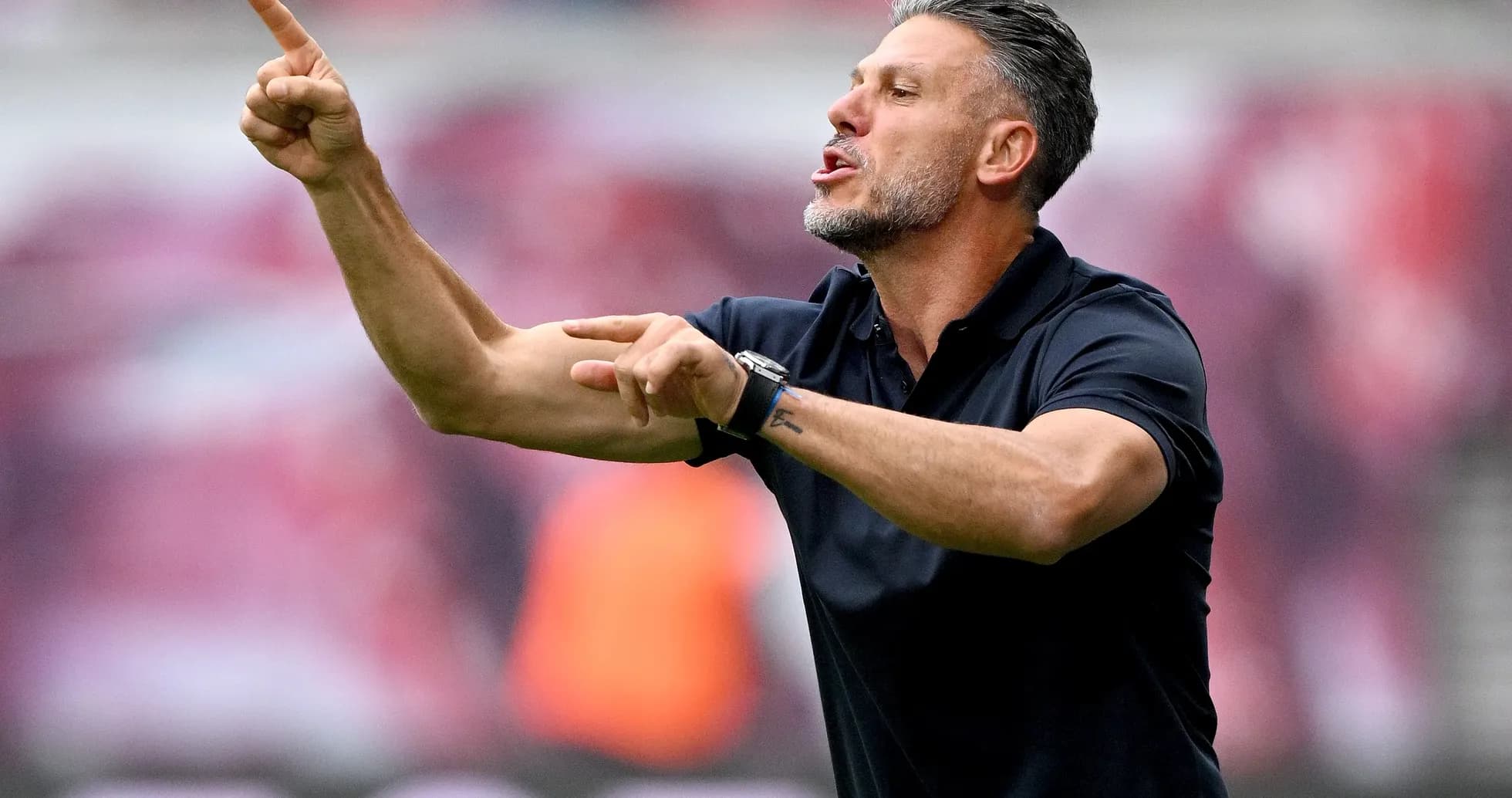
The job was always going to be demanding. At RB Leipzig, the margins are thin, the expectations heavy. But for Martin Demichelis, there is an extra layer of difficulty before a ball is even kicked: he has to win games through a chain of translators.
The 45-year-old Argentinian arrived in the summer after the abrupt dismissal of Ole Werner, a decision that surprised much of German football. Demichelis brought pedigree and presence from his Bayern days, but not the language. He reportedly speaks neither enough German nor enough English to address the entire squad directly with his tactical instructions.
That gap has turned the Leipzig dressing room into a kind of live translation booth.
Team manager Babacar N'Diaye relays Demichelis’ words to the French-speaking players. Goalkeeping coach Frederik Gößling passes the message on in English. Assistant coach Cristian Fiél, the German-Spaniard, acts as another bridge, shuttling between the coach and the squad. Several voices, one message – or at least that is the idea.
In reality, the system is creaking. By the time the original speech has been filtered, broken down and rebuilt in two or three languages, much of Demichelis’ edge disappears. The German players are said to often find themselves clarifying instructions to each other afterwards, piecing together what the head coach actually wanted. The fire and emotion of his team talks, the nuance of his tactical tweaks, get diluted in the process.
At a club that thrives on clarity and speed, that is a serious handicap.
Results raise the volume of the debate
Language alone does not decide a season. Results do. And Leipzig’s have dragged the communication issue into the spotlight.
The 1-3 league defeat at Werder Bremen hurt. It was unexpected, it was flat, and it cut straight against the club’s ambitions. Then came the real blow: a disastrous 1-4 loss to FC Como 1907 in the Champions League. On the European stage, where Leipzig see themselves as established players, they were picked apart.
The criticism around Demichelis grew louder. Questions followed quickly: Can a coach really control a top-level dressing room when he cannot speak to it directly? How long will a club of Leipzig’s stature tolerate teething problems that cost points?
Demichelis knows exactly where he stands in this business. After the defeat in Como, he was blunt about the reality of his profession. He said he understood the rules of football, that time is short, especially at a big club, and that when you do not win, everything is judged harshly. There was no illusion in his words, only awareness.
Then, just as the noise around him swelled, his team hit back.
Last weekend’s emphatic 5-0 win against HSV did more than brighten the mood. It showed what this Leipzig side can look like when the pieces click, when the ideas on the training pitch actually reach the players on matchday. The performance gave Demichelis some breathing space, a brief pause in the storm.
The doubts, though, have not vanished. A single big win does not erase a shaky start, nor does it silence concerns at a club that finished third last season and expects to push from that platform, not slip from it. The early setbacks have already put those lofty ambitions under strain.
The next few weeks will be decisive. Demichelis must show that the HSV victory was a step in a direction, not an exception. He needs not only results, but patterns: convincing performances, clear progress, a team that looks like it fully understands what he wants – no matter how many voices carry his words.
Club leadership calls for calm – with conditions
Inside the club, the response to the mini-crisis has been carefully measured. No panic, no public drama. At least not yet.
Sporting managing director Marcel Schäfer stepped forward last week with a clear message. He stressed that Leipzig would remain calm and focused, that the club stood firmly together. His support extended to everyone: employees, the team, the entire coaching staff. The wording was deliberate – unity, trust, stability.
He also urged patience. This is a newly assembled side, he pointed out, one that needs time to build automatisms and routines. That line matters at a club that has never been shy about reshaping its squad and asking a coach to weld it into something coherent at speed.
But Schäfer did not pretend everything was fine. He openly admitted that recent results “do not meet our standards.” Internally, he said, the situation was being addressed clearly and directly. Leipzig might be preaching calm in public, but they are not blind to the table or the performances.
For Demichelis, Schäfer’s words amount to a formal vote of confidence – and a warning label. The backing is real, but it is conditional.
Two things must change if the Argentinian is to truly settle into the saddle in Leipzig. Communication between coach and team has to become more efficient, so that his ideas arrive with the same intensity with which he delivers them. And the results must follow, consistently, not in isolated bursts.
If he manages that, the language barrier will turn into a footnote in his story at the club. If he does not, the question will not be whether Leipzig understood him – but who they turn to next.