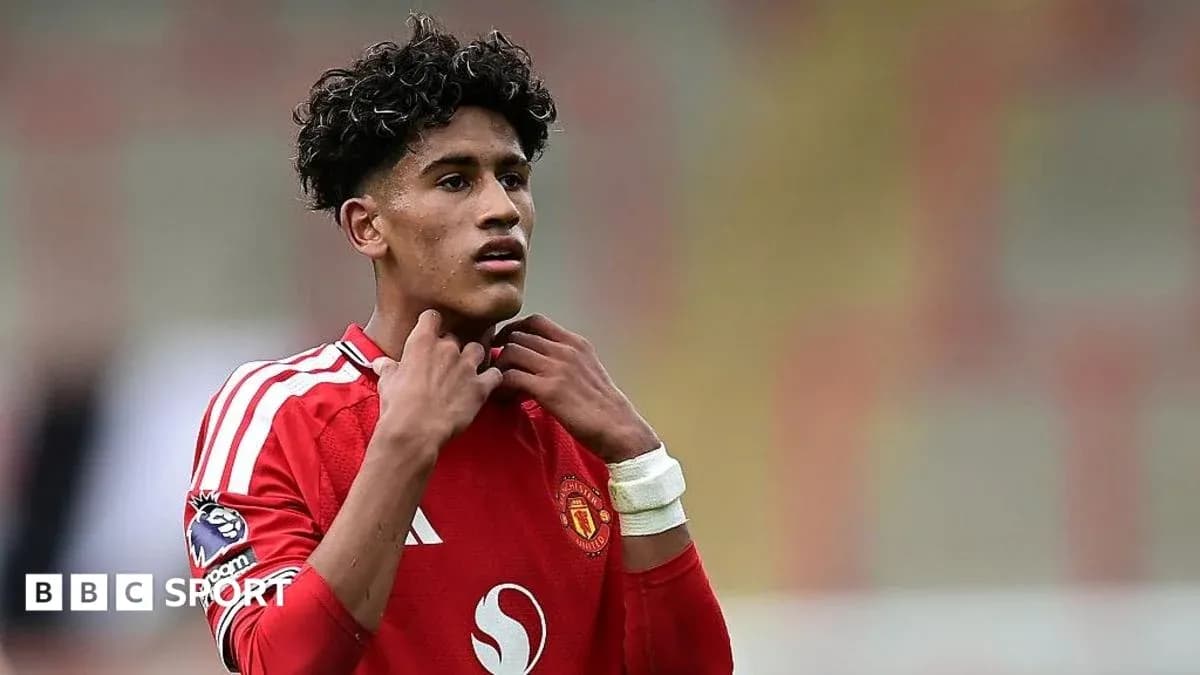
Manchester United's Prodigy JJ Gabriel on the Brink of Leaving
On a night that was supposed to be about history at Old Trafford, Manchester United walked into a different kind of storyline entirely.
Before a ball was kicked, the club were already dealing with the shock that JJ Gabriel, the 15-year-old they have been quietly grooming as their next great prodigy, wants to leave.
Inside United, the mood has shifted from excitement to anxiety with brutal speed. A week ago, Gabriel was the golden thread in the club’s future tapestry: a hat-trick on his Uefa Youth League debut at Leigh, talk of him becoming the youngest player in United’s history with a Carabao Cup bow against Brighton, and a pathway that seemed clear.
Now, that pathway is in danger of being walked away from.
A prodigy on the brink
United’s hierarchy have moved quickly. Chief executive Omar Berrada and director of football Jason Wilcox are locked in talks, trying to coax a change of heart from a teenager whose mind, those close to him believe, is largely made up.
It feels like a rescue mission rather than a negotiation.
The core of the problem is trust. Sources around the player believe promises about his development and route to the first team have not been honoured. That sense of a broken pact sits alongside a fierce belief in Gabriel’s current level and ultimate ceiling.
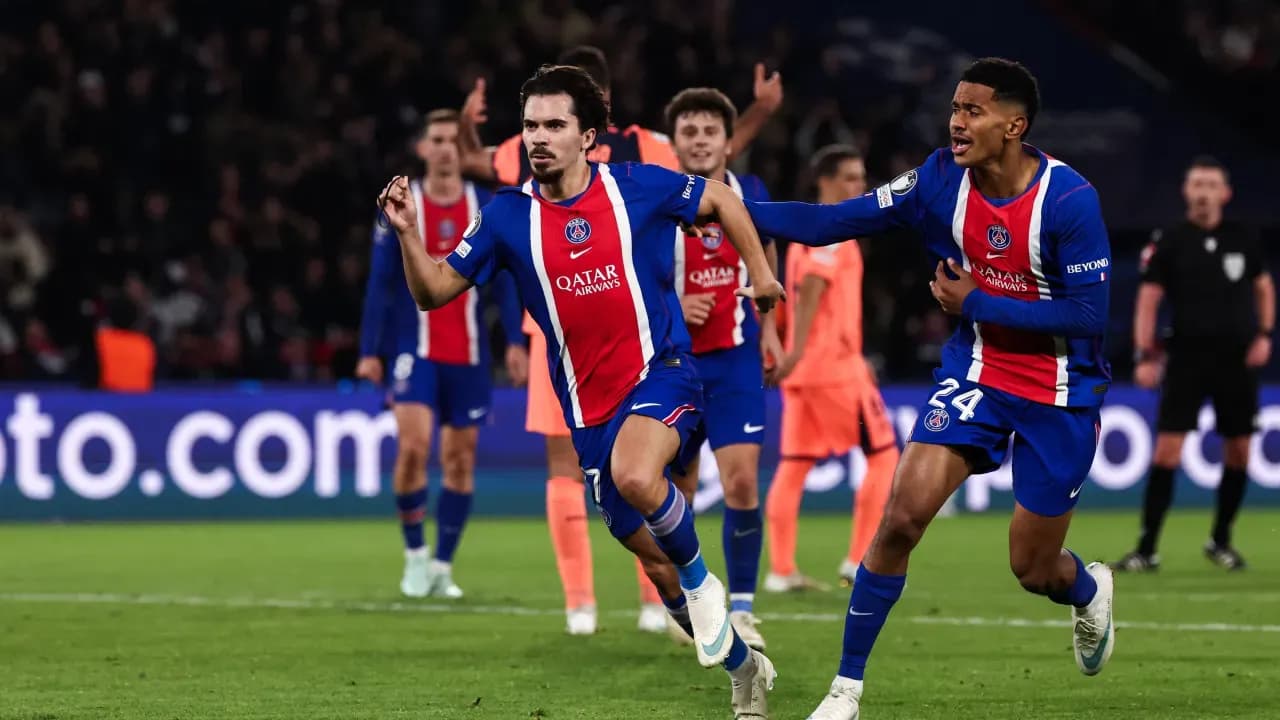
The rest of Europe has noticed too. Real Madrid, Barcelona and Paris St-Germain are tracking the situation, watching a storm brew at Old Trafford around a player many inside Carrington regard as a once-in-a-generation talent.
Gabriel’s potential is not a secret. Last season he was named Under-18 Premier League Player of the Year, even though he was only 14 when the campaign began. He scored 23 goals in the Premier League Under-18 competition, added three more in the FA Youth Cup and carried United to both the Premier League Under-18 Cup final and the FA Youth Cup final.
He swept the board: Premier League Under-18 Player of the Year and United’s own Under-18 Player of the Year. The numbers and the honours tell one story. The eye test tells another.
Balance. Pace. Tight control in tight spaces. A powerful shot. This season, a growing appetite to press and win the ball back. Inside the club, one source recently labelled him “the best 15-year-old in Europe”.
Adam Lawrence, United’s Under-21s coach, cut to the heart of it after Gabriel’s Youth League treble against Sabah FK.
“The first thing in my job is not to ruin him,” he said. “When you have a talented player like JJ, you obviously don’t want to stifle their freedom and their creativity.”
That is the tension now. How do you protect a talent like this without suffocating it? How do you manage his steps without turning the pathway into a blockade?
Pathway promised, pathway questioned
United’s initial stance when word of Gabriel’s discontent began to seep out was calm. Privately, they insisted they would try to convince him his future was best served where he is. They also pointed to a practical detail: his registration runs until the end of the season.
That buys them time domestically. It does not necessarily protect them from the pull of the continent.
Gabriel holds a European Union passport. His mother is of Greek-Cypriot heritage; his father represented the Republic of Ireland twice. That matters. In 2016, the Court of Arbitration for Sport rejected an appeal from Velez Sarsfield when one of their 16-year-olds moved to Manchester City. The player’s dual Argentine-Italian nationality allowed him, as an EU national, to move freely within the European Union despite coming from outside it.
The warning lights for United are bright. West Brom know this territory well. When Louie Barry left them for Barcelona at 16 in 2019, Fifa ruled the Midlands club were not due compensation because they had not formally offered him a scholarship. West Brom had claimed €130,000 in training compensation. Six months later, Barry moved from Barca to Aston Villa for just under £1m.
For United, the nightmare scenario is simple. Gabriel turns 16 on 6 October, walks away, and the club receive nothing for a player whose market value, even at this raw stage, already runs into millions.
This is not a new story in English football. Jadon Sancho was 17 when he stopped training at Manchester City to push through a £10m move to Borussia Dortmund, convinced his chances of first-team football were stronger in Germany than under Pep Guardiola. Morgan Rogers, Barry’s team-mate in West Brom’s 2019 FA Youth Cup semi-final side, left for City three months later, signing on his 17th birthday.
Ambitious teenagers, big clubs, promises, pathways. The pattern is familiar.
Sources suggest that when Gabriel agreed his short-term commitment to United last summer, conversations with the hierarchy included clear assurances about his trajectory. Some of those expectations, they feel, have not been met.
The debut that never comes
To be fair to United, Gabriel has not been completely shut out. He stepped into senior training sessions, first under Ruben Amorim and then under Michael Carrick. The FA Cup was mentioned as a possible stage for a first taste of senior football last season.
That talk was cooled by Darren Fletcher, then Under-18s coach and later interim senior manager after Amorim’s dismissal. Fletcher felt it was too early.
This summer was supposed to be different. Pre-season looked like the moment the door would finally open.
When United flew to Helsinki to face Wrexham on 18 July, Gabriel stayed behind. The explanation was simple enough: the timing of his return to pre-season training. After that, he was named in every squad. On paper, the pathway looked intact.
On the pitch, it told a different story. He played only once, for eight minutes, against Atletico Madrid in Stockholm.
Did that start to harden his stance? In Trondheim against Rosenborg on 24 July, Carrick used 11 substitutes. Gabriel, who travelled, was one of only two players not to come on. Five of those who did have since left the club, either permanently or on loan.
At Croke Park, 18-year-old Tynan Thompson made his senior debut against Leeds United, playing 45 minutes just three weeks after arriving from Tottenham. Gabriel travelled. He did not play.
Inside the academy, there was still a belief he would become United’s youngest-ever player this autumn, most likely in the EFL Cup. The third-round draw handed them Brighton at Old Trafford, a stage worthy of the milestone. United’s Champions League group, with Azerbaijani champions Sabah at home, seemed to offer another opening.
On Tuesday night, United were 3-0 up against Sabah at half-time. By the 72nd minute, Carrick had used all five substitutes. Gabriel stayed on the bench.
This time, the reason was technical rather than tactical. Uefa rules meant that at 15 he could only play if registered on United’s A list. He was not. United still named the full 25, including Manuel Ugarte, who will not feature until after the registration window reopens in January due to a knee injury. Thompson made the list. Gabriel did not.
Why? That remains murky. Inside United, some coaches have argued he is not yet physically ready for senior football. Those close to Gabriel reject that outright. They point to Arsenal giving Max Dowman his debut at 15 last season and Bayern Munich introducing Lennart Karl at 17, and ask why United, a club built on the mythology of youth, are hesitating.
A fault line at the heart of United’s identity
This is more than a contract issue. It cuts to the core of what Manchester United claim to be.
For decades, the club have sold a simple idea: if you are good enough, you are old enough. From the Busby Babes to the Class of ’92 and beyond, Old Trafford has traded on the romance of teenagers stepping into the light.
Now, with a 15-year-old many inside the building describe as the best of his generation, the club stand on the brink of losing him before he has even kicked a ball for the first team.
If Gabriel walks at 16, United will not just lose a player. They will lose a statement about who they are. The question is whether they can repair the trust, adjust the pathway and convince a prodigy that his future still lives under the Old Trafford lights – or whether another European giant will be the one to unleash a talent United believed would define their next era.