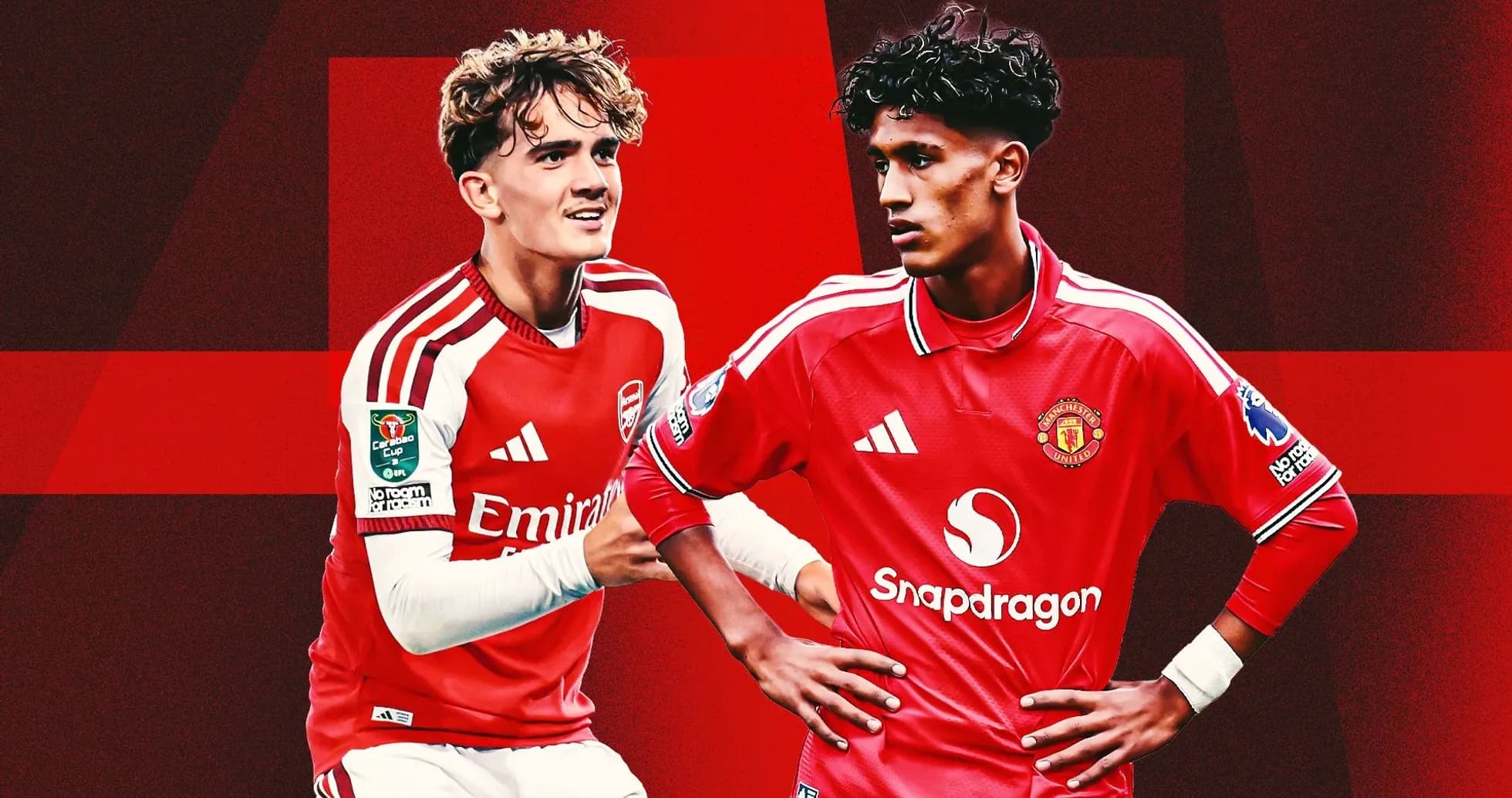
Manchester United's Gabriel at a Crossroads: Keeping the Wonderkid
Manchester United are fighting to keep hold of Gabriel – and this time, the battle is not with Manchester City, but with the biggest sharks in Europe and the teenager’s own ambition.
Real Madrid, Barcelona, Paris Saint-Germain and Bayern Munich have all moved into position for the 15-year-old forward. United, for their part, are refusing to even entertain the idea of letting him go. Senior figures are now working overtime to convince him his future still lies at Old Trafford.
For Sir Jim Ratcliffe, already under fire from sections of the fanbase for a string of unpopular calls in his brief spell fronting football operations, this is a political and footballing powder keg. Lose a kid being talked about as a once-in-a-generation talent, and the protests won’t just continue – they’ll intensify.
A contract loophole and a ticking clock
On paper, United hold the cards. Gabriel is under contract until next summer. In reality, the situation is far more fragile.
He is not part of the club’s full-time model or a scholar, which leaves a crack in the door. Under Brexit regulations, if he holds a European passport, he will technically be free to leave when he turns 16 on October 16. United know it, and they are now examining his eligibility.
His father, Joe O’Cearuill, played professionally and represented Ireland twice. His mother has Greek Cypriot roots. That mix opens the possibility of dual nationality and, with it, a route into the European Union before he turns 18.
United fended off City last year to keep him. This feels different. Bigger clubs, bigger promises, a bigger stage. And the signs are worrying.
Gabriel was scheduled to join first-team training on Saturday. He didn’t turn up. He has not been seen at Carrington all week.
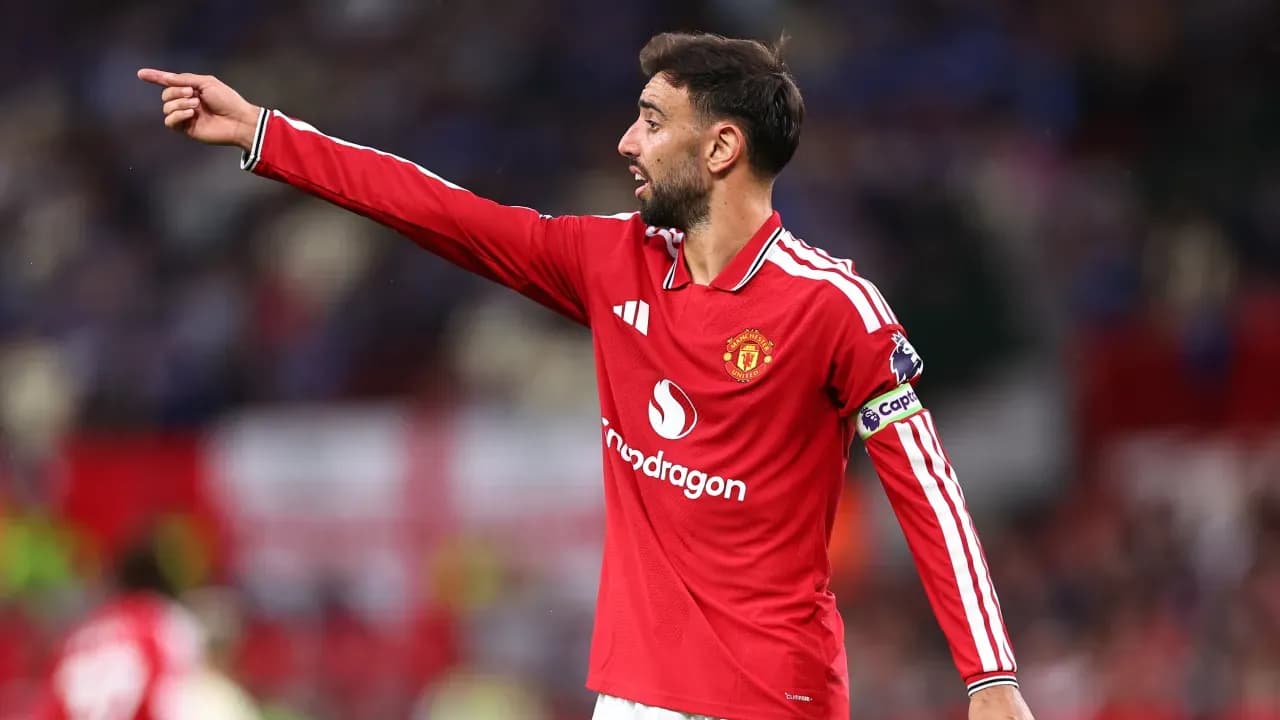
Michael Carrick had planned to name him in the squad for Wednesday night’s Carabao Cup third-round tie against Brighton at Old Trafford. Had he stepped onto the pitch, Gabriel would have become the youngest player ever to feature for United’s senior side. That dream debut has been quietly erased from the team sheet.
A rare light in a dim academy era
United’s academy has not produced a genuine global superstar since Marcus Rashford burst through. Gabriel has carried the hopes of a restless fanbase almost from the moment he arrived as an 11-year-old.
He is two-footed, slippery in tight spaces and ruthless when the goal opens up. Defenders think they have him boxed in; a quick shift of the hips, a dart of acceleration, and he is gone. The Neymar comparisons are unhelpful, but you can see why they come. The balance, the agility, the swagger. He even wears the same model of Nike boots as the Brazilian, having signed a lucrative extension with the brand in March 2025.
The numbers back up the hype. Last season he broke into United’s Under-18s at 14 – another record – and scored 20 goals in 21 league matches. He swept the board on awards: the inaugural Premier League U18s Player of the Year and United’s Jimmy Murphy Young Player of the Year, as the youngest ever recipient.
In August, he stepped up again, this time to the U21s. On debut against Ipswich he produced two assists and a delicate chip in a 5-0 win. A week later, he scored again as United hammered Leicester City 4-1.
This is not a prospect gently finding his feet. This is a teenager lapping his age group.
The Dowman effect – and the danger of envy
When a player that gifted looks up and sees his peers already starring on the biggest stage, patience becomes harder to sell.
Arsenal have set the benchmark. Ethan Nwaneri became the youngest Premier League player in history at 15 years and 181 days when he came on against Brentford in September 2022. His development has not been smooth – loans to Marseille and Borussia Dortmund, some stalling, some doubts – yet he already has over 50 appearances for Arsenal and is still only 19.
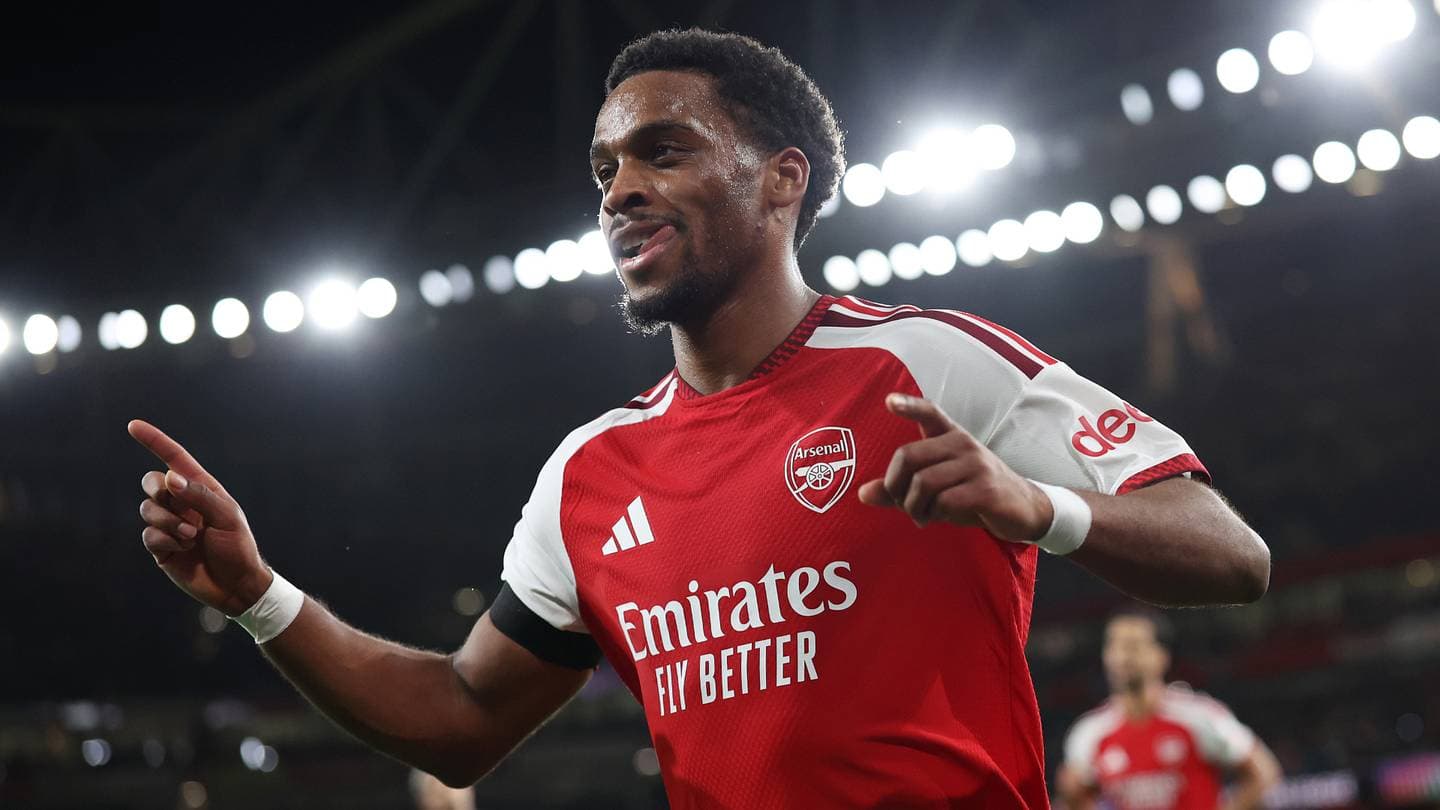
Now Max Dowman has taken the baton. Mikel Arteta brought him on against Leeds United in August 2025, making him the league’s second-youngest player. In March, Dowman broke James Vaughan’s record as the Premier League’s youngest scorer, slaloming through Everton at 16 years and 139 days. In May, he became the youngest title-winner in league history. This week, he joined Wayne Rooney in an exclusive club: only the second 16-year-old to score a brace for a Premier League side in a major competition, as Arsenal beat Ipswich 4-2.
Fourteen senior games already. Flair, power, end product. Arteta has compared him to Lionel Messi in terms of talent profile and is drip-feeding his minutes with care.
“We have to look after him. He’s 16 years old. You don’t see that in this league,” Arteta said after the Ipswich tie, stressing the physical and mental demands of English football and the need to place Dowman only in the right moments, with the right preparation.
For Gabriel, that is both inspiration and provocation.
Different bodies, different realities
Here is the blunt truth: Gabriel is not Dowman, physically.
Dowman already looks like he belongs in the Premier League’s collisions. Gabriel does not. He is slight, often the smallest player on the pitch. His grit and refusal to be bullied make up some of the gap, but not all of it.
Throwing him straight into the Premier League could spark fireworks. It could also blow up in United’s face.
Imagine he explodes on debut, scores, dazzles, lifts the crowd. From that moment, the pressure to play him every week would be relentless. Carrick would be asked, loudly and repeatedly, why the kid is on the bench when the first team is so short of inspiration in the final third.
Arteta can rotate Dowman in and out because Arsenal are a machine. The squad is deep, the system is stable, the results are consistent. If Dowman sits out a run of games, Arsenal still win. Nobody panics.
United are nowhere near that level of control. Performances swing wildly. If Carrick introduces Gabriel and then pulls him back, he will be branded too cautious, accused of stifling a generational talent. If Gabriel comes in and struggles, the same voices will turn, calling him overrated, overhyped, another false dawn.
That is why Carrick’s restraint has been quietly smart. Danny Simpson, a United academy graduate who broke through under Sir Alex Ferguson, sees it that way.
Speaking to GOAL courtesy of Free Bets, Simpson drew the contrast with Arsenal’s environment.
He recalled coming into a United side that was already cruising, often 2-0 or 3-0 up, surrounded by a “second XI” strong enough to win the league. That is Dowman’s world now, he argued: a flying team, dripping with top talent, where cameos are low-risk and high-reward.
United today, Simpson stressed, are different. The margins are thinner. The scrutiny is harsher. The safety net has gone.
His message was clear: let Gabriel train, let him feel the rhythm of the first team, and trust that his time will arrive.
Yamal, La Liga and the lure of fast-tracking
Dowman is not the only reference point.
Lamine Yamal’s story at Barcelona will be playing on repeat in Gabriel’s mind. Yamal debuted at 15 years, nine months and 16 days in 2023, a wisp of a winger in a league that prizes technique and possession over raw physicality. He was skinny, yes, but his speed and intelligence allowed him to dodge danger and dictate games.
La Liga’s tempo and style gave him room to breathe. The Premier League would not. Time on the ball is shorter. Contact is heavier. Mistakes are punished quicker.
From Gabriel’s perspective, Barca or Real Madrid might look like fast lanes to superstardom. The reality is more complicated.
When Yamal broke through, Barcelona were marching towards the La Liga title under Xavi but licking their wounds after a Champions League group-stage exit. Raphinha, Ousmane Dembele and Ferran Torres were not at their current levels. There was space in the hierarchy for a fearless teenager to crash the party.
That space has shrunk. Barca now boast Yamal, a peak Raphinha, Anthony Gordon, Karim Adeyemi and Gabriel Jesus across the front line. Real Madrid, under Jose Mourinho, can call on Kylian Mbappe, Vinicius Junior, Jude Bellingham and Yan Diomande. PSG and Bayern Munich are hardly short of attacking options either.
Where, exactly, does a 16-year-old Gabriel walk straight into that? He doesn’t. He waits. He watches. He fights for scraps of minutes – just as he would at United, only with a clearer path to a starting role in Manchester than at any of his suitors.
Timing, not just talent, will decide his trajectory.
Entitlement, standards and a line in the sand
For all the nuance, one hard line remains: Manchester United cannot allow themselves to be held hostage by a boy who is still 18 months away from his GCSEs.
Gabriel is special. That does not make him bigger than the club.
Carrick and the academy staff have handled him carefully so far, giving him responsibility at youth level, exposing him to senior training, resisting the temptation to throw him in just to appease the noise. They will continue to guide him if he re-engages. If he doesn’t, there is little sense in chaining him to a place he no longer believes in.
The longer this drags on, the more it distracts from United’s attempts to recover from a poor start to the season. Whether driven by advisers or his own impatience, Gabriel’s current stance smacks of a false sense of privilege.
The history of the club points the other way. George Best, Sir Bobby Charlton, Ryan Giggs, David Beckham, Paul Scholes, Gary Neville – none of them were gifted status. They earned it. They worked through setbacks, criticism, and the grind of proving themselves every single day.
Ruben Amorim, much maligned and eventually sacked in January, misjudged plenty in his short reign. On one point, though, he cut straight to the heart of the modern problem.
“There is a feeling of entitlement we have in our club,” he said in a press conference. Difficult moments, he argued, can be good for young players. They do not need constant applause. They need to stay, fight, overcome.
“Nowadays, they speak and go against the club because they feel entitled. Let’s stay. Let’s fight. Let’s overcome. That is the way we can solve things.”
Gabriel, right now, stands at that exact crossroads.
If he learns that lesson – that no one, however gifted, is bigger than the badge – he could yet light up Old Trafford for a decade. If he doesn’t, United may decide they are better off letting him chase the fast track abroad, and discover the hard way that the long road was the one that led to greatness.