The Manchester Derby VAR Controversy: A Call for Change
“Quick, quick, quick, quick! Go, go, go, go, go!”
In the heat of the Manchester derby, those words from video assistant referee Matt Donohue were meant to signal efficiency. Instead, they became the soundtrack to one of the most damaging VAR mistakes the Premier League has seen.
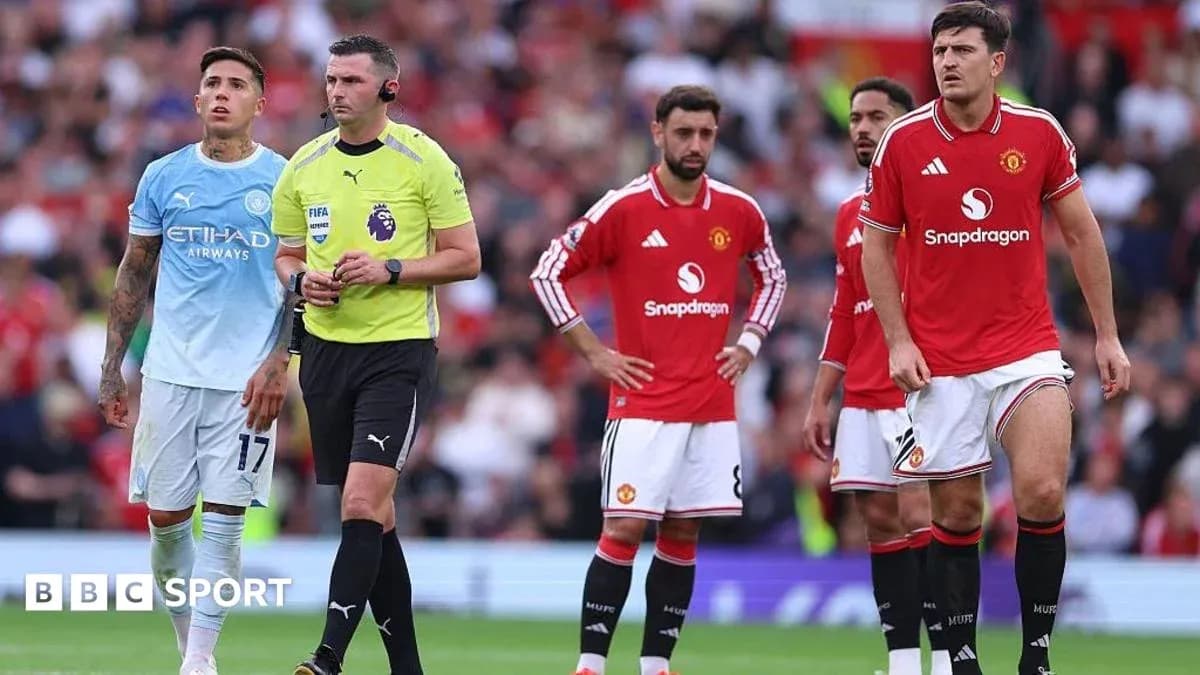
Erling Haaland’s late winner stood. Manchester City beat Manchester United 1-0. And Enzo Fernandez, three yards offside in the build-up, slipped clean through the net of a system built to catch precisely that.
Speed over sense
VAR has always lived in a goldfish bowl: every decision slowed down, replayed, dissected. The introduction of the technology was supposed to ease the pressure on referees. It has done the opposite.
This season, the Premier League even hard-wired “more efficient application of VAR to reduce delays” into its football principles. The message from boardrooms, broadcast studios and fan forums has been relentless: be quicker. Don’t kill the spectacle. Don’t drag the game to a halt.
So when Donohue’s voice crackled through Stockley Park – “Let’s go, let’s go, let’s go, let’s go!” – it sounded less like a measured official and more like a man racing a stopwatch. The exchange between VAR and replay operator wasn’t calm or clinical. It was rushed. It was frantic. It was exactly what a video review should never be.
The pressure is real. Managers complain. Supporters groan. Stakeholder surveys, which pool views from coaches, fans and clubs, keep circling back to one theme: make decisions faster. Delays are branded unacceptable.
But they are not as unacceptable as this.
The process breaks
On the numbers, Howard Webb can point to progress. VAR delays, including the time it takes for the referee to announce the decision to the stadium, have dropped from an average of 46 seconds per game to 36 seconds compared with last season.
Yet the only other acknowledged VAR blunder this campaign – the failure to award Arsenal a penalty at Aston Villa – also came from an incident waved through too quickly.
This is the core of the problem. Completing a check swiftly does not mean skipping steps. On Sunday, key steps simply never happened.
The crucial failure came even before Donohue began rushing through the attacking phase. As Josko Gvardiol swung in the cross, Donohue told the replay operator to freeze the first replay at the moment of contact. He then went straight to the semi-automated offside technology.
That is not how the system is supposed to work.
The VAR team should have watched the full sequence: from Gvardiol’s cross, through the chaos in the box, to Haaland’s header. Only then do you understand who is where, who intervenes, and who affects play. Only then do you see Fernandez, standing blatantly offside and attempting to head the ball.
They didn’t. The events inside the penalty area were effectively ignored until the attacking phase was narrowed down. By that point, Donohue and his assistant VAR, Blake Antrobus, were fixated on a single question: did Fernandez touch the ball? If he had, it would have created a new phase and left Haaland offside.
They were looking at the wrong problem.
Where was the safety net?
Donohue has taken most of the heat, but the role of Antrobus is just as stark. The AVAR exists as a safety net, a second pair of eyes to challenge, to question, to stop exactly this sort of oversight.
His entire contribution to the review was one line – “no, yeah” – about the possible Fernandez touch. One second later, Donohue confirmed: “final decision is goal, check complete.”
No wider check. No pause. No reset. No one asking: “Have we actually looked at everyone in the box?”
The support VAR, sitting in the operations room next to the match hub at Stockley Park, also had scope to intervene on protocol. They could see how quickly the review was being squeezed. They did nothing.
Even then, the situation was not beyond repair. The period between the goal being scored and the restart remains a window in which a decision can be corrected. That chance passed too.
For all the investment, all the training, all the simulation work poured into VAR by Pro Ref, this was a complete systems failure. Technology, process, people – all three buckled.
The specialist who slipped
This is not a story about an untrained official flung into a high-profile game. Donohue is exactly what many have demanded: a VAR specialist.
Three seasons ago, Pro Ref invited referees to step away from the pitch and focus on video work. Candidates went through aptitude tests, with around 15 reaching the final training stages. Ten of those have now operated in the Premier League.
Donohue is one of them. Sunday was his 65th match as the video official. His progress has been strong enough to earn a place on the international list, working on Uefa club competition qualifiers over the summer.
He has made mistakes before; almost every VAR has. The job is unforgiving, the margins microscopic. Across the last two seasons, only Nick Hopton and Neil Davies – both from the same accelerated programme – have a completely clean VAR record.
The idea of building a cadre of pure VAR officials is not new. The Premier League tried it with Lee Mason and Mike Dean after their on-field retirements. Webb removed both within months, their tenures undone by a series of high-profile errors.
Spain’s La Liga and its second tier go even further, using a full team of officials who only work in the video booth and never referee on the pitch. The controversies there are just as loud. At the start of last season, VAR in Spain failed to spot that a goalscorer was offside when the ball was played. Different league, same argument.
Specialists help. They do not guarantee anything.
Haunted by the clock
Antrobus’ own recent history adds another layer. The only truly lengthy VAR delay in the Premier League this season came in Brentford v Sunderland, when a Dan Ballard goal was chalked off for a subjective offside against Kevin Danso.
Antrobus was AVAR that day as well. The check dragged on for more than four minutes and drew heavy criticism in parts of the media.
Did that experience sit in the back of his mind on Sunday? Did the memory of being hammered for taking too long nudge him towards silence as the review raced by? No one can say with certainty.
The irony is sharp. In that Brentford game, Antrobus played a vital role in guiding VAR Tim Wood to the correct offside call against Danso. Slow, painful, but right.
Contrast that with West Ham’s stoppage-time equaliser at Arsenal last season. That review also took more than four minutes. The goal was ruled out. The outcome was correct. There was noise, but no crisis.
The lesson is obvious, yet football keeps ignoring it: the obsession with speed is starting to poison the well.
A football problem, not just a VAR problem
Pro Ref will now have to explain how, in one of the biggest fixtures of the season, a VAR team ended up racing through a review like a drill rather than a decision that could shape a title race.
The technology did what it was told. The training exists. The protocols are written. But when the culture around the game keeps screaming for everything to be faster, sharper, snappier, this is where you can end up: a three-yard offside missed in a room built to see everything.
The rush did not begin with Donohue’s shout of “quick, quick, quick.” It began the moment the sport decided that a 30-second delay is worse than a season-defining mistake.
How long before someone inside the game finally decides that getting it right is worth the wait?