Madring: F1’s Bold New Circuit in Madrid
Formula 1 rolls into a new playground this weekend, and it is no half-measure. The Madring, wrapped around the IFEMA Exhibition Centre on the edge of Madrid’s main airport, is the championship’s first fresh circuit since Las Vegas in 2023 – and it feels like a statement.
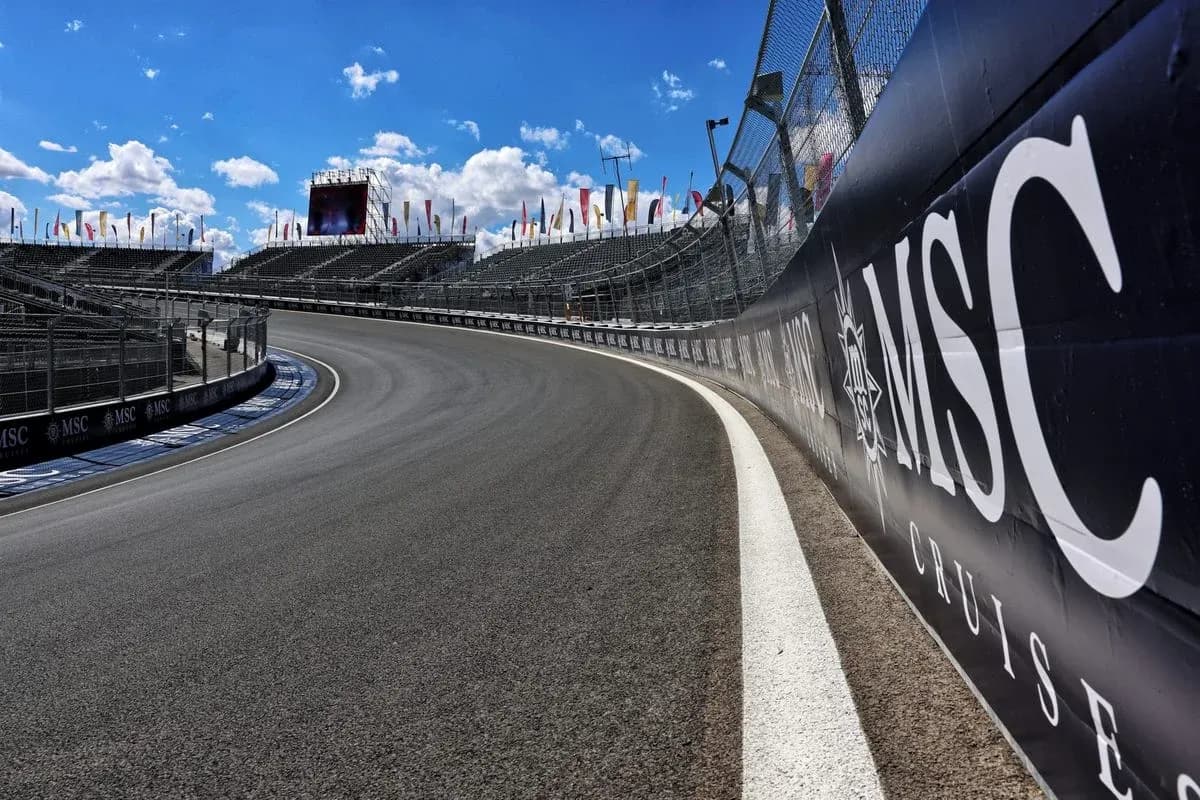
Yes, it carries the “street circuit” label. But that only tells half the story. One side snakes past exhibition halls and concrete walls, the other feels almost like a permanent facility, climbing and diving towards a showpiece banking that is already the talk of the paddock.
Walk the place once and one thing hits immediately: this venue wants to be a star, not just a backdrop.
La Monumental: the amphitheatre corner
Every new track needs an icon. Madring has La Monumental.
The vast banked right-hander has dominated every conversation since the first drawings leaked out. Drivers, engineers and Pirelli have all circled it as one of the most technically demanding corners of the entire season, not just this weekend.
Up close, it justifies the hype. The turn stretches to around 550 metres, sweeping around under grandstands that rise steeply above the asphalt. A huge hospitality complex sits on the inside, closing the space in. Stand there and it feels less like a corner and more like an arena – the kind of enclosed intensity you get on the start-finish straight at Interlagos.
The real question now is not whether it looks good. It’s whether it races well. If multiple lines are genuinely possible through the banking, this could become a corner that decides races, not just sells tickets.
Trouble lurking at Turn 5
La Monumental may own the headlines, but the drivers’ headaches could come from somewhere less glamorous.
Turn 17, a heavy-braking right-hander taken just after a fast left kink, will demand precision and nerve. Get greedy on the brakes there and the wall will punish you.
Yet the most likely flashpoint lies earlier in the lap: the Turn 5/6 chicane. F3 testing has already given a preview, and the tyre marks still etched into the asphalt tell their own story.
It arrives at the end of the quickest section of the track, a long, sweeping blast from Turn 3 that loads the cars up before snapping them into a fiddly change of direction. The kerbs demand respect. Attack them too hard and the car will skip and slide. Play it safe and you surrender time.
Then comes the sting. The barrier angle on the exit creates a pinch point that narrows the margin for error. One misjudged exit, one snap of oversteer, and the consequences could be brutal. If there is a corner that keeps race engineers awake this weekend, it is this one.
A street track without the bruises
Street circuits usually come with a warning label: bumps, patches, and hidden ridges that send ride heights skyward and unsettle even the best-prepared cars.
Madring breaks that pattern. The surface is silky smooth.
A lap on foot reveals fresh, uniform asphalt that should let teams run their cars low and stiff without fearing surprise undulations. The bumps that have blighted other temporary venues simply aren’t there in the same way.
Track limits, though, will still matter. In many places the walls naturally define the edge of the circuit. Where they don’t, painted kerbs step in to keep drivers honest. The FIA has added its now-familiar ribbed paint lines – the same visual and tactile cues used in Jeddah, Miami and Austin – to guide drivers towards staying within the white lines at high speed.
The cars might glide. The stewards’ radios will not.
A paddock on a different scale
The moment you step behind the pit garages, Madring delivers another surprise.
The paddock is enormous. Not just big – disorientingly big.
Because the garages sit inside the IFEMA exhibition complex, the usual neat, continuous row has been broken apart. Between Williams and Racing Bulls there is a 150‑metre void, filled by the media and TV pen. What is normally a few strides in a traditional paddock becomes a genuine walk; moving between those two teams takes more than two minutes.
Behind the garages, the layout fragments again. Trucks and engineering offices occupy one zone, hospitality another. Some outfits have been tucked inside air‑conditioned halls, shielded from the heat. Others, including McLaren and Mercedes, work outside under the sun, their operations spread across open spaces.
It feels less like a conventional paddock and more like a small village stitched into an exhibition centre. For teams used to the rhythm of a standard F1 weekend, even finding the right truck could be an early test of organisation.
A marathon pitlane with a sting at the exit
On track, the most striking piece of infrastructure is the pitlane. It is long. Very long.
Between the two speed‑limiter lines, the official distance stands at 562 metres. That alone will shape strategy. Pirelli reckons a stop will cost around 25 seconds, a figure softened slightly by the fact the pitlane does not rejoin at Turn 1 but merges later, at Turn 3.
The time loss is only part of the story. The exit itself demands nerve and concentration. Cars will accelerate hard out of the limiter zone and surge towards a right-hand concrete barrier before blending back onto the racing line at the exit of Turn 3. In traffic, with tyres still cold and drivers eager to defend or attack, that blend could become one of the more uncomfortable pieces of real estate on the circuit.
Short-fuel dashes and aggressive multi-stop gambles may look tempting on paper. The length of that pitlane will force teams to think twice.
The Madring does not feel like a tentative addition to the calendar. It feels like a purpose-built showcase dropped into a city, a hybrid of street spectacle and permanent-circuit ambition. The corners are bold, the paddock sprawling, the pitlane unforgiving.
Now the question is simple: when the lights go out in Madrid, will this new arena elevate the racing – or expose the bravest drivers and sharpest teams in the harshest possible way?