.svg&w=384&q=75 "logo")
Liverpool’s New Era: Old Questions Persist as Season Begins
The season has started, the Andoni Iraola era is officially underway, and yet Anfield still feels like a club stuck halfway through a job. Liverpool are up and running on the pitch, but off it, the clock is ticking loudly towards deadline day and the squad still has obvious gaps.
A first competitive home game for Iraola against Nottingham Forest looms on Saturday lunchtime. The League Cup kicks off soon after, the Champions League follows, and all of it arrives while Liverpool wrestle with a transfer window that has drifted rather than driven.
Supporters have been asking why. The answers paint a picture of a club with a plan that has been repeatedly knocked off course.
The Salah Successor That Got Away
The most pointed question is the one that has hovered over Liverpool all summer: why, with Mohamed Salah’s departure long signposted, are Liverpool still scrambling for a right winger in the final days of the window?
The truth is they didn’t wait to start. They went early.
Liverpool identified Yan Diomande at the start of the summer as their preferred successor on the right. The Ivorian was attainable, keen on the move and, crucially, viewed as the long-term solution to the Salah problem. Encouragement was given. Encouragement was received.
Then RB Leipzig named their price. Liverpool balked. So did Paris Saint-Germain. Real Madrid didn’t.
Diomande, having drawn interest from Liverpool and PSG, ultimately used that leverage to secure his move to the Bernabeu. He is not the first player to do it and will not be the last, but it left Liverpool exposed and short of time.
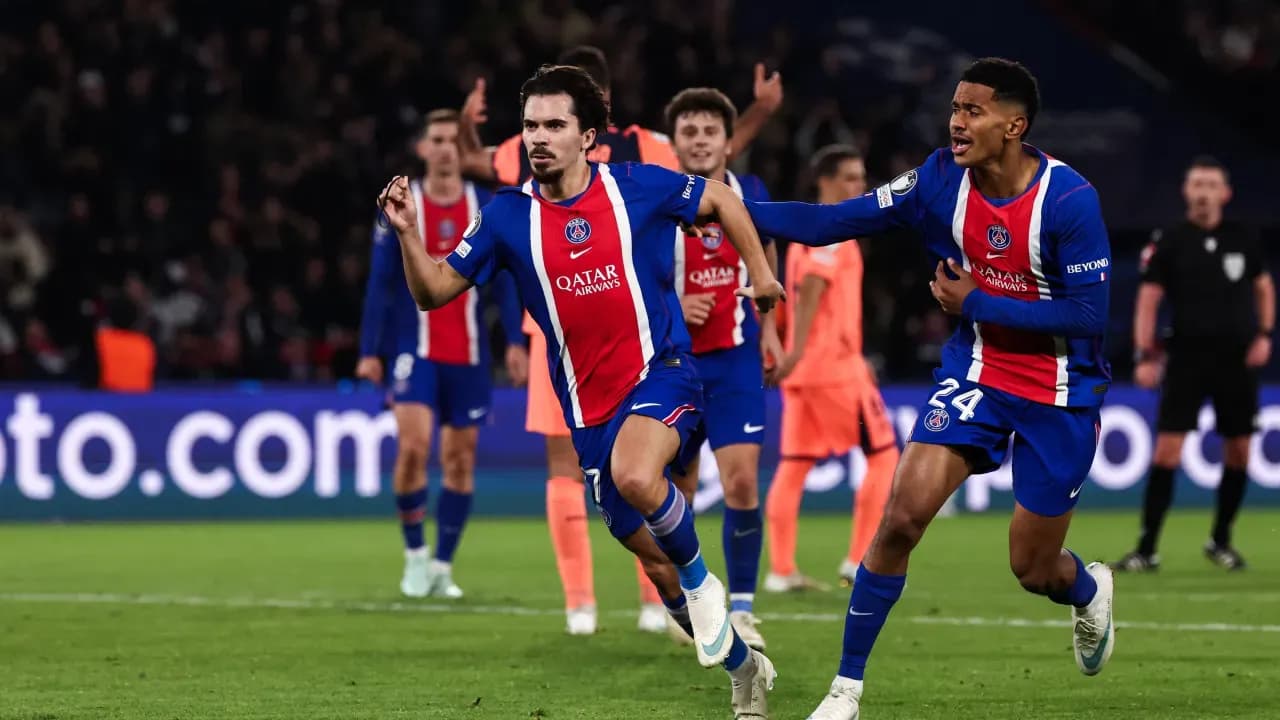
The setback was compounded by PSG’s stance on Bradley Barcola. Liverpool saw the Frenchman as another way to bolster their attack, yet PSG demanded big money and refused to budge. Two primary options, two blocked paths.
The result? A club of Liverpool’s stature now hunting for a right winger with only days to spare. They are not alone in leaving business late in this Premier League window, but it does little to calm a fanbase that has watched the Salah succession plan drift from clear to chaotic.
Iraola’s Midfield: No Fixed Best, Just the Right One
Another pressing concern: the lack of a defensive midfielder. The signs are clear — unless something dramatic changes, Liverpool will go into the season without a specialist holding player signed for Iraola.
So what does that mean for his midfield?
Under Iraola, as under Jurgen Klopp, the idea of a fixed “best” midfield may not exist. It is likely to be a game-by-game puzzle rather than a permanent picture, a horses-for-courses approach shaped by opposition, schedule and form.
Three names stand out for the deeper roles: Alexis Mac Allister, Ryan Gravenberch and Dominik Szoboszlai. Those three are contesting the two defensive midfield slots most often, with Szoboszlai also the obvious alternative to Florian Wirtz in the number 10 role.
Beyond them, the options thin quickly. Wataru Endo has started only two Premier League games in more than two seasons. Trey Nyoni carries real promise but remains a teenager yet to start a top-flight match. The gap between what Liverpool need and what they currently have in that position is obvious.
From a purely footballing perspective, the logic is simple: this squad still needs a defensive midfielder. That has been the case for more than a year. The risk of ignoring it again is just as clear.
Hughes on the Move, and Another Big Call Upstairs
The uncertainty is not limited to the pitch. Behind the scenes, Liverpool are braced for another key departure.
There is a growing expectation that sporting director Richard Hughes will leave his role once the summer window closes, with Saudi Pro League side Al Hilal his most likely destination. If that happens, it will mark yet another change in a position that has been anything but stable in recent seasons.
As for a replacement, no obvious successor has been lined up. One internal option would be Julian Ward, currently technical director at Fenway Sports Group and previously in the sporting director role at Liverpool. For now, though, there is no indication that a handover has been prepared or agreed.
At a time when long-term squad planning is under the microscope, the prospect of another reset in the recruitment department only adds to the sense of unease.
Gakpo, Isak and a Thin Line in Attack
Up front, the questions keep coming. With Alexander Isak leading the line, supporters are asking what happens if he is unavailable — and why Liverpool would even consider selling Cody Gakpo in the current climate.
On paper, Liverpool should be adding forwards, not losing them. Entertaining the idea of Gakpo’s departure feels counterintuitive unless the push is coming from the player himself. Given some of the criticism he faced from sections of the fanbase last season, a desire for a fresh start would be understandable.
The Dutchman’s response, though, has been emphatic. He has started the season like a man intent on staying and proving a point. His movement, his work-rate, his involvement all suggest a player who sees a future for himself at Anfield.
If he were to leave, Liverpool’s margin for error in attack would shrink dramatically. One of the expected two forward arrivals would almost certainly have to operate as permanent backup to Isak, at least until Hugo Ekitike returns. That is a thin plan for a campaign that will stretch across four competitions.
Injury Room: No Quick Fixes
The injury list offers little comfort either. Giovanni Leoni, Joe Gomez, Hugo Ekitike and Conor Bradley are all sidelined, and none has a firm, publicly defined return date.
Ekitike has talked about Boxing Day as a target for his comeback. Even if he hits that date, the severity of his Achilles injury suggests that the real version of Ekitike — sharp, explosive, fully confident — may not be seen until next season.
Bradley has been missing since early January. Liverpool are determined not to rush him, wary of overloading a young right-back coming off a lengthy absence.
Leoni is edging closer to a return to first-team training after almost a year out, but he too will be handled with extreme caution. Minutes will be carefully rationed before Christmas.
Gomez looks the likeliest to return first, yet even that comes with a warning sign. He has already been out for a month, and his history means every absence is watched with concern.
Why the Negativity?
So why does the mood around Liverpool feel so flat, so early?
The answer lies in the gap between what was expected and what has actually happened. Everyone knew months ago where the squad needed help: a right winger to succeed Salah, a defensive midfielder to anchor the side, depth across the forward line. Those issues remain only partially addressed, if at all.
On the pitch, the mistakes in the opening game at Newcastle United were painfully familiar. The same lapses, the same vulnerabilities that haunted Liverpool a year ago resurfaced, and the lack of fresh faces in key areas has made it harder for supporters to believe that this season will be different.
That could still change in the final days of the window. A late surge of smart business would alter the mood quickly. But there is a hard, new reality taking hold around Anfield.
For the first time in years, very few people genuinely expect Liverpool to challenge for the title.
Iraola’s job, starting with Nottingham Forest at home and rolling into a relentless schedule, is to prove that assumption wrong with a squad that still looks one or two big decisions short of complete.