Liam Lawson’s Formula 1 Future: Red Bull's Next Star?
Liam Lawson’s Formula 1 future has gone from slow-burn subplot to one of the sharpest talking points of the 2026 driver market.
Thirteen seats on next year’s grid are already locked in. Of the remaining nine, most look like formalities waiting for signatures. Stability, on paper at least, should be the theme.
Red Bull, as usual, refuse to play along with that script.
Red Bull’s four seats, one certainty
Across the senior Red Bull team and Racing Bulls, only one name is written in ink: Max Verstappen. Everything else is pencil.
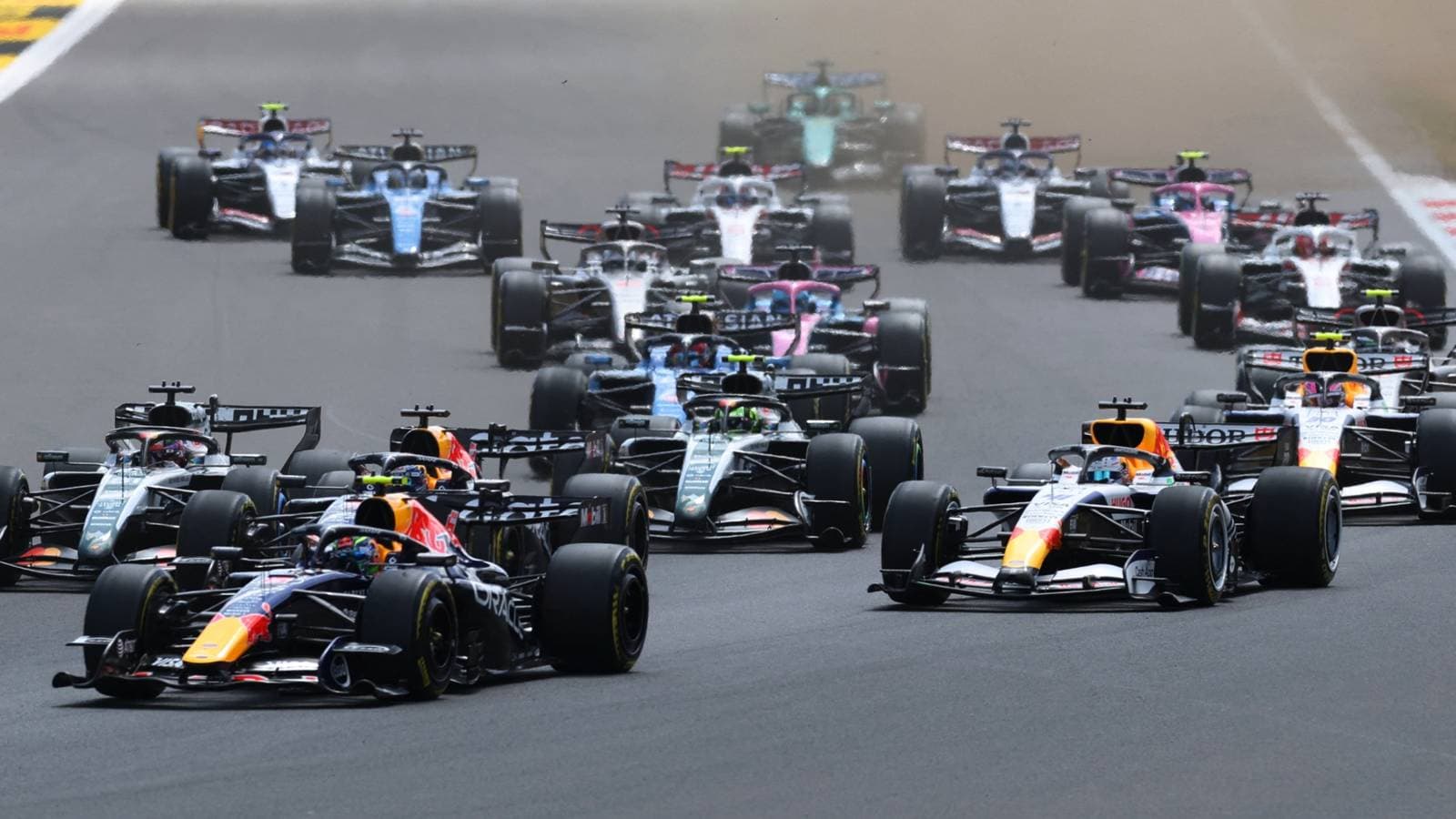
Behind the scenes, the picture is clearer than the public noise suggests. GPblog understands the current structure is expected to roll on: Isack Hadjar stepping up to partner Verstappen at Red Bull, with Lawson staying put at Racing Bulls alongside Arvid Lindblad.
That keeps Lawson on the grid. It does not, however, answer the bigger question: is he a future Red Bull race winner, or a dependable stopgap in the wider machine?
Right now, that argument is raging in the paddock.
Rosberg lays down the Red Bull standard
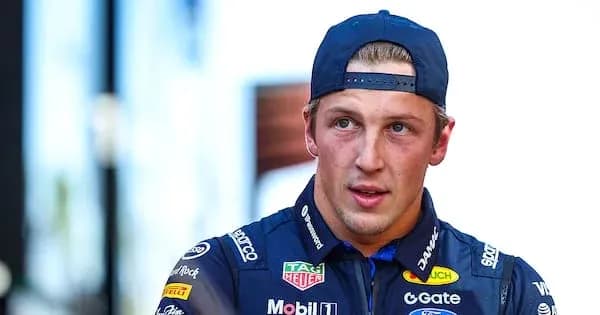
Lawson has been thrust back into the spotlight by circumstance, subbing for the injured Hadjar in the last three Grands Prix. The results have been solid rather than spectacular: seventh at Zandvoort, 14th at Monza, sixth in Madrid. Points on the board, composure under pressure, but no headline-grabbing miracle drive.
For Nico Rosberg, that’s not enough for a team that measures itself in world titles, not top tens.
“That's certainly a difficult decision,” the 2016 world champion said on Sky F1. “They do need to decide at some point.
“The thing for Red Bull, though, is they're looking for the next Max Verstappen and the next Sebastian Vettel.
“Everything else is just not good enough. At the moment, I'm not sure that Liam Lawson would be considered at that level with what he's been producing so far.
“With Lindblad and also Hadjar, it's still possible in the discussions for them.”
Rosberg’s point cuts to the heart of Red Bull’s identity. This is the team that fast-tracked Vettel, that threw Verstappen into the deep end at 18 and watched him tear the sport open. In that context, “good” is almost a criticism. Red Bull traditionally chase the freak talents, not the slow burners.
Mekies pushes back
Inside the Red Bull camp, the tone is very different.
Lawson’s stand-in run has given Laurent Mekies, Red Bull team principal and CEO, a fresh sample size to judge. He didn’t hesitate.
“I think he's done a very good job,” Mekies said. “I think we all know how difficult it is to jump to a different team, to a different car, and I think that he has done that to the best of what could have been our expectations.
“He has taken some very important points today with the P6. He did the same in Zandvoort and in Monza he would have done something similar without the contact with Nico [Hulkenberg] and the front wing damage.
“So, I think he did a very good job, again very different pictures compared to the first two races of 2025 when he was in the team so we are thankful and happy with that.”
That is not the language of a boss unconvinced by his driver. Mekies leans heavily on context: the challenge of switching cars, the value of “important points”, the sense that Lawson has grown since his earlier stint in 2025. Where Rosberg sees a ceiling, Mekies sees progression.
A different Red Bull, a different timeline
Strip away the names and this is an old Red Bull story: a young driver under the microscope, every lap weighed against the ghosts of Verstappen and Vettel. Yet there is a crucial twist.
This is not the Christian Horner and Helmut Marko era.
Under that regime, Red Bull’s junior system was ruthless. Drivers were promoted fast, demoted faster, and often discarded the moment their shine dulled. The bar was sky-high and the patience razor-thin.
Today’s Red Bull is shifting. The structure, the leadership, the tone around its young drivers all feel less trigger-happy. Mekies’ public defence of Lawson underlines that change. So does the expectation that the current line-up will be kept intact across both teams.
Lawson’s immediate future appears safe. The longer view is where the intrigue lies. Can a driver who builds his case over steady weekends, rather than explosive breakthroughs, really become the face of a team still obsessed with finding “the next Max”?
For now, Lawson keeps scoring, keeps learning, keeps buying himself time. In this new Red Bull, that time might just be the most valuable currency he has.