Leclerc and Hamilton: A Rivalry Without a Title
At Monza, the names were familiar, the script less so.
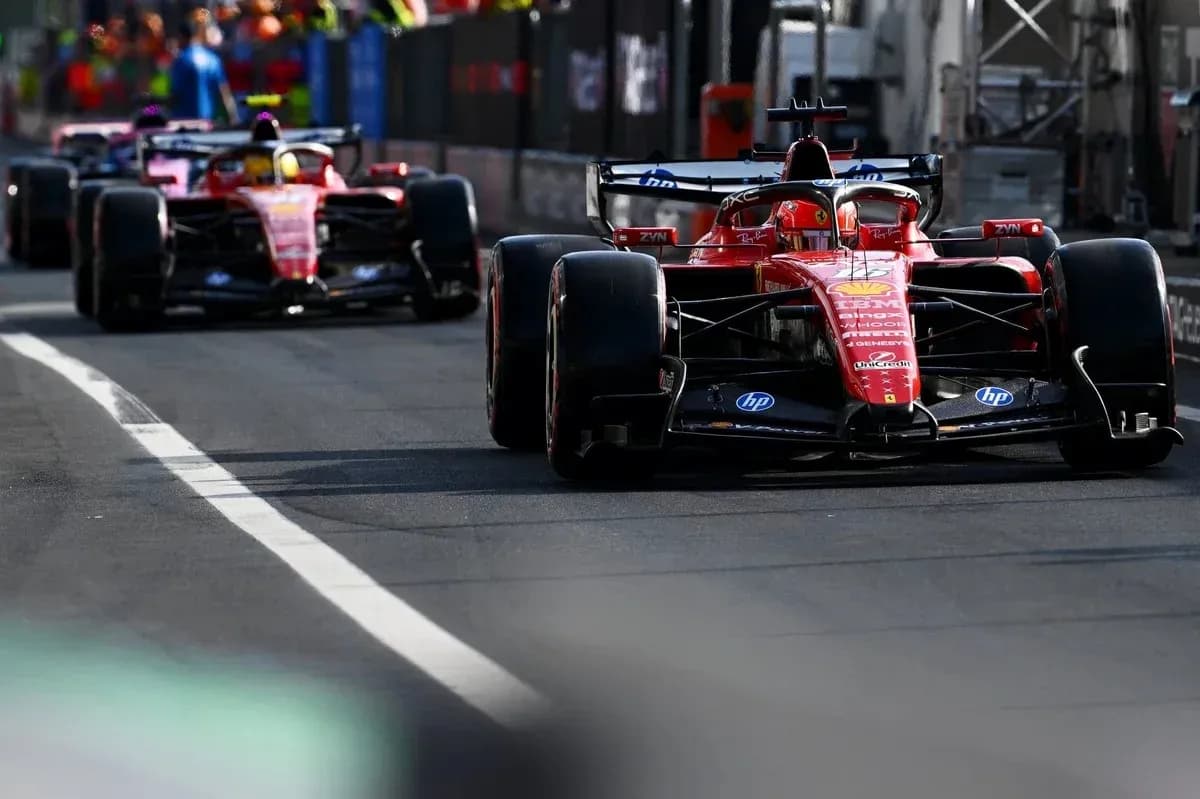
Charles Leclerc and Lewis Hamilton clashed in red, on and off the track, in a way that doesn’t quite fit the usual logic of Formula 1’s great intra-team wars. The gestures, the radio barbs, the tension in the paddock corridors – all of it echoed the sport’s fiercest duels. The stakes, though, simply do not match.
That is the paradox.
A rivalry without a title
The history of Formula 1 is littered with team-mate feuds that burned for a reason. Ayrton Senna and Alain Prost. Nigel Mansell and Nelson Piquet. Mark Webber and Sebastian Vettel. Nico Rosberg and Hamilton. Every one of those battles erupted when both drivers sat in machinery capable of delivering the world championship. The equation was brutally clear: beat the man across the garage, or lose the biggest prize in the sport.
Even the modern benchmark for intra-team conflict, Rosberg versus Hamilton, followed that logic. In 2013, Hamilton’s first year at Mercedes, the W04 was quick but not a title-winning weapon. Hamilton took one win, Rosberg two, and the relationship remained warm. They shared dinners in Monaco. They shared data. The tension stayed manageable.
Then came 2014 and the first dominant Mercedes hybrid. Overnight, the car turned them from friends into combatants. Every race win mattered. Every corner became a test of hierarchy. The title transformed a cordial partnership into an arms race.
With Leclerc and Hamilton at Ferrari, that motive is missing.
Ferrari can talk about titles, about long-term projects and relentless effort at Maranello. The reality of 2025 tells a different story. The numbers do not place this team in a genuine world championship fight. The season’s narrative does not, either. These are not two drivers trading blows at the top of the standings, with a title swinging on each decision.
They are fighting hard. But not for a crown.
No contracts to win, no crumbs to fight over
Strip away the emotion of Monza and the picture becomes even stranger.
There is no contract battle simmering beneath the surface. No looming renewal to weaponise, no number one status to secure. Both Leclerc and Hamilton know where they stand at Ferrari and what their future looks like through 2027. Their positions are guaranteed. Their salaries are more than comfortable. The paddock joke about “two stars fighting over crumbs” misses the point entirely.
This is not about survival.
Both men are paid – very well – to deliver for Ferrari. Not for themselves. Not for their fanbases. For the team. They are established, elite drivers, and from that level you expect a certain perspective: an understanding that when the car is not a title contender, the priority must be to maximise points, minimise damage, and avoid turning internal friction into yet another handicap.
That is why Monza jars. Not because the clash was the worst we have seen between team-mates – it was not – but because the underlying justification is so hard to pin down.
Shifting status inside the garage
Look deeper and the human element starts to show.
Hamilton spent the whole of last season swallowing frustration. Week after week he watched Leclerc extract more from the car, qualify ahead, finish ahead, and build a reputation as the man dragging Ferrari forward. The seven-time world champion endured it, but it stung.
Now the picture has flipped. Hamilton has rediscovered his edge and sits comfortably ahead of Leclerc in the standings. He is driving with the air of a man who feels he has a point to prove – to the paddock, to the team, and yes, to the younger star in the other car.
Leclerc, for his part, came out of last year with his status enhanced. Beating Hamilton across a season, in the same machinery, carries weight. It changed how he was perceived inside Ferrari and outside it. Twelve months on, that authority is under pressure. The man he outperformed is now the benchmark again.
It is not hard to see how that shift can grate. Pride is not a midfield luxury; it lives at the front of the grid too.
Yet this kind of edge usually belongs lower down the order. In the midfield, one podium can define a career. One mistake can close doors. There, beating your team-mate at any cost can be a matter of survival. Contracts are short. Patience is shorter. Every lap feels like an audition.
Leclerc and Hamilton do not live in that world. Their futures are secure. Their reputations are built. Which brings the question back, stubbornly: what, exactly, are they risking this much for?
Vasseur’s problem to solve
Now the responsibility sits squarely with Frédéric Vasseur.
Ferrari’s team principal already tried to get ahead of the storm. He met both drivers in his office at Monza before the race, laid out expectations, and attempted to draw a line. The events on and around Sunday suggest that meeting did not quite land as intended. A second conversation looks inevitable.
The principle he must hammer home is brutally simple: the team comes first. Always. Especially when there is no world championship within reach.
A sharp internal rivalry can be a weapon when channelled correctly. It can drag a team forward, force engineers to find more performance, and push both drivers to new heights. Senna-Prost and Hamilton-Rosberg both drove their teams to levels of excellence they might never have reached without that internal fire.
But when the car is not in that window, the calculation changes. If the fight starts to cost points instead of generating them, if it creates tension instead of momentum, it stops being an asset. It becomes a liability.
Ferrari already has enough problems to solve: closing the gap to the front, stabilising performance, building a consistent platform for the future. The last thing it needs is a civil war that drains energy and focus from the one thing that truly matters.
The tifosi at Monza came to see two red cars attacking the field, not each other. The question now is whether Ferrari can turn this simmering duel into a tool for progress, or whether it lets another season slip away while its stars wage a battle with no title at the end of it.