.svg&w=384&q=75 "logo")
Charles Leclerc's Commitment to Ferrari and Fred Vasseur
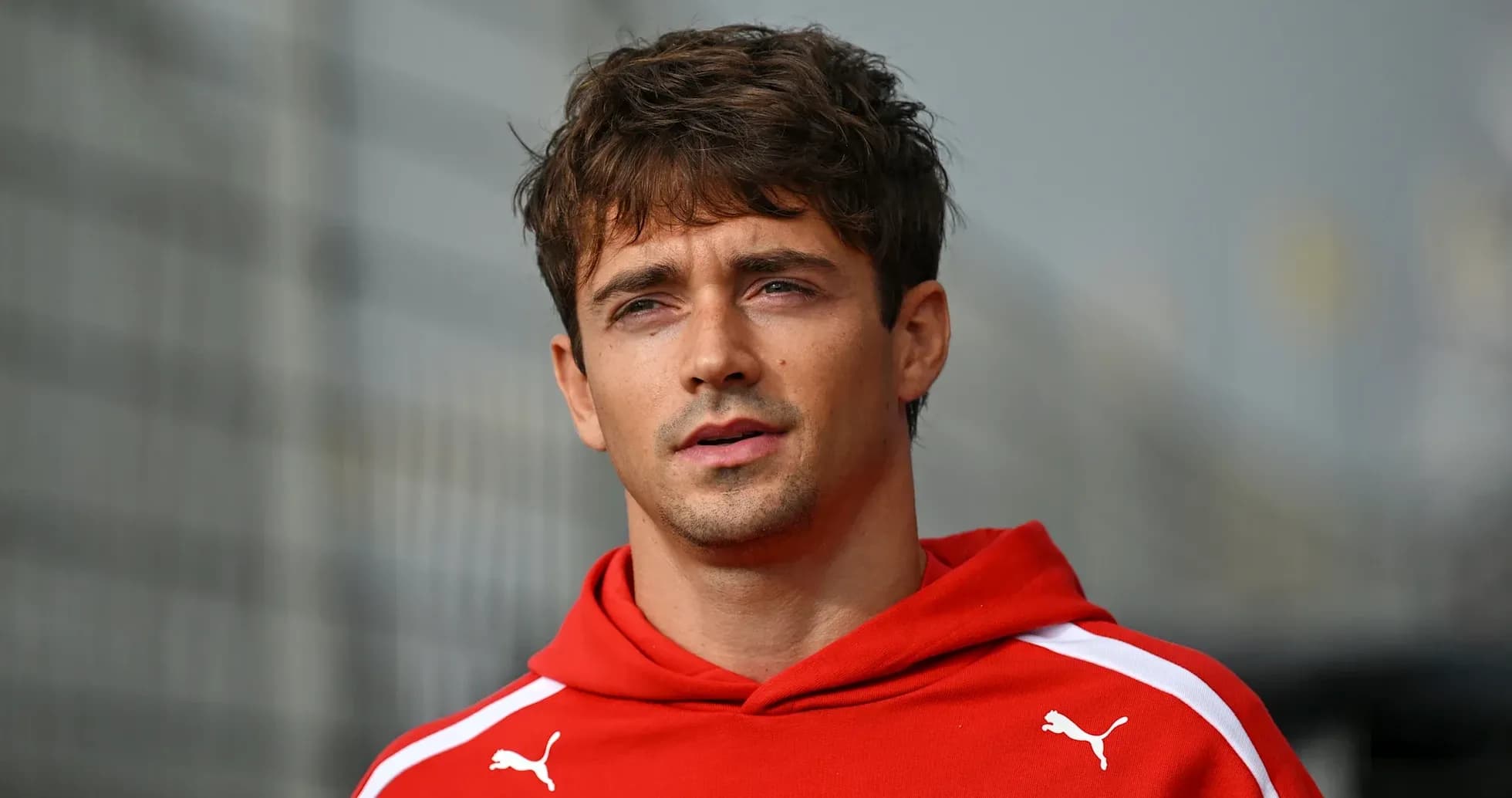
Charles Leclerc says he never really hesitated. In a season that has already thrown him two DNFs, a bruising P8 in Monaco and the sight of Lewis Hamilton winning in red, the Monegasque chose commitment over doubt. He signed on again with Ferrari – and, in his mind, the decision came down to one man as much as one team.
“I believe in Fred 200 per cent,” he said on F1’s Beyond The Grid podcast. That belief in Team Principal Fred Vasseur, he admitted, was a “big reason” why he put his name on a new multi-year deal that keeps him in red for the “coming seasons”.
‘This is where I belong’
Leclerc’s relationship with Ferrari has always carried a sense of destiny. He joined the F1 team in 2019, but his links to the Ferrari family stretch back much further. The emotional pull remains powerful.
“It just felt right,” he explained. “For me, this is where I belong, for now. This is where I feel good. This is where I am the most motivated to do well, just because I love this team so much.”
The target has never changed. World champion, yes – but specifically world champion with Ferrari.
“I don't want to give up on my ultimate goal, which is to become a World Champion with Ferrari,” he said. “I believe in the project, I believe in every single person of the team.”
That belief is rooted in what he sees behind the scenes in Maranello. Leclerc talked about a more aggressive Ferrari, one that is pushing hard on development.
“We are in a year where we've been showing innovation. We are very aggressive also in the production plan and in the upgrades we are bringing. That gives me lots of hopes for the future.”
Vasseur, the anchor
Amid the turbulence of results, Vasseur has become Leclerc’s constant. The pair go back years, long before they reunited at Ferrari, and that history now underpins Ferrari’s future.
“Fred is a big reason why I have signed again as well,” Leclerc said. “We've known each other for many years now and to be able to work with him in the team I've always loved is a privilege.”
The bond, he stressed, goes far beyond a standard driver-boss dynamic.
“It feels like I know Fred since forever. He's the kind of person that you speak once and, I don't know, I think it's the values. There's just something that was naturally working from the beginning and you cannot quite explain that.
“From the very first talks, it felt like I've known him forever. So, obviously, the bond is stronger than just a work, business relationship.”
For Leclerc, that sense of trust stripped away any hesitation.
“So, for me, I had no doubt that this was the right decision for me.”
Hamilton flying, Leclerc searching
While Leclerc wrestled with inconsistency in the first half of 2026, Hamilton found an early groove in Ferrari red. The seven-time world champion banked two P2 finishes in Canada and Monaco, then delivered his first Ferrari victory in Barcelona.
On the other side of the garage, Leclerc hit a rough patch. Two retirements, that low-key eighth place at home in Monaco, and a car that refused to speak his language.
The temptation from the outside is obvious: copy Hamilton. Inside the cockpit, it is not that simple.
“It's not as easy as, ‘Oh, Lewis is doing that. I'll just do the same,’” Leclerc said. “Lewis is an incredibly talented driver and has a natural driving style that is his and he's the best in the world for that particular driving style.
“To reproduce that is very tricky.”
So he went another way. Rather than bending himself entirely around Hamilton’s approach, Leclerc pushed Ferrari to tune the car closer to his own instincts.
“I tried to push more into trying to find ways to have this car a bit more fitted to my driving style. I found a few things in the data that was just not working.”
The data, though, only goes so far.
“In Formula 1, it's not always black and white,” he added. “It's not like you sit in front of your computer, look at the data and say, ‘Oh, this is one tenth and a half of a second. Let's change that.’ It's not as easy as that. It's intuition. It's feeling.”
He looked for the areas that made him uneasy in the cockpit.
“It's things that you might think, ‘Okay, this is what makes me a bit less comfortable in the car. And if I improve that feeling, then performance will come.’”
Silverstone shift and the war on overthinking
The breakthrough came at Silverstone. Ferrari made changes that weekend, Leclerc felt the difference, and he converted it into victory. It was more than a single result; for him, it was proof that he had finally nudged the car in the right direction.
He called it a move in the “right direction” and has tried since then to protect that feeling rather than dissect it to pieces.
“The car is constantly changing so it's not like I can really go back to that feeling I had in Melbourne, so it's evolving but my goal is to get into the car and not overthink,” he said.
He is convinced that the mind can be as much an enemy as a weapon in modern F1.
“When you overthink, you know that you are losing time on the table because our sport is not a lot about reacting on what's happening on the car. It's more about anticipating and feeling the car.
“Getting into a corner, I need to know exactly the way the car will behave so I don't have to overthink about things. I think overthinking is killing performance.”
What he wants is that elusive “flow state” drivers talk about – the sweet spot where instinct takes over and the car feels like an extension of the body.
“When things come naturally, that's where I think the flow state that we speak about, racing drivers or athletes as well, the flow state when things just flow naturally is really where you use 100 per cent of your potential. When you've got to overthink things, that’s where it becomes trickier.”
Chasing Mercedes, one upgrade at a time
For all the internal progress, the standings remain blunt. Ferrari sit second in the constructors’ championship, 87 points behind Mercedes. The gap is big, but the regulations have turned development into a weapon that can transform a season in a matter of weeks.
Leclerc knows that, which is why he refuses to get dragged into predictions.
“It's very difficult to predict” whether Ferrari can catch Mercedes, he admitted. “It’s not something I really want to put energy towards thinking about too much.”
He sees this championship as one that will be decided in the wind tunnel and on the factory floor as much as on Sunday afternoons.
“This championship will be won with upgrades. The upgrades are so powerful with these cars,” he said. “We've got a lot less downforce than we used to in the past, so every point of downforce you add to this car has got a much bigger influence on how the car feels like on track. So the pecking order can change so quickly one way or another.”
His response is to narrow his focus.
“I'm very much focused race by race and not really thinking about the long-term picture about if we've got a real shot with that championship. But surely until it's not finished, I'll keep believing in it and we'll see how it goes.”
The dream, though, is never far from the surface.
“The championship is something that I will dream of ticking off one day, particularly with the red team, this has been a dream of mine since many years. I feel we are getting closer. When will that be? I don’t know, I hope as early as it can be.”
For now, he leans on faith – in the car, in the project, and above all in the man leading it. If Ferrari do finally drag themselves back to the top, Leclerc has made it clear: Fred Vasseur will be at the heart of it, and so will he.