Le Classique: Marseille vs PSG Showdown at Stade Vélodrome
On 20 September 2026, at 18:45 GMT, the Stade Vélodrome will do what it does better than almost any ground in Europe: roar, rage and rattle as Olympique de Marseille welcome Paris Saint‑Germain for a Le Classique loaded with early‑season tension.
This is Matchweek 5 of Ligue 1, but it already feels like a crossroads.
Marseille on Edge, Marseille on Alert
Bruno Génésio brings his team home with scars still fresh. Two league defeats in a row, both of them stinging in different ways, have stripped away any illusion of comfort.
In Rennes on 11 September, Marseille were undone by a single moment. A tight, tactical first half gave nothing away, then Adrien Thomasson struck in the 52nd minute. One lapse, one finish, and a 1–0 defeat that underlined the fragility of a side still searching for defensive certainty.
That loss came straight after something more alarming: a 3–2 home reverse against Paris FC. Conceding three at the Vélodrome to a visiting underdog cut deep. It wasn’t just about points; it was about identity, about a back line that suddenly looked far too easy to get at.
Génésio now leans heavily on the firepower at the other end. Amine Gouiri, Igor Paixão and Timothy Weah give Marseille a frontline with pace, invention and edge. They will need all of it, and then some, against a PSG side that arrives with its own rhythm and renewed swagger.
The numbers tell a blunt story. Across their last five games, Marseille have one win, one draw and three defeats. Eight goals scored, seven conceded. A 4–0 demolition of Strasbourg stands out as the lone emphatic performance in a run otherwise defined by inconsistency and frustration.
That is the backdrop to Sunday night. A proud club, in a feverish stadium, trying to slam the brakes on a slide before it becomes a pattern.
PSG Smell Blood – and Momentum
Luis Enrique’s PSG head south with the opposite feeling: momentum finally starting to build.
At Brest on 13 September, they did something champions often have to do – suffer, then steal away with the points. Ferran Torres struck early, in the fourth minute, and PSG clung to that 1–0 lead with a mix of control and resilience that had been missing in previous weeks. It was their first Ligue 1 win of the campaign, and it mattered.
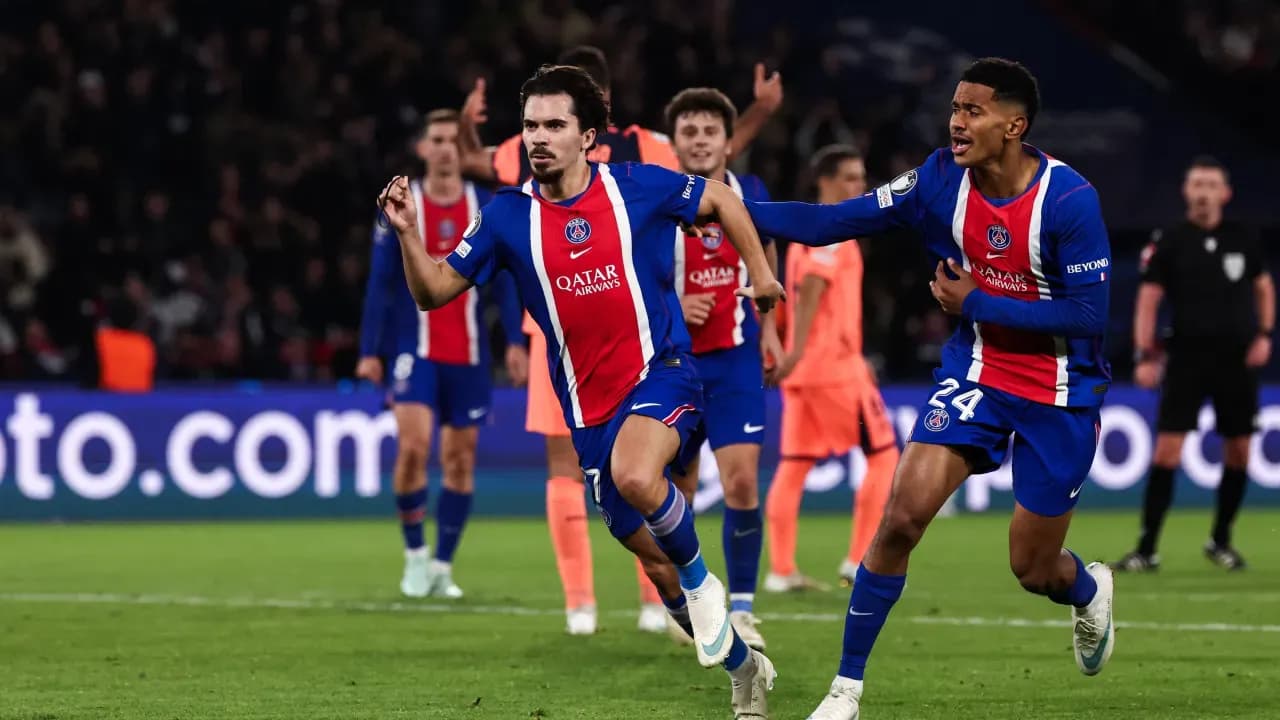
Then came the statement. In midweek, ŠK Slovan Bratislava were swept aside 6–1 in the Champions League. The scoreline told of a side that had found its cutting edge. Ousmane Dembélé stretched the game, Vitinha knitted attacks together, and PSG’s attacking patterns suddenly looked sharp, almost ruthless.
Their recent form reads two wins, two draws, one defeat in the last five. Thirteen goals scored, six conceded. The blemish remains a 2–1 home loss to Monaco, a reminder that this PSG is not bulletproof. But the direction of travel is clear: they are accelerating, not stalling.
For Luis Enrique, this trip is about more than just a rivalry. It is a chance to turn a good week into a defining one, to convert early sparks of form into a genuine surge up the table.
Midfield Battle: Engines vs Architects
Le Classique rarely needs extra spice, but this one has a clear tactical fault line: the middle of the pitch.
Marseille will lean heavily on the grit and drive of Pierre‑Emile Højbjerg. He sets the tone, snapping into duels, closing lanes, dragging his team up the pitch. Alongside him, Angel Gomes offers a different rhythm, able to turn a loose ball into a quick transition, to thread passes into space for Gouiri, Paixão or Weah.
Their job is simple to describe, brutal to execute: disrupt PSG’s build‑up at source. Break the patterns. Turn possession football into a scrap.
On the other side, PSG trust the fluidity of João Neves and Warren Zaïre‑Emery. Neves brings calm and clarity, always available, always ready to shift the ball into dangerous areas. Zaïre‑Emery drives through lines, a midfielder who can change tempo with a single surge.
If they dictate the rhythm, PSG can drag Marseille’s backline into the open field, where gaps appear and Dembélé, Vitinha and Torres thrive. If Marseille’s midfield can turn that rhythm into chaos, the Vélodrome will feed off every interception, every tackle, every counter.
This is where the match breathes.
Wounds, Absences and the Edge of a Crowd
Both managers arrive with at least one key piece missing.
Marseille must cope without Tochukwu Nnadi, ruled out through injury. Génésio has no suspensions to navigate, but the absence trims his options in a squad already looking for balance.
PSG travel without Achraf Hakimi, also sidelined. His absence robs Luis Enrique of a natural outlet on the right, a full‑back who stretches play and pins opponents back. There are no suspensions in his camp either, yet the loss of Hakimi subtly reshapes the way PSG can attack wide.
The Vélodrome, of course, does the rest. Few fixtures in France carry the emotional weight of this one. The rivalry is raw, long‑running, and unforgiving.
History Leans One Way, Memory Another
Recent history tilts heavily towards Paris.
The last meeting, on 8 February 2026, ended in a brutal 5–0 PSG win in the capital. Across the last five clashes, PSG have taken three victories and one draw. The aggregate scoreline, 11–4 in their favour, reads like a warning.
Yet Marseille cling to one precious reference point: September 2025, a 1–0 home win in this very fixture. On that night, the stadium became a force of nature, and PSG buckled.
That memory hangs over this edition of Le Classique. PSG know what it is to be suffocated here. Marseille know what it feels like to flip the script, even when the form book screams the opposite.
So the question is not whether the rivalry still burns. It is whether Marseille’s passion and volatility can derail PSG’s growing fluency, or whether Luis Enrique’s side will walk into the storm, hold their nerve, and turn the Vélodrome into just another stage for their ascent.