Kendry Paez's Journey at Chelsea: From Prodigy to Project
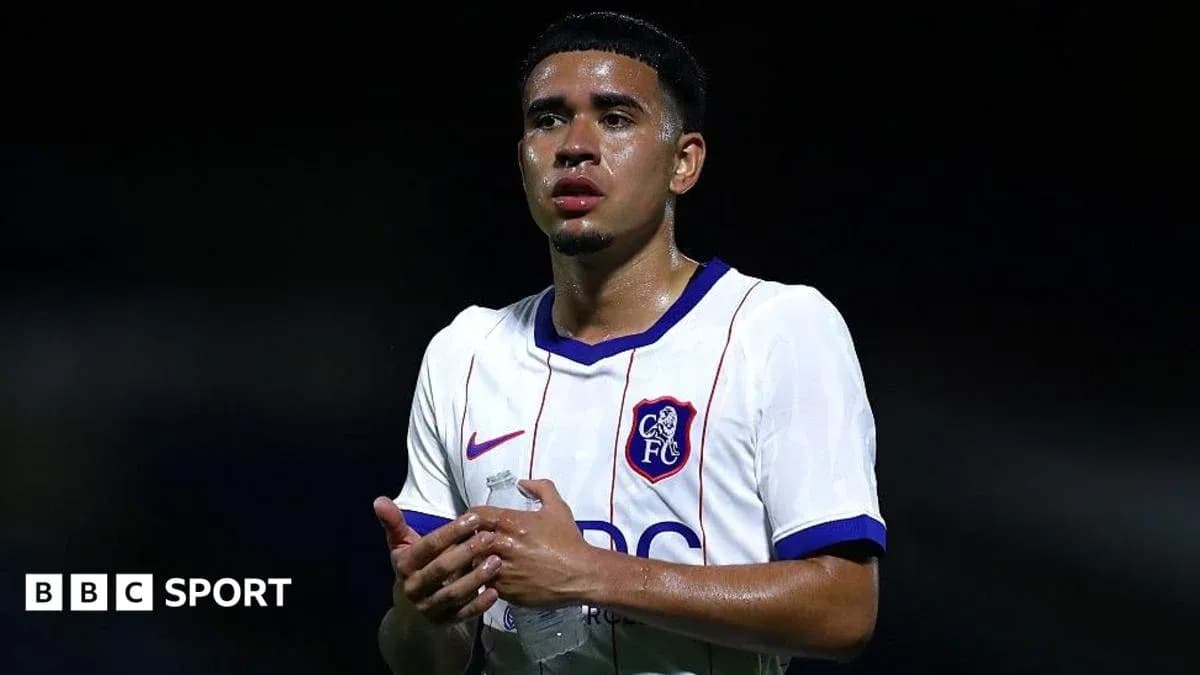
Kendry Paez finally pulled on a Chelsea shirt at the weekend. Not under the bright lights of Stamford Bridge, not to a roar from 40,000 people, but as a 12th‑minute substitute for Cobham Next Gen away at Arsenal in a Premier League 2 fixture.
It has been a long, winding road to that moment.
From teenage phenomenon to stalled project
Chelsea committed £17.27m to sign Paez from Independiente del Valle back in 2023, when he was 16 and being spoken about in the same breath as the continent’s great prodigies. By then he had already broken records in Ecuador, already carried the weight of a nation’s expectations.
At 15, he became the youngest debutant and goalscorer in Ecuador’s top flight. In the same season he stepped into the Copa Libertadores, South America’s most unforgiving stage, and looked at home. The rise barely paused.
By 16 years and 131 days, Paez had made his second appearance for Ecuador, becoming the second-youngest South American to feature in World Cup qualifying after Diego Maradona. A month later he went one better, scoring in a 2-1 win away to Bolivia to become the youngest South American ever to find the net in a World Cup qualifier.
Chelsea were convinced. When they agreed the deal, he already had 18 caps and two international goals. They saw a left-footed playmaker with flair, courage and a sense of occasion. A player destined, in their eyes, for the very top.
They brought him into the Cobham bubble early, allowing him to train with the first team before he could officially join after his 18th birthday. When violence erupted in Ecuador in early 2024, the club stepped in off the pitch too, helping provide security for Paez, his family and the family of international team-mate Moises Caicedo.
The story should have continued on a smooth upward curve. It didn’t.
Loans, criticism and a harsh spotlight
A few months after those security arrangements, Paez appeared in very different headlines. He was filmed in a New York strip club while away on international duty. For a teenager already under intense scrutiny, it added fuel to a narrative that he was losing his way.
On the pitch, his first major European test came at Strasbourg, Chelsea’s sister club in Ligue 1. The start was promising. He won September’s Young Player of the Month award in France and looked to be adapting quickly.
The praise didn’t last. Then-manager Liam Rosenior publicly demanded more.
“We expect more, clearly,” Rosenior said later in the season. “I’m tired of using the excuse of the player’s youth.”
One goal in 21 appearances told its own story. The loan was cut short despite Strasbourg’s strong links to Chelsea’s ownership group.
River Plate came next, a two-year loan to one of Argentina’s giants and a club that has seen more than its share of teenage stars. The fit never quite felt right. Sources in Argentina raised similar concerns about Paez’s attitude when speaking to BBC Sport, pointing to a flat performance in the Superclasico defeat to Boca Juniors at the Monumental in April as a symbol of his struggles.
Soon after, River president Stefano Di Carlo named Paez among 15 players training away from the first team. Others around the club argued he deserved more chances, but the outcome was clear. The loan ended by mutual consent after just one goal in 14 appearances and 461 minutes.
Back in Ecuador, the tone shifted from excitement to worry. A player built up as the country’s next great attacking talent suddenly looked adrift.
Michel Deller, owner of Independiente del Valle, spoke with the concern of a man who had known Paez since he was a boy.
“He’s like a son to us. We care about him deeply,” Deller told Hincha Amarillo. “He’s a good kid who’s had a tough time and has made decisions that have complicated his life. We are always hopeful he’ll show his exceptional talent once again but right now, it’s up to him to decide what to do with his life.”
Chelsea and those close to Paez do not dismiss those concerns outright. They push back, though, at the idea that his story is already written. He is 19. He has more than 100 senior games behind him. He has time.
Alonso’s blunt verdict and a reset at Cobham
If Paez needed a jolt, Xabi Alonso provided it. The new Chelsea manager was asked about the Ecuadorian and did not dress up his answer. Paez, Alonso said, was “not in my plans”. On the club’s website, he appeared not as a first-team hopeful but as an academy player.
Chelsea looked at another loan in English football, a fresh environment to test his resolve. Fifa regulations stopped them. The club had already used all six of their international loan slots and could not send him abroad again.
So Paez returned to Cobham, not as a marquee signing but as a project to be rebuilt. Cobham Next Gen, the rebranded Under-21 side, would be his proving ground.
His debut came in a 4-1 win away at Arsenal on Saturday, introduced in the 12th minute. It was low-key, the sort of moment that passes almost unnoticed in a season dominated by senior storylines. For Paez, it mattered.
There was another glimpse in the EFL Trophy at Wycombe Wanderers on Tuesday. Chelsea’s youngsters were heading out of the competition when, deep into added time, Paez whipped an outswinging cross from a short corner. Harrison Bettoni arrived to tap in. Moments later, another cross from the Ecuadorian caused chaos as Chelsea chased an equaliser in front of just 778 fans.
It was a flicker, but an important one.
For most of the night he had been a peripheral figure, used as a right-sided No 10 in a role similar to Cole Palmer’s, in a shape mirroring Alonso’s back three. Before kick-off he cut a solitary figure, the Spanish-speaking teenager often standing apart from the rest of the academy group, joining in warm-ups but largely keeping to himself before coming on in the 62nd minute.
The late surge did not change the result. Chelsea lost. It did, though, offer a reminder of why the club fought so hard to sign him in the first place.
A career still within reach
Strip away the noise and the disciplinary headlines and the raw facts remain striking. Paez is not Chelsea’s youngest player, but he has already made 70 appearances for Independiente del Valle and passed the 100-game mark in senior football. At 19, that kind of experience is rare.
Chelsea have taken encouragement from his response since returning to Cobham. He is back in a controlled, elite environment. Family members were in the stands at Wycombe, adding another layer of stability around him. Coaches see a player who is listening again, working, trying to reset.
Being in-house also means Chelsea can track every training session, every minute of game time. Academy matches at Cobham are regularly watched by scouts from across the English Football League and further afield. If Paez strings performances together, doors will open.
Those close to him are optimistic. The hope is clear: impress over the coming months, earn a first loan in England in January, or step into one of the six international loan slots if one becomes available. Either route would offer a bigger stage and a fresh test of his maturity.
The talent that made him one of South America’s most coveted teenagers has not vanished. It has been clouded, questioned, pushed to the margins by missteps and the sheer intensity of expectation. But it is still there.
For now, Kendry Paez’s Chelsea career lives on the outer pitches of Cobham, in front of three-figure crowds and under the eye of academy coaches. The next move is his.