Juventus' Identity Crisis: Between Rebuild and Reckoning
For Juventus, this felt like the week when the illusion finally lifted.
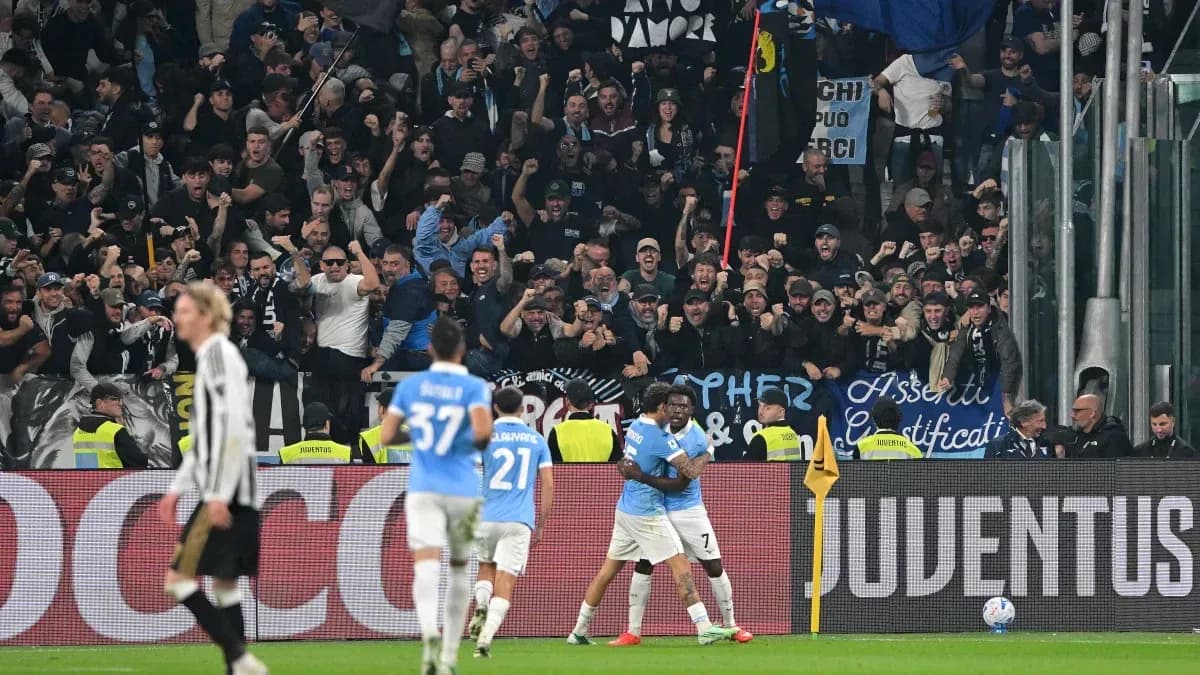
A 3-0 home defeat to Lazio did not look like a blip. It looked like a verdict. Four days later, a 2-2 draw away to Rennes did not magically reset the narrative, did not erase the bruises from Turin, and did not sound like a statement of renewed intent.
What it did offer, though, was perspective.
Taken on their own, neither result explains this Juventus side. Together, they sketch a more uncomfortable truth: this is a team stuck between a rebuild and a reckoning, between what it wants to be and what it actually is.
1. Further from the summit than anyone wanted to admit
The Lazio loss stripped away the comforting language of “transition” and “project”.
There were no freak deflections, no red cards, no refereeing storms to hide behind. Lazio were simply better. Better organized. Better drilled. Sharper in their movements, clearer in their ideas, more ruthless when the moments came.
Juventus had the ball, but not the game. Possession piled up, but without purpose it became a kind of theatre — sterile, repetitive, and strangely hollow. Lazio, by contrast, played like a side that knew exactly where it sits in Serie A’s hierarchy. Juventus played like a side still trying to talk itself into that same room.
By the final whistle, they had lost more than three points. They had lost the crowd and, for the night at least, the argument that they truly belong among Italy’s leading contenders.
This season will not just measure progress. It will decide whether the club is genuinely closing the gap or still living off the promise that better days are always “just around the corner”.
2. An attack without an identity
If there is one department that crystallises the confusion, it is the attack.
Juventus do not merely lack goals. They lack a clear idea of how they want to create them. Movements and passes rarely arrive in sync. Wide players receive the ball standing still, not bursting into space. Attacks fizzle out before defenders are forced into uncomfortable choices.
Finishing is not the main issue. The real problem lies earlier, in the build-up and between the lines. Juventus struggle to generate consistent numerical or positional advantages. They spend heavily on attacking talent, then ask that talent to operate inside a structure that still looks half-formed.
The pattern is painfully familiar: run, pass, cross, repeat. Effort, yes. Intention, less so. It looks like a team trying hard, not a team that knows exactly how it wants to hurt opponents.
For a club of this size and spending power, that is not just a tactical flaw. It is an identity crisis.
3. Absences hurt, but the structure hurts more
The Lazio match came with caveats. Several key players were missing. The squad was stretched.
That matters. But it does not explain everything.
Even with those absences, Juventus still fielded seasoned internationals and expensive signings. There was enough quality on the pitch to show more than they did across both games. What disappeared was not just individual brilliance; it was structure, clarity and conviction.
That is why the alarm bells now sound louder around the system itself. Returning players will raise the technical level. New signings may follow. None of that guarantees a solution if the broader framework remains uncertain.
Teams can ride out injuries. They cannot ride out doubt about who they are, how they recruit and how they want to play. When those questions linger, every setback feels heavier.
4. The old defensive certainties have gone
A 3-0 home defeat cuts to the core of what Juventus once were.
This was the club that built an empire on defensive certainty. For years, even in weaker cycles, opponents knew they would need near-perfect execution to score. That aura has gone.
Against Lazio, every acceleration, every quick combination seemed to unnerve Juventus. The back line did not just concede chances; it lost its bearings. The team as a whole struggled to hold its shape when the tempo rose.
There is still talent in that defensive unit. Enough to form a solid base. What is missing is the automatic assumption that Juventus will stay organized when the pressure spikes. Elite sides absorb punches without falling apart. Right now, Juventus look one mistake away from losing their composure.
That fragility is new. And it is dangerous.
5. Rennes offered a glimpse of a more pragmatic Juventus
The trip to Rennes will not live long in the club’s European folklore. Two goals conceded, only a point taken, and familiar flaws still on show.
Yet within that, something shifted.
Where Lazio pinned Juventus in a sterile pursuit of possession, Rennes encountered a different version. Juventus no longer tried to control every phase with the ball. They accepted stretches without it. They dropped into compact shapes, allowed harmless passes in front of them and sprang forward when the chance appeared.
The midfield sat deeper. Defensive distances tightened. Fewer players surged ahead of the ball, which meant fewer chaotic transitions when possession was lost. When Juventus did attack, they often did so with more directness and intent than they had shown days earlier.
Crucially, there were periods when Rennes had the ball but not the match. They circulated possession without truly dictating the terms of the contest.
The best European sides have long understood that control is not measured solely in passes completed. It is measured in space denied, transitions managed, risk contained. Juventus were far from perfect in those areas; Rennes still carved out openings and exposed vulnerabilities.
But unlike the Lazio collapse, this felt like a team beginning to accept what it currently is, rather than what it wishes to be. A tactical framework, if not yet a fully formed identity, started to emerge.
6. The mentality question lingers
Strip away tactics and systems, and one issue remains stubbornly in place: mentality.
When Lazio scored the first goal, Juventus wobbled. When the second went in, they sagged. The body language shifted, the belief drained. Confusion took over.
Supporters can live with defeat. They struggle to live with a team that looks unsure of its own idea. A clear plan that fails can still be respected. A vague plan that unravels cannot.
In Turin, the uncertainty spread from the pitch to the stands. The noise faded into resignation well before the final whistle. In Rennes, there was at least a different tone. Juventus stayed in the contest. They resisted. That does not answer the mentality question, but it suggests the answer might still exist somewhere within this group.
Two games, two visions of Europe
Look at the week as a whole and two competing visions of Juventus appear.
Against Lazio, they chased control through possession and produced almost nothing of substance. Against Rennes, they ceded some of that control and, in doing so, became more threatening.
That tension lies at the heart of their European prospects. Domestic football rewards domination over months: consistent patterns, steady accumulation of points, a clear style. European football is crueler and sharper. It rewards the ability to manage moments — to control space and risk in the handful of decisive sequences that define a tie.
This Juventus side is not built to suffocate opponents in the way the best Napoli under Luciano Spalletti did. It does not yet have that level of technical and collective superiority. But it might be capable of something more pragmatic: staying compact, picking its moments, surviving.
The Rennes performance hinted at a team that, while far from the finished article, can at least remain alive in European games. Organized enough. Competitive enough. A long way from the peak of the continent, but perhaps close enough to make nights awkward for others.
A different Juventus, for now
The hard truth after Lazio is that Juventus cannot currently live with Europe’s elite on their terms.
The more hopeful truth after Rennes is that they may not need to — not yet.
The version that crumbled against Lazio looked stretched and exposed, chasing an ideal it cannot yet reach. The version that faced Rennes was more modest, more compact, and arguably more effective. It did not demand the ball. It tried to manage risk.
Somewhere between those two performances lies the next phase of this club’s identity. The question now is not whether Juventus can recreate what they once were, but whether they are brave enough to embrace what they actually are — and build from there.