James McClean's Struggle: A Career in Limbo
James McClean sits in limbo. Not retired, not playing, not welcome where he thought he’d be most at home.
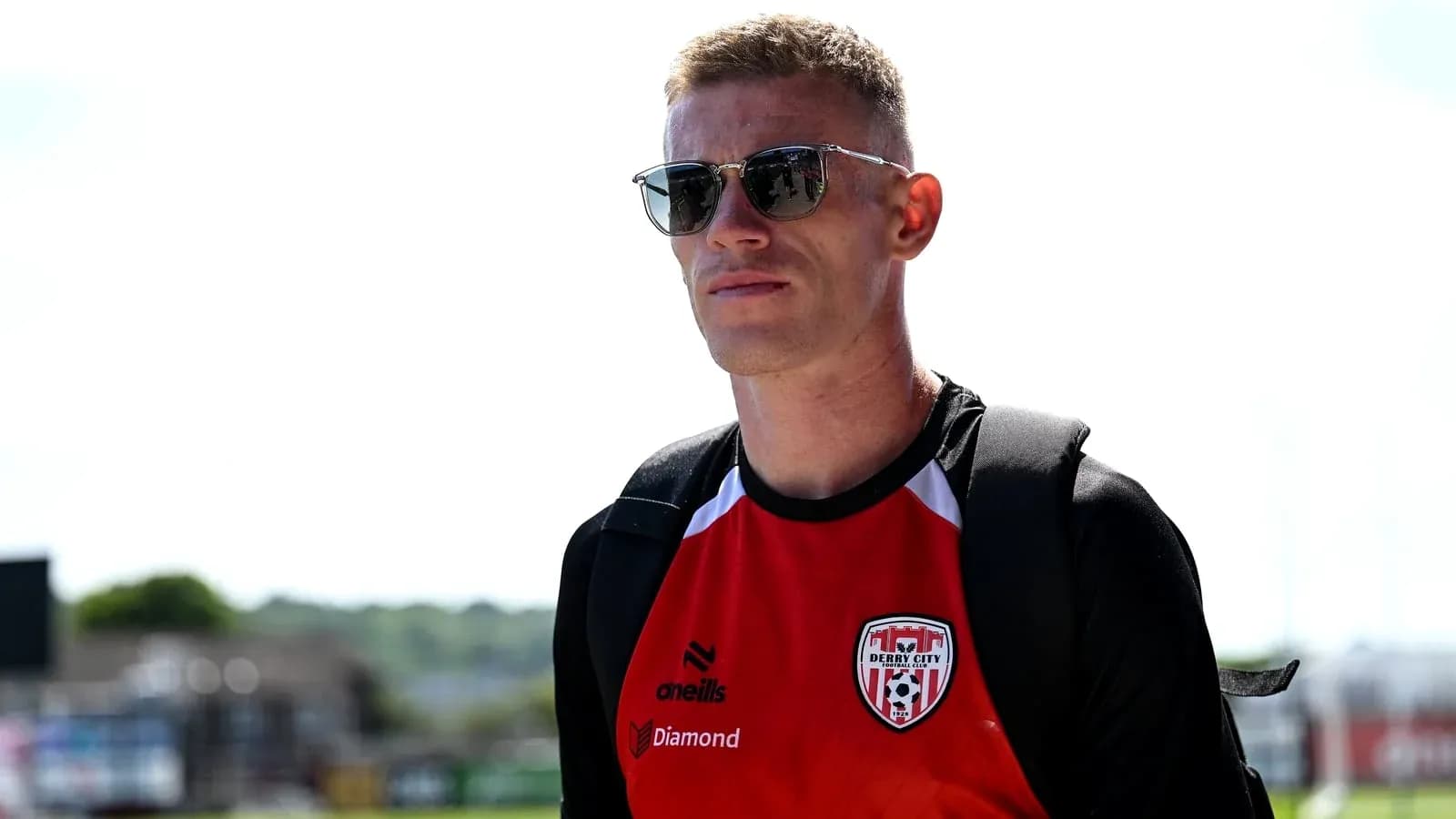
The 103-cap Republic of Ireland international returned to Derry City in January from Wrexham with the air of a homecoming. Instead, by early July, he had slipped out of the matchday squads and into a bitter stand-off with the club he grew up supporting.
He accused the Candystripes of an "incomprehensible" attempt to terminate his contract. The club pushed back. McClean later apologised for the sharpness of his criticism, but the damage was done. He has not featured since, even after Mark Connolly stepped in as interim manager.
Now 37, McClean is caught between the end of a playing career and the start of whatever comes next. That uncertainty is written all over his new book, The Walls, where he speaks openly about football, family, and a growing obsession with boxing as the curtain falls on his time in the professional game.
It is also where old wounds surface. McClean reveals he only discovered the identity of his biological father at around the age of 10. The man had alcohol problems. They met once. That was it. The absence, he suggests, has lingered in the background of a life played out in the unforgiving glare of public scrutiny.
A storm over words
The latest scrutiny has been particularly fierce. In an interview with the Sunday Independent to promote the book, McClean explained why he has never considered therapy.
"As a man, I see that as weakness. I don’t need to open up," he said. "I see it as a weakness that I’d have to speak to someone about my feelings; my emotions."
Those lines detonated across social media. The backlash was instant, and severe. McClean, long used to criticism, suddenly found himself cast as a voice against mental health support at a time when football is trying to move in the opposite direction.
Speaking on RTÉ Radio 1’s The Brendan O’Connor Show, he tried to pull the lens back, to explain the context and, in doing so, admitted his own fragility.
"Maybe more so now after the backlash of the last few days," he said when asked if he had been reluctant to revisit his past while working on the book with ghostwriter Dan McDonnell.
"It has probably made me more reluctant to do so going forward because I opened up on stuff that I never really spoke about privately, never mind publicly.
"What has happened over the last few days has made it really tough."
The row has widened the gap between player and club. Derry City publicly distanced themselves from his earlier comments, stressing that they "do not reflect" the core values or beliefs of the club. For a local hero, once embraced as a symbol of the city, that statement cut deep.
At home, the picture looks different. His wife Erin has spoken about the strain of the year, describing his situation as a "daily battle" and saying her husband has been "struggling".
McClean does not argue with that.
Struggling in plain sight
Asked on RTÉ if he agreed with Erin’s assessment, he didn’t dance around it.
"I am struggling," he said.
"I’m struggling in my current situation because you go home expecting and being told one thing, and for that not to work out, and then to be cast aside and then made to feel like a leper in a place where you thought they would never do that to you…for that to happen is very tough.
"The one thing I have always loved doing, and all I have known, is playing football. For a power to take that away from me wrongly, and unfairly, has been difficult."
That sense of being shut out, of football being taken from him rather than surrendered, is at the heart of his anger. It’s also bound up in how he copes.
McClean insists he respects anyone who seeks professional help for their mental health. He says he was talking only about himself, about his own refusal to go down that road and his reliance instead on the gym, on fitness, on physical exertion as a release valve.
"That (the comment about seeking counselling as a weakness) was a screengrab, it was put out there and people jumped on it," he said.
"My own club (Derry City) put out a statement that didn’t help in the slightest, but not one person reached out to me to say, ‘James, can you clarify what you meant?’
"I’m pretty sure nobody actually read the context of the article. If they had, they would have seen that I was solely speaking on my own personal experience. When you are going through difficult situations, people have their own ways and means of coping with that."
Social media, he admits, has been a recurring trap.
"My biggest problem has always been social media. In the moment, when I feel attacked, it’s almost like auto-pilot, I go on the offensive to show nothing bothers me."
Erin, he says, believes he carries trauma from childhood that he has blocked out. She thinks therapy would help, particularly around the unresolved issues involving his biological father. McClean listens, but does not move.
"Any man or woman that needs to go to therapy to help themselves, I couldn’t commend them any higher," he said.
"That’s not to say me going to the gym is wrong either because that works for me. I was solely speaking about me.
"Me saying the word weakness, was probably my weakness in saying that, but I’m not going to apologise that I’m in a place where I feel I don’t need to go to therapy.
"That’s in a way what I’m getting bashed for."
A career paused, not closed
The tension between public perception and private reality has followed McClean throughout his career. Now, with his boots idle and his name off the Derry teamsheet, that tension feels more exposed than ever.
He is a centurion for his country, a player who built a career on intensity, confrontation, and a refusal to step back. Those same traits now sit uneasily alongside a man admitting, in his own words, that he is struggling.
Derry City and McClean remain locked in stalemate. The club has stepped away from his comments. He feels cast aside by the place he thought would offer him a final, fitting chapter.
The book is out. The interviews have been done. The backlash has hit. The gym sessions continue.
What doesn’t change is the simple truth he keeps returning to: all he has ever really known is playing football. The question now is whether anyone will let him do it again.