.svg&w=384&q=75 "logo")
Jake Lehmann's 115 Not Out Revives Hampshire Against Nottinghamshire
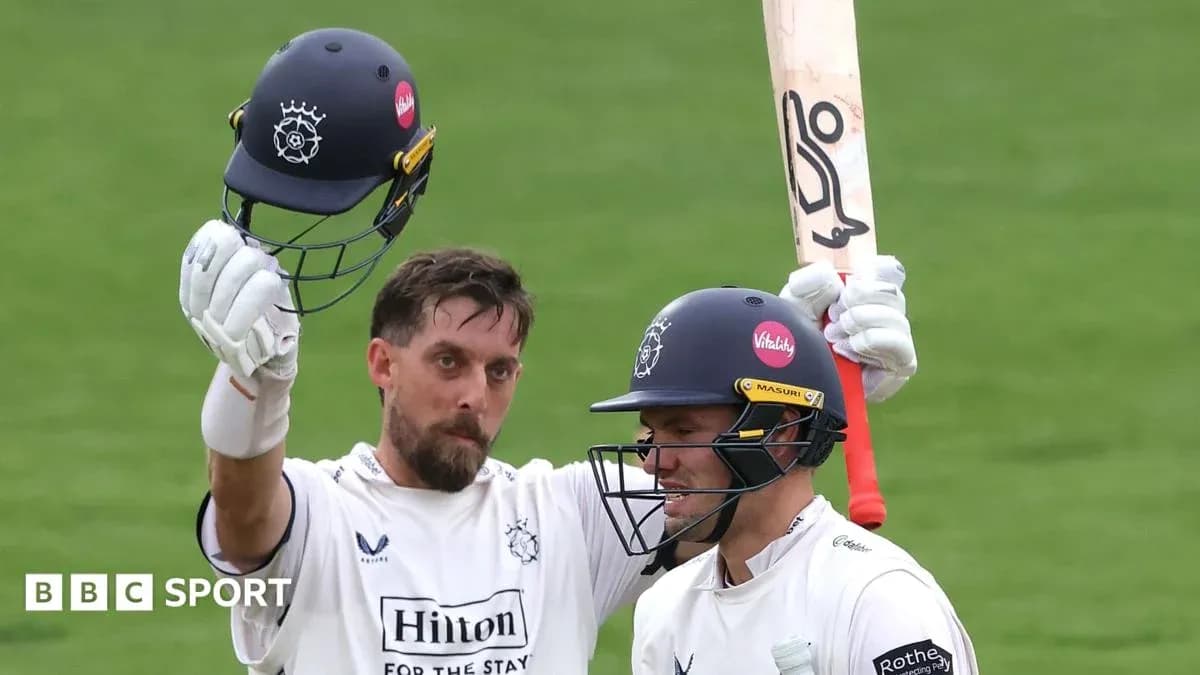
Jake Lehmann walked off Trent Bridge unbeaten, bat raised, the weight of Hampshire’s season sitting lightly on his shoulders.
His 115 not out was the innings the champions-elect Nottinghamshire did not want to see, and exactly the one his struggling side desperately needed. On a day when Hampshire’s brittle batting order again threatened to fold, the South Australian with the British passport stood firm, stylish and stubborn, to drag them to 267-7, 110 behind Notts’ 377.
Lehmann defies the numbers
The numbers say Hampshire’s batting has been a problem all year. Only Lancashire have scored fewer runs per wicket in Division One, Hampshire scraping along at an average of 24.50. Lehmann has been the glaring exception.
By stumps he had moved to 922 Championship runs for the season, joint-second highest in the top tier. The figures tell one story. The method told another.
From the moment he arrived, with Hampshire wobbling and Nottinghamshire sensing blood, Lehmann’s footwork lit up a grey Trent Bridge day. He moved crisply, inventively, with a hint of his father Darren in the way he opened up angles and picked gaps. He was 33 from 29 balls by lunch, refusing to let the bowlers dictate, and never really loosened his grip on the innings after that.
His hundred came from 160 deliveries, a controlled, unhurried effort built around precise placement and sharp running rather than brute force. By the close he sat one run shy of his best score in England – 116 for Yorkshire back in 2016 – and looked as if he could have batted all night.
False dawn for Notts
Nottinghamshire had begun the day believing they could drive this game hard. They ended it mildly exasperated, two wickets short of maximum bowling points and with Hampshire still very much alive.
The morning could hardly have started better for them. First ball of the day, Olly Stone thundered in, straight and fast, and Felix Organ’s defensive prod only feathered an edge through to the keeper. Six and gone. Hampshire 12-1. Trent Bridge stirred.
What followed was a long spell of frustration. Toby Albert and Nick Gubbins settled, leaving well, nudging and nurdling the reply along. For 18 overs, Nottinghamshire’s seamers beat the bat occasionally but made no real dent.
Then the pressure snapped the innings open in a rush.
Tom Giles, the fourth seamer in only his second game, struck in his second over. Albert, on 31, played around a full ball and went lbw. Four balls later, Dillon Pennington found a near-identical delivery from round the wicket to the left-handed Gubbins, who fell the same way for 35. From 12-1 to 114-3, suddenly the new men were exposed and Nottinghamshire had their tails up again.
Collapse checked, then rebuilt
Hampshire pushed on to 141 before the slide resumed. Joe Weatherley, on 25, misjudged Stone badly, shouldering arms to a ball that crashed into his pads. A third successive lbw. Another self-inflicted wound.
At the Stuart Broad End, Liam Patterson-White took hold of the game in a quieter, more suffocating way. His left-arm spin dried the scoring to a trickle. Across 21 overs he conceded just 28 runs, no wickets but relentless pressure. From one end, the game slowed to a crawl.
Under that squeeze, mistakes came. Ben Brown, who had done the hard graft, suddenly flashed at a wide one and carved a cut straight to first slip. Fraser Sheat, bustling in with purpose, struck again within ten balls as 18-year-old Ben Mayes edged out for just one. Hampshire, from a relatively stable position, were 190-6 at tea and sinking.
Only Lehmann stood between Nottinghamshire and a commanding lead. He needed a partner. Scott Currie gave him one.
Currie’s vigil and a stubborn stand
Currie arrived with a modest first-class batting record – one century, scored on loan at Leicestershire two years ago – and a mountain of time to survive. He did far more than just hang around.
Across 143 balls and 38 overs in tandem with Lehmann, Currie made 35 runs that mattered far more than the number suggests. He left well, blocked with soft hands, and refused to be drawn into the airy drives that had cost his teammates. Every maiden over he saw out gnawed at Nottinghamshire’s belief.
The stand of 97 for the seventh wicket changed the tone of the day. Lehmann kept scoring, sweeping, clipping, driving. Currie absorbed blows and boredom alike. As the second new ball loomed at 216-6, Notts turned again to their quicks, Patterson-White finally rested after his marathon spell.
The breakthrough refused to come. The new ball skidded, seamed, and beat the edge, but the pair held. Nottinghamshire’s seamers worked furiously for a reward that would not arrive.
Only when 31 balls remained in the day did the resistance crack. Sheat produced a beauty, full and straight, that finally breached Currie’s defence and sent his off stump cartwheeling. It was a richly deserved wicket and a crucial one, but it came late enough to leave Hampshire still breathing.
Lehmann, unshaken, carried on. He walked off unbeaten, 115 to his name, his team seven down but not yet out.
Champions made to wait
For Nottinghamshire, champions and standard-setters, the last 18 days have brought more irritation than satisfaction. Since their last win, against Surrey, they have searched for the ruthless edge that defined their title run.
They will begin day three needing two quick wickets inside ten overs to bank full bowling points and clear the way for a push towards victory. The pitch has offered enough, the attack has created chances, yet Hampshire, through Lehmann’s class and Currie’s resolve, have refused to fold.
One more morning burst could still tilt this game firmly back Nottinghamshire’s way. Fail to land it, and Lehmann may yet turn a defiant hundred into the innings that derails the champions’ momentum at Trent Bridge.