.svg&w=384&q=75 "logo")
Hornets' Bold Move: Myles Turner as the Missing Piece
The LaMelo era in Charlotte is over. So is the long, uneasy wait on Miles Bridges.
The Hornets ripped off the Band-Aid this offseason, shipping LaMelo Ball to the Minnesota Timberwolves and Bridges to the Phoenix Suns, and in doing so signaled something they’ve resisted for a decade: a clean, unapologetic reset.
This is Brandon Miller’s team now, with Kon Knueppel stepping in as the other pillar of the rebuild. Around them, the front office has stacked the roster with grown‑ups who know how to win possessions if not headlines: Naz Reid, Grayson Allen, Dennis Schroder. The message is clear. The 10-year playoff drought isn’t a background stat anymore. It’s the target on the wall.
They’ve also crowded the frontcourt. Power forward and center are no longer soft spots on the depth chart. They’re busy. Competitive. A little messy.
What the Hornets still don’t have is that one big man who scares people at the rim.
Naz Reid can score and space. Hannes Steinbach brings size. Grant Williams is a switchable, physical body. Moussa Diabate offers energy and length. Ryan Kalkbrenner has size and feel on the defensive end. Each piece has value. None of them is a true, night-in, night-out defensive anchor.
That’s where one familiar name hovers over the trade machine.
Turner as the missing piece
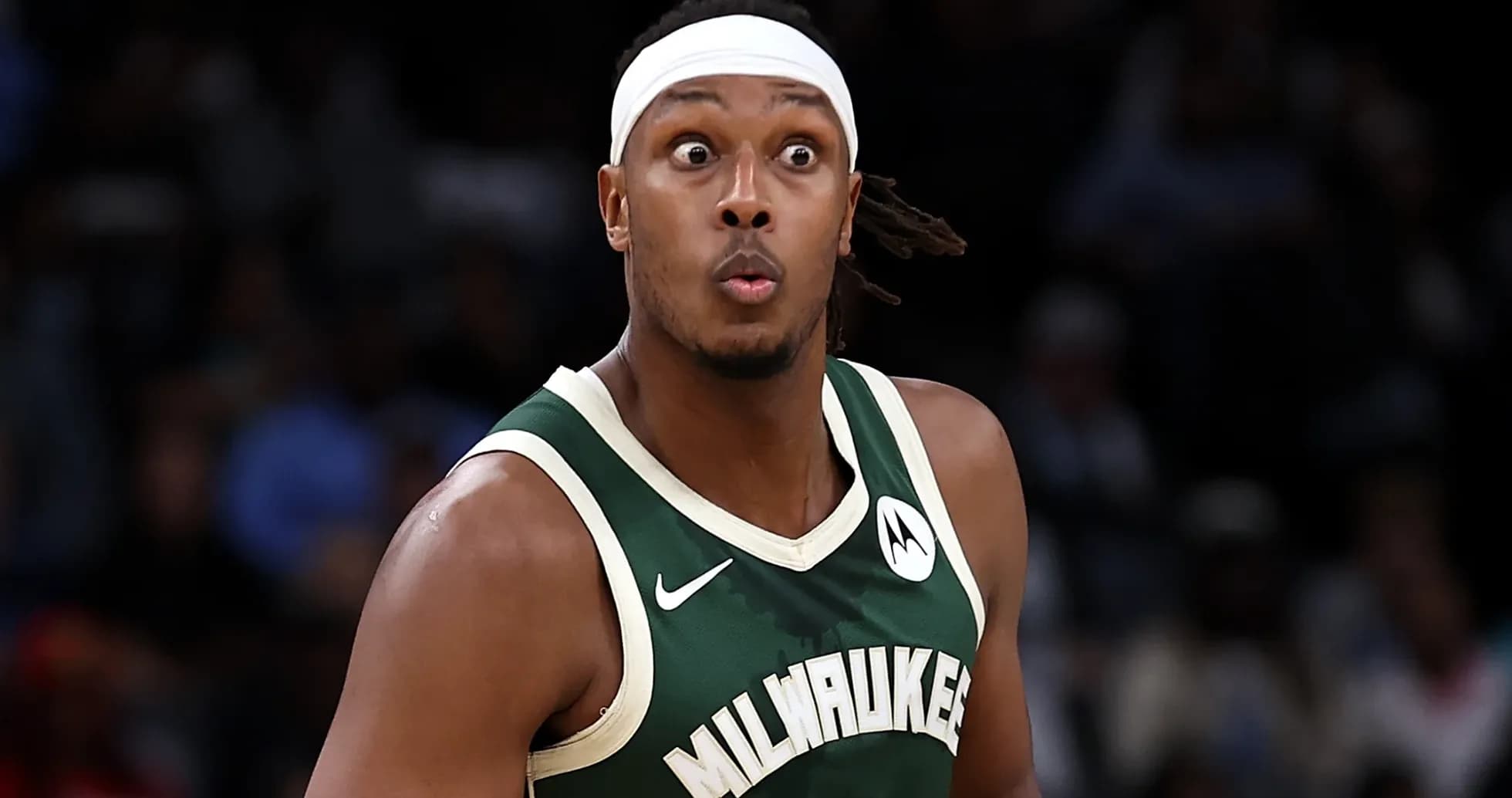
Myles Turner, now with the Milwaukee Bucks, could be the kind of midseason swing the Hornets haven’t dared to make in years.
Turner is coming off a brutal first season in Milwaukee, a year that never really fit the way the Bucks imagined when they pushed in chips to get him. His contract has been difficult to move, his impact inconsistent, and now he’s staring at a very different Milwaukee landscape in the first season without Giannis Antetokounmpo since 2013.
If he plays well in that new reality, the equation changes.
According to Sean Devaney of Heavy Sports, Turner could hit the trade block by the deadline, especially if his early-season form convinces teams he’s still the same player who twice led the NBA in blocks. Last year’s 1.6 blocks per game don’t scream “dominant rim protector,” but the track record is there, and front offices remember.
For Charlotte, that’s where the opportunity lives: a distressed asset with upside, on a team that might need flexibility more than a traditional center.
A framework that makes the call
One proposed structure is simple enough:
- Hornets receive: Myles Turner
- Bucks receive: Grant Williams and Ryan Kalkbrenner
From Charlotte’s perspective, Turner steps in as an immediate starting center who checks two boxes this roster badly needs in one player. He protects the rim and spaces the floor. He gives coach Charles Lee a defensive backbone without shrinking the offense.
Imagine a long, shooting-heavy front line with Turner and Naz Reid together. You get size, rebounding, and shot-blocking, but you don’t have to abandon spacing. The paint is protected, the corners are occupied, and Miller has room to operate.
Want to tilt more toward chaos and disruption? Pair Turner with Moussa Diabate. Suddenly, the Hornets can throw out a frontcourt that contests everything, swallows drives, and still doesn’t completely clog the lane.
For Milwaukee, the logic is different. Grant Williams becomes the key piece. He’s on an expiring deal, he can guard multiple positions, and he fits the kind of flexible, playoff-style basketball the Bucks will need as they reconfigure around a post-Giannis core. His contract gives them options they don’t currently have with Turner.
Kalkbrenner, meanwhile, is a developmental swing. A big with size and respectable defense, he could grow into a reliable backup behind Kel’el Ware. Or he could become part of a broader youth movement if Milwaukee leans further into a retool.
There’s also the Tidjane Salaun question. The former No. 6 pick has yet to find his footing in Charlotte, and patience runs thinner when a team is trying to punch into the postseason instead of drifting through another lottery year. On a young, rebuilding roster like the Bucks, Salaun’s timeline makes more sense. His mistakes would be developmental, not costly.
The price for Charlotte doesn’t stop at players. To get Milwaukee to absorb Turner’s contract and walk away from a former centerpiece, the Hornets will have to attach draft capital. Picks turn this from a convenient swap into a serious offer.
How bold do the Hornets want to be?
This is the decision in front of Charlotte’s front office. They’ve already chosen their stars. They’ve already embraced change.
The next step is risk.
Do they ride out the season with a committee of bigs and hope internal growth is enough to break the playoff drought? Or do they push harder, pay the price, and bring in a proven rim protector who could stabilize a defense overnight?
At some point, a franchise that’s spent a decade on the fringe has to decide whether it’s content collecting prospects or ready to start collecting playoff games.