Hansi Flick Prioritizes Wins Over Records at FC Barcelona
On the eve of another La Liga night at Spotify Camp Nou, Hansi Flick cut through the noise with one blunt line that tells you everything about his approach at FC Barcelona.
“I don't want to break records, I want to win matches.”
No grandstanding. No talk of milestones. Just a coach who knows that against Racing Santander, the only statistic that matters is the scoreline when the whistle goes.
Focus sharpened at Ciutat Esportiva
The session at the Ciutat Esportiva carried that same edge. This was no gentle tune‑up. With Racing visiting midweek, the work tilted towards intensity and detail: quicker circulation, cleaner pressing triggers, sharper combinations in the final third.
The stakes are clear. La Liga points in September do not decide titles, but they shape seasons. Drop them at home to a newly promoted side and the questions start. Impose yourself, and the rhythm of a long campaign starts to feel a little more under control.
Racing arrive as the classic “nothing to lose” opponent. For them, this is a free swing at one of the giants, under the lights, in a stadium that now has a Champions League final on its horizon. For Barça, it is the type of fixture they are expected to dominate. That gap in expectation often decides the tone of the night.
A global spotlight on a midweek test
The club’s own viewing guide underlines how far this fixture travels. From early‑morning kick‑offs in Asia to afternoon and late‑night broadcasts across the Americas, FC Barcelona v Racing Santander will again play out as a global event, even if the calendar labels it a routine league game.
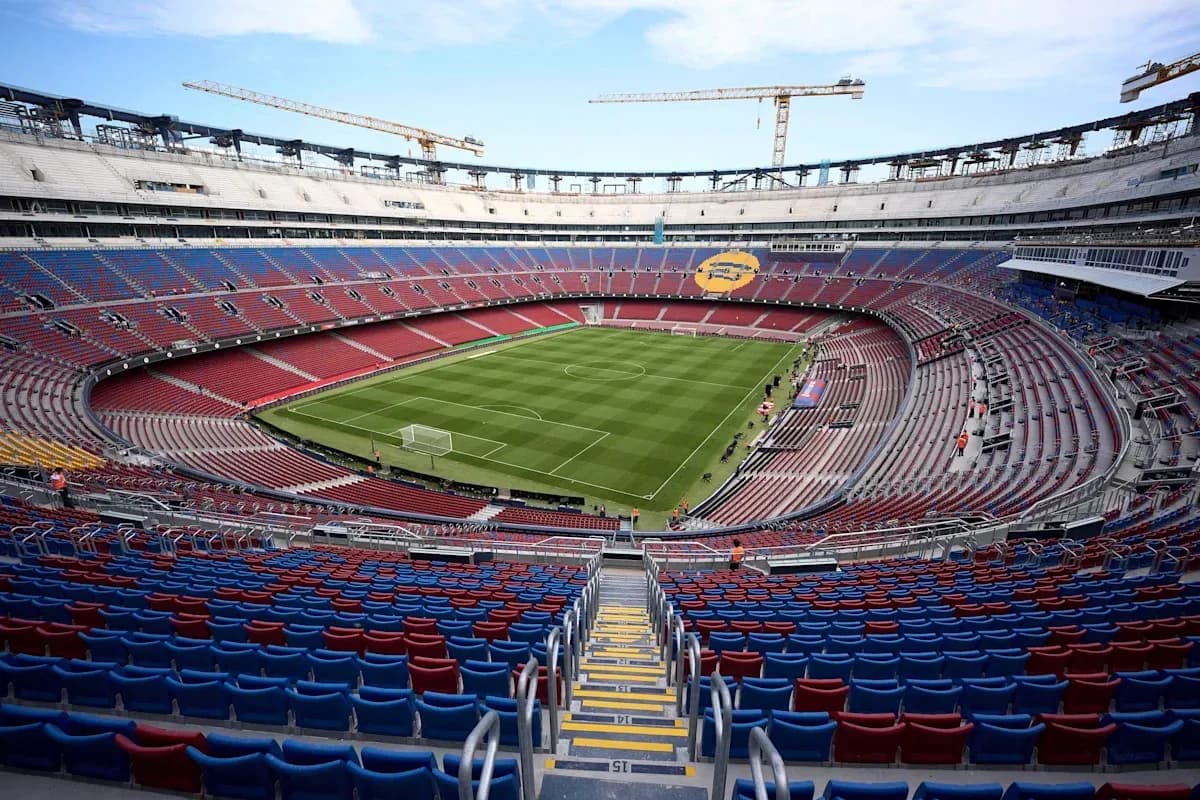
Spotify Camp Nou remains the stage. Soon, it will be the stage.
UEFA’s decision to award the 2029 Men's Champions League final to the stadium is a formal recognition of what the venue already represents: a benchmark arena in world football, capable of hosting the sport’s biggest nights and swallowing the pressure that comes with them. That future showpiece will not change how many points are at stake against Racing, but it does raise the bar for every performance played on that grass.
If you want to host the biggest club game on the planet, you had better look like a Champions League finalist every three days.
Lamine, the number 10, and a Ballon d'Or debate
Within that demand for excellence, one player keeps dragging the conversation his way. Lamine, Barça’s number 10, already carries a level of scrutiny and expectation that would crush most players his age. Flick, far from shying away from it, has stepped right into the debate.
“And why shouldn't we campaign for him?” the coach asked, when talk turned to the Ballon d'Or.
It was more than a soundbite. Flick stressed the qualities that matter to him: Lamine’s self‑belief, his honesty when he speaks, and the way he marries talent with personality. In a squad that still blends veterans and emerging stars, that kind of profile is gold dust.
The message is clear. If Lamine keeps delivering, the club will not pretend he is just another promising youngster. They will push his case on the biggest individual stage in the sport.
Barça Femení show the way
If any group at the club understands how to live with expectation, it is Barça Femení. Their 4-2 comeback win over Atlético Madrid was another reminder of why they sit at the top of the domestic game.
They trailed. They suffered. Then they turned it.
A hard‑fought contest swung their way through persistence and quality, sealing a third win in three league matches. It was not a procession; it was a statement that this team can win when the script turns awkward.
That resilience will be tested again soon in the Women's Clásico. The date is set: Sunday 4 October, 5pm CEST, at Spotify Camp Nou. A Clásico on the main stage, at prime time, with a side that has made comebacks and trophies feel routine. For them, these games are no longer occasions to survive. They are platforms to dominate.
Youth sides feel the grind
Lower down the ladder, the margins looked thinner. Barça Atlètic travelled to Logroño and left with a 0-0 draw against UD Logroñés B. On paper, it is “another point.” On the pitch, it was a story of control without reward.
Belletti’s team dictated the game but never found the finish. In developmental football, that can be a useful kind of frustration. Dominance without goals exposes decision‑making, movement, and composure in the box. It also tests patience, both on the touchline and in the dressing room.
For a club that preaches attacking football from the academy up, those are the nights that either harden habits or expose weaknesses.
A club moving on multiple fronts
So the picture, on the eve of Racing’s visit, is layered.
The first team tighten their focus at Ciutat Esportiva, led by a coach who refuses to chase records for their own sake. The women’s side keep winning, even when dragged into a fight, and now eye a Clásico on home turf. The academy teams wrestle with the final step from control to incision. And above it all, Spotify Camp Nou prepares to host the biggest club game in football in 2029.
The question now is simple: with the stadium already booked for a Champions League final, how quickly can this Barça side grow into a team that looks at home on that stage every single week?