.svg&w=384&q=75 "logo")
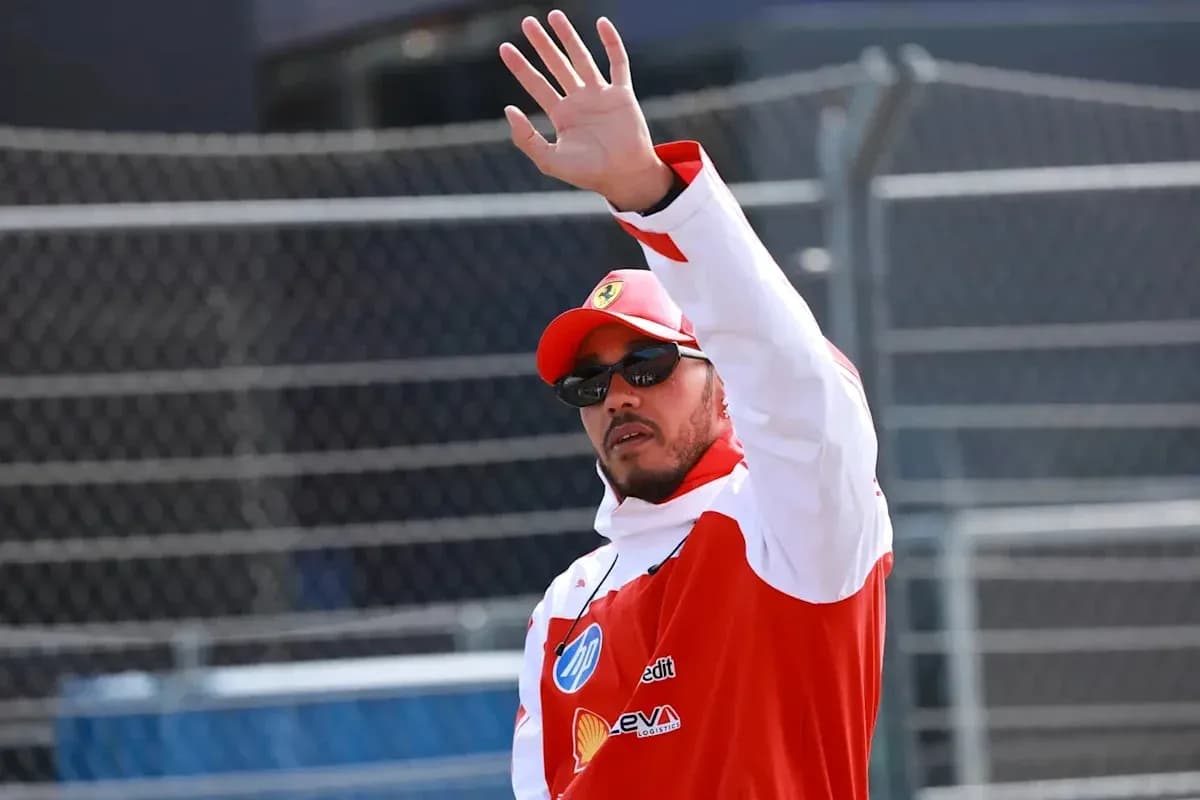
Hamilton's Zandvoort Outburst: Schumacher Calls for Calm
Lewis Hamilton left Zandvoort with points, a podium contender’s pace – and a storm of his own making. The Ferrari driver’s raw, repeated complaints over team radio became one of the main stories of the Dutch Grand Prix, almost sharing the spotlight with Lando Norris’ victory.
From the cockpit, Hamilton felt trapped. Lap after lap behind Charles Leclerc, watching his race ebb away, he challenged Ferrari’s calls and questioned why he was being held up. The frustration crackled over the airwaves, unfiltered and unmistakable.
A day later, the tone changed.
Hamilton went onto social media to apologise for how he had expressed himself, admitting that emotion had spilled over in the heat of battle. He underlined his commitment to Ferrari and stressed that the anger came from his obsession with getting the best possible result for the team, not from a loss of faith in the people on the pit wall.
That didn’t convince everyone.
“At his age and with his standing…”
Speaking on the Backstage Boxengasse podcast, former Formula 1 race winner Ralf Schumacher cut straight to the point. He recognised the adrenaline and the immediate sting of a compromised race, but argued that a seven-time world champion should have handled it differently.
“I can understand a certain amount of frustration. That's always there as a driver, and especially immediately after the race, the emotions are still there,” Schumacher said. “But at his age and with his standing, you could handle it a little differently. Especially when it comes to criticising the team publicly.”
For Schumacher, this is about more than one angry radio message. It’s about context.
He pointed to Hamilton’s difficult first season in red and suggested that, right now, Ferrari deserves more patience from its star signing than the other way around.
“I think that particularly applies to him, considering that last year he really didn't help the team. I think the team still has a little more credit in the bank than he does. You can handle that differently,” he added.
Then came the line that will echo around Maranello.
“In the paddock – and I'm talking particularly about the Italians – there are one or two rumours that this is the first driver where the Italians have the feeling that he is more important than the brand.”
At Ferrari, nothing outranks the badge. Not even a driver with seven titles.
How “one lap more” lit the fuse
Behind the emotion sat a simple trigger: one extra lap.
Team principal Frederic Vasseur later laid out how the situation spiralled. Ferrari had expected Hamilton to pit as soon as he caught Leclerc. That was the working plan. Then traffic complicated the picture.
As the cars approached the window, the pit wall asked Hamilton to stay out for one more lap. That single extension changed the equation. With the timing skewed, Ferrari could no longer realistically order an immediate position swap with Leclerc while also managing the stop and the traffic.
The race moved on. Hamilton didn’t – at least not mentally.
Vasseur admitted that, with the benefit of hindsight, a different decision around lap 46 might have produced a better result. The real failure, in his view, lay in how the plan was relayed to the driver.
He accepted that communication with Hamilton “could have been handled better” and highlighted a key misunderstanding: Hamilton had not been clearly told that Ferrari now expected him to stay out until the end, managing his pace, rather than simply pushing harder in that phase and waiting for a stop that never came.
So the driver pushed, felt blocked, and vented. The team juggled scenarios, misjudged the messaging, and braced for the fallout.
A fragile balance at Ferrari
This is the tightrope Ferrari now walks. On one side, a global superstar demanding perfection and unafraid to voice his anger. On the other, a team still trying to knit him into its culture after a bruising first year together.
Schumacher’s verdict is blunt: Hamilton must show more restraint, and more respect for the brand that hired him. Vasseur’s admission is equally clear: Ferrari must speak more clearly to the man in the cockpit when the strategy shifts under pressure.
The next time Hamilton finds himself stuck behind a teammate with the race slipping away, we’ll see which lesson truly stuck – the driver’s, or the team’s.