George Russell's Strategic Wait for ADUO Upgrade Penalty
George Russell is prepared to wait for pain.
Rather than take an immediate Formula 1 engine penalty and reset his pool of components, the Mercedes driver will hold off until the team’s upgraded ADUO-specification power unit is ready – a move that could push his grid drop back as far as the United States Grand Prix.
This is not a luxury decision. It’s damage limitation.
Mercedes boxed in by reliability
Early-season reliability issues have backed both Russell and team-mate Kimi Antonelli into a tight corner on power unit usage. To get through the campaign, both have already pushed beyond their in-season allocations.
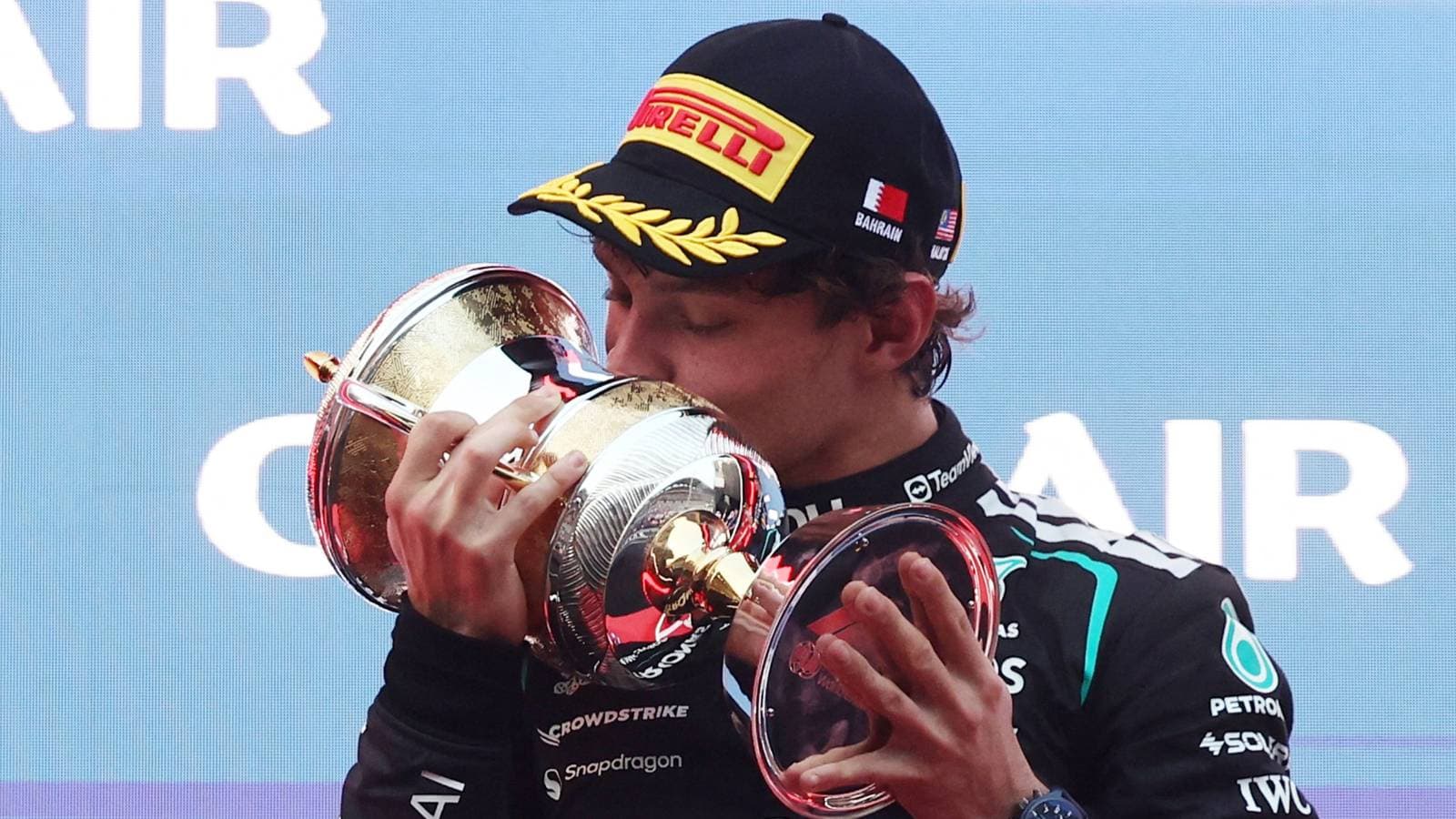
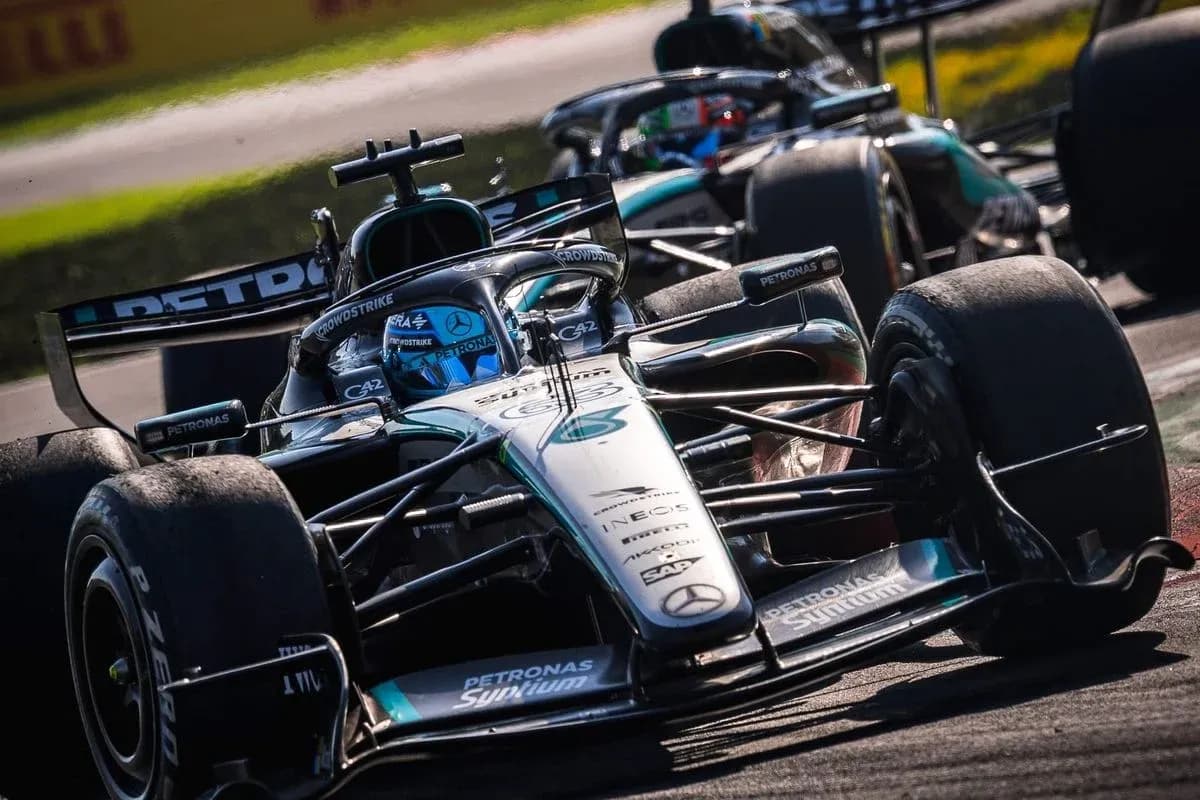
Antonelli bit the bullet at Monza. He took extra power unit elements at the Italian GP, started a lowly 19th, and still tore through the field to win. His charge underlined how potent the Mercedes package can be when unleashed with fresh hardware and a clear strategy.
Russell, on paper, had a similar opportunity coming up. Baku’s long straights make the Azerbaijan GP a natural hunting ground for drivers carrying engine penalties, with overtaking chances and slipstream battles offering a route back into contention.
Yet Mercedes has chosen to wait. The team wants Russell’s penalty to land on the same weekend as its upgraded ADUO power unit, rather than waste a grid drop on an outgoing spec.
ADUO upgrade changes the calculus
As reported after the Italian GP, Mercedes has been granted extra development room under F1’s Additional Development and Upgrade Opportunities (ADUO) system. That allowance has opened the door to a revised power unit – believed to feature, among other tweaks, an improved turbo – but it has also complicated the timing of Russell’s penalty.
Russell is already at the ceiling for several key components: internal combustion engine, turbo, energy store, and control electronics. Any move to fresh parts at the next races would automatically trigger grid penalties. If he then switched again to the ADUO-enhanced hardware later, he would face another hit.
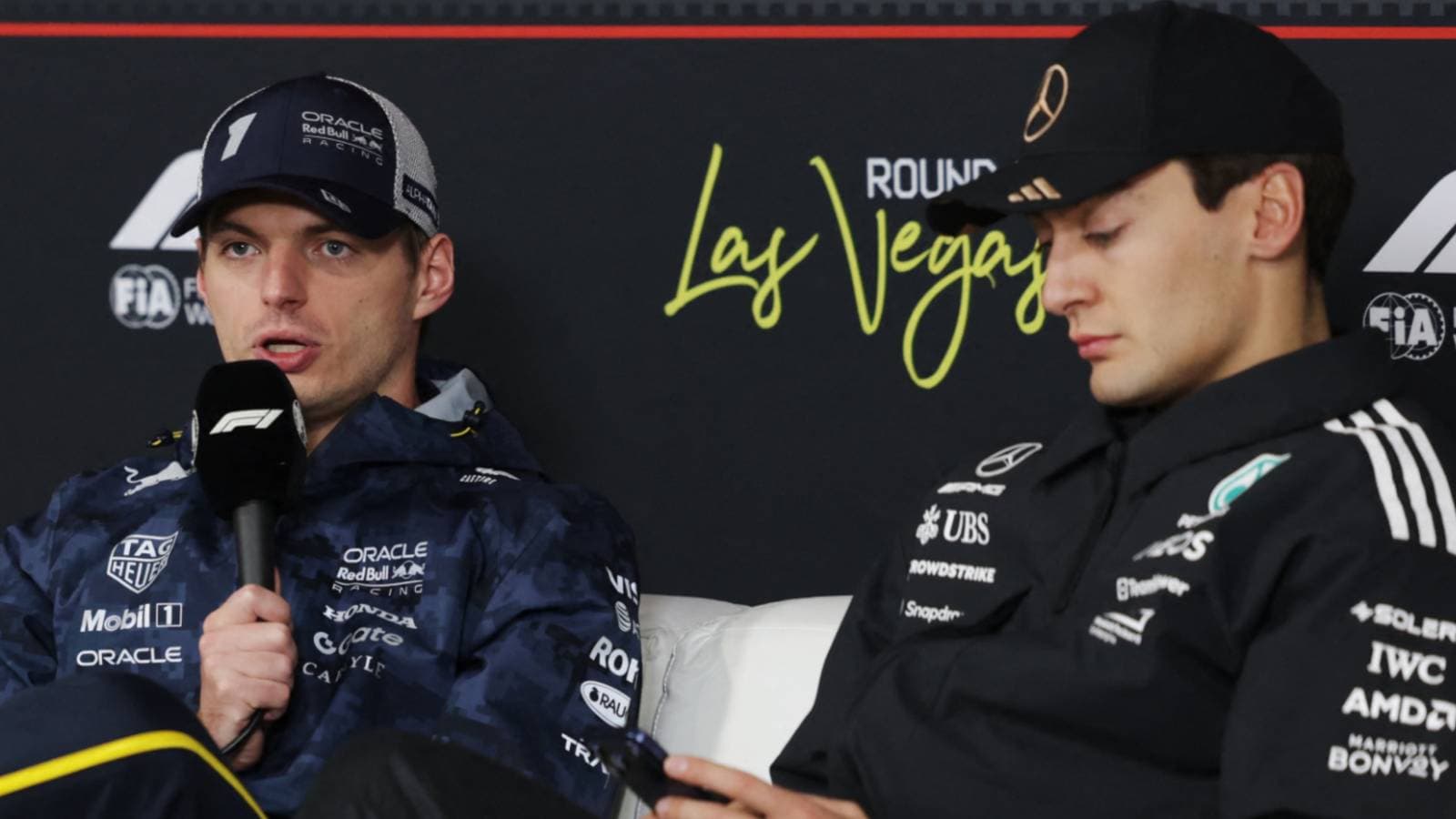
Speaking at the Spanish GP, Russell made clear that scenario was off the table. The plan is simple: take the pain once, when the upgraded package is ready.
“We were always going to take my penalty with the ADUO upgrade,” he said when asked if he regretted not following Antonelli’s route at Monza. “Otherwise, if I took it there, I'd have to take it again. So it makes zero sense for me.”
From a sporting and strategic standpoint, it’s ruthless logic. There is no point burning a penalty on an old spec when a more powerful, more efficient unit is on the horizon.
Targeting Austin – and a triple-header swing
Initially, Mercedes had looked at introducing the ADUO step for the next run of flyaway races: Azerbaijan, Malaysia, and Singapore. That would have aligned neatly with Russell’s expected penalty window.
The timeline has slipped.
Sources now indicate the upgraded spec is more likely to arrive for the brutal triple-header across the Americas – United States, Mexico, and Brazil – starting in Austin on October 23-25. That stretch of races, with its mix of altitude, temperature swings, and layout variety, is precisely where a refined turbo and power unit package can tilt a title fight or salvage a season.
When Mercedes does finally roll out the new engine, Antonelli will not be left behind. The championship leader, who did not take a full power unit change in Italy, only switched his internal combustion engine, battery, and control electronics at Monza. That decision now looks even smarter.
He still has room in his allocation to bolt on a new turbo, MGU-K, exhaust, and ancillaries without incurring penalties. In other words, when the ADUO-upgraded turbo and associated parts land, Antonelli can take them cleanly. Russell cannot. He must pay the grid-price.
Knock-on effect for customer teams
Under F1 rules, any specification improvement Mercedes introduces for its works cars must also be made available to its customer teams. There is a catch: at the first event, they only receive a single unit each.
That constraint will force some careful planning up and down the Mercedes-powered roster. Teams will have to decide which driver gets the new hardware first, and when to align their own penalty schedules with the works squad’s upgrade cycle.
For Russell, the path is harsher but clearer. He will carry his overstretched pool of components through the next races, knowing a heavy grid drop looms later in the year. When it comes, it will come with a sharper, more potent power unit under his right foot.
The question now is whether that delayed hit – likely landing in the cauldron of a triple-header – becomes the weekend that reshapes Mercedes’ season, or the one that defines its limits.