.svg&w=384&q=75 "logo")
Gasly Loses Monaco Podium as FIA Court Upholds Penalties
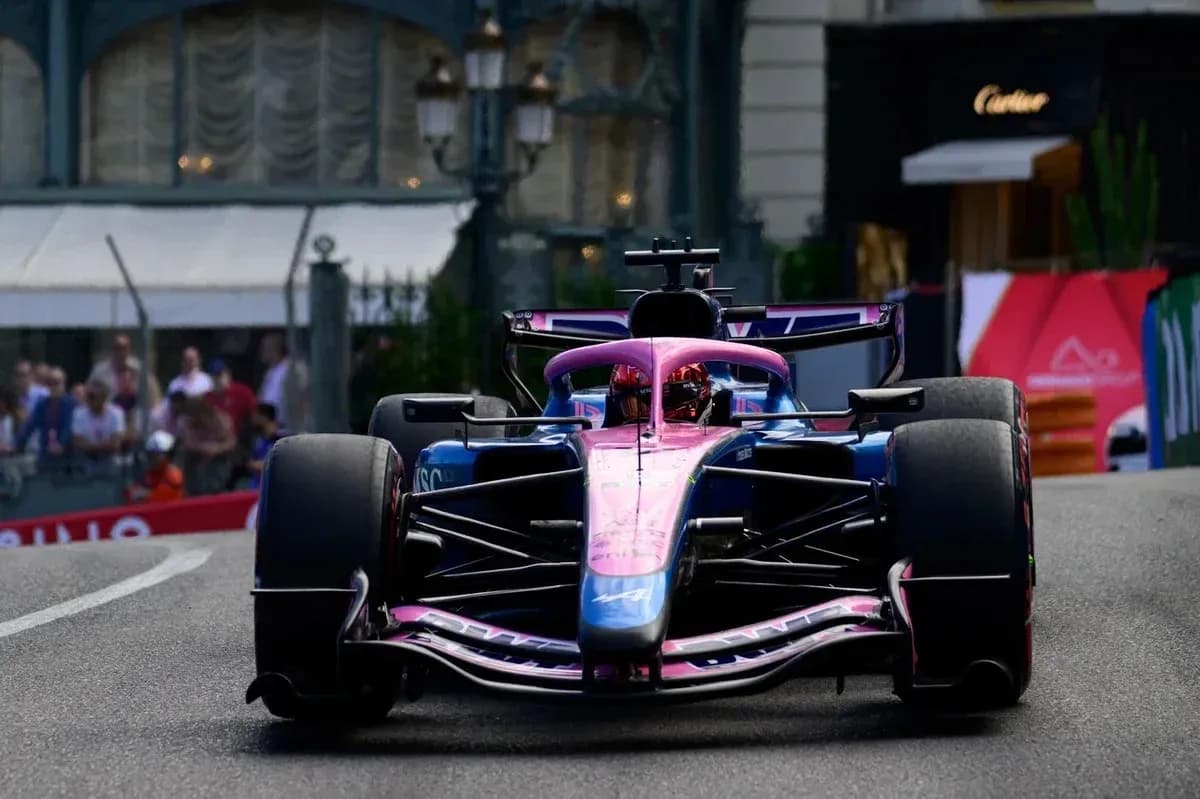
Pierre Gasly’s Monaco podium is gone. Again.
Weeks after Alpine celebrated a successful appeal and the Frenchman finally held the third-place trophy from the 2026 Monaco Grand Prix, the FIA’s International Court of Appeal has overturned that decision and reinstated his pitlane speeding penalties. Gasly drops back to seventh. Isack Hadjar moves up to third. The controversy, though, is nowhere near as neatly rearranged.
From Street Glory to Legal Maze
Gasly’s race in the principality had looked like a rare Alpine high point in a bruising season. He finished third on the road, only to be hit with two separate five‑second penalties for speeding in the pitlane, based on timing loops that later turned out to be wrongly positioned.
The error was not marginal. The FIA acknowledged a 77-centimetre discrepancy between the first two timing loops in the pitlane. That tiny strip of tarmac triggered an unusually high number of speeding infringements and turned a precision sport into a geometry problem.
Some drivers, like Oscar Piastri and George Russell, served their penalties during the race. Russell’s case was messy: Mercedes served his sanction incorrectly and he ended up with a drive‑through. Gasly, by contrast, took his penalties on race time, demoted from third to seventh after the chequered flag. That timing opened a door for Alpine that others didn’t have.
The team requested a right of review, arguing that the flawed loop positions had produced an illegitimate sanction. On 12 June, the stewards agreed and scrapped Gasly’s penalties, handing him back third place. The Monaco podium reshuffled, trophies changed hands, and some of Gasly’s rivals watched on with gritted teeth.
They did more than that.
McLaren and Red Bull Push Back
McLaren and Red Bull both appealed to the International Court of Appeal, arguing that the reversal had punished their drivers while rescuing Alpine. Hadjar and Piastri had already served their penalties in real time; they could not claw those seconds back in a courtroom.
The original stewards’ call had dropped Hadjar from third to fourth and Piastri from fourth to fifth once Gasly’s restored result rippled through the classification. Racing Bulls, whose drivers also lost positions, backed the appeal, as did Motorsport UK.
On Friday, the ICA sided with them.
The Court ruled that the original penalties for pitlane speeding stand. Gasly’s two five‑second sanctions are reinstated. His Monaco result is reset to seventh. Hadjar regains the third place he had celebrated on the day, this time by legal decree rather than champagne.
The Court’s Logic – And Alpine’s Fury
At the heart of the ICA’s reasoning lay a simple question: could Alpine prove, beyond doubt, that Gasly had not exceeded the pitlane speed limit?
The answer, in the Court’s view, was no.
Alpine argued that the inaccurate placement of the timing loops meant Gasly’s measured time between them did not reflect the true distance he travelled, and therefore his calculated speed was unreliable. The ICA acknowledged the measurement issue but pointed out that Alpine could not conclusively demonstrate that Gasly had travelled a longer distance than the system assumed.
The Court noted that the shorter recorded time between the loops could be the result of “a shorter path, greater speed, or a combination of both.” Without clear proof that the distance was longer – and therefore the speed lower – the sanction could not simply be erased.
On a separate point, the ICA addressed the broader fairness argument. Some drivers had served penalties during the race, others had them applied afterwards. Could that imbalance block the cancellation of what Alpine called an illegitimate penalty?
The Court was blunt. It stated that other drivers having served their penalties “cannot be an obstacle to the cancellation of an illegitimate sanction, because those penalties were served at the discretion and choice of the team.” To argue the opposite on the grounds of sporting unfairness, it added, would itself be “inconsistent with sporting fairness.”
Alpine was left seething.
In a team statement, it spoke of “disappointment and frustration” with the verdict and insisted it “still fully maintain[s] that Car #10 did not exceed the Pit Lane speed limit at any point during the race.” The team called the outcome “unjustly” punitive but accepted the judging panel’s decision and tried to pivot back to the track, stressing its focus on performance and a “very competitive Championship fight.”
The message was clear: they believe Gasly did nothing wrong, but the legal road has run out.
FIA Promises Reviews, Defends Stewards
The FIA, for its part, moved quickly to frame the decision as a legal correction rather than a condemnation of its stewards.
In its own statement, the federation underlined that the ICA had upheld the appeals of McLaren and Red Bull and “effectively overturn[ed]” the stewards’ earlier move to cancel Gasly’s penalties. At the same time, it defended the officials who made the original calls on a live, chaotic Grand Prix weekend.
The FIA stressed that stewards operate in a very different environment to the Court. The ICA has access to “extensive and additional legal counsel input, arguments and evidence” that are simply not available in the heat of a race. The governing body reiterated its “full” support for the independence and objectivity of its stewarding panels, describing them as an “integral part of global motorsport.”
Yet the federation also acknowledged that the saga had exposed weaknesses.
It confirmed it is “reviewing the methodology and operation of the current Formula 1 timing system and the related regulatory matters.” The right of review and appeal processes will also come under scrutiny, with the FIA promising a wider look at “judicial procedures and operations.”
Inside the stewarding community, the decision will be studied line by line. The FIA said its stewards “constantly review their processes” and that every ICA decision is “carefully examined” to ensure “continuous improvement.”
A Podium Lost, A System Questioned
For Gasly, the outcome is brutal. A rare Monaco podium has vanished twice – once on timing data, once in a courtroom. For Hadjar, it restores the result he believed he had earned on the streets of Monte Carlo, even if the celebration now feels more procedural than explosive.
The bigger issue lingers above them both.
When 77 centimetres of timing error can reshape a Grand Prix result months later, Formula 1’s obsession with precision suddenly looks fragile. The FIA has promised reviews. The teams have fired their legal shots. The drivers have paid the price.
The next time the cars snake through the Monaco pitlane, how much faith will anyone place in the numbers on the screen?