FIA President Urges Formula 1 to Support Alonso's Competitive Exit
Mohammed Ben Sulayem has drawn a clear line in the sand: Formula 1 should not allow Fernando Alonso to fade out of the sport stuck in an uncompetitive car.
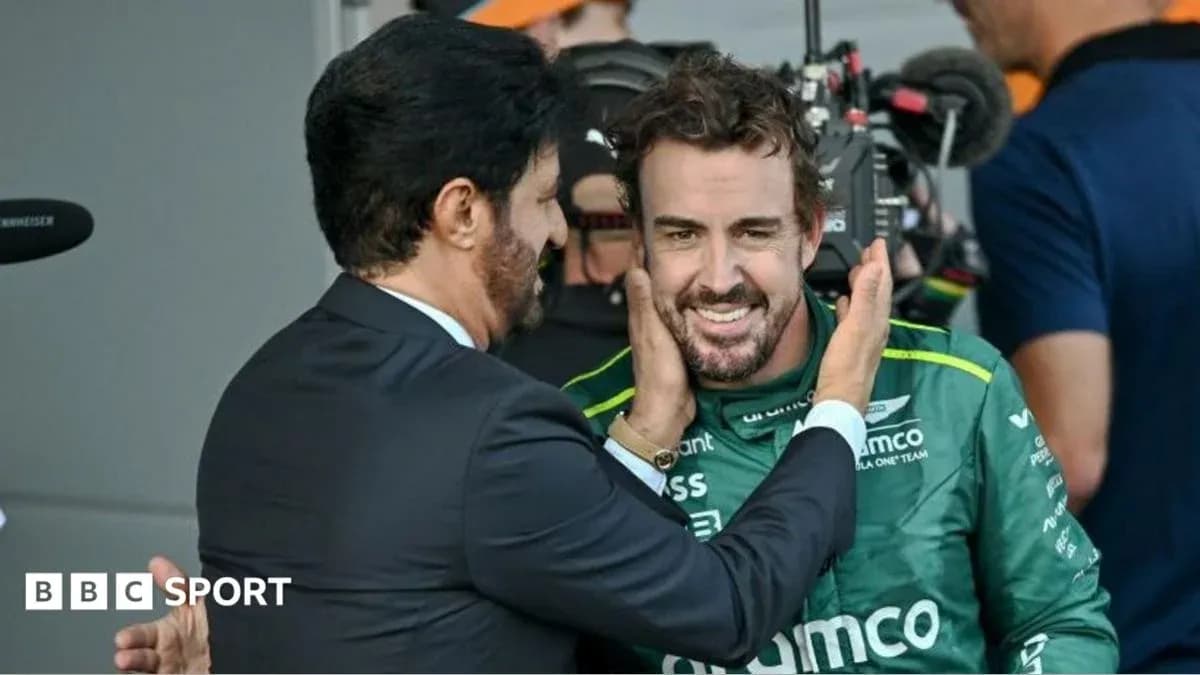
The FIA president, speaking in Madrid on Friday, made it plain he believes the two-time world champion deserves a very different exit.
"There is no way we can allow Fernando to leave – Alonso, a great champion – to leave just because of the circumstances," Ben Sulayem said. "That's not the way to leave the stage. He has to be successful and then he leaves whenever he wants, not because he was forced to leave because of the performance."
Alonso, 45, is out of contract with Aston Martin at the end of the season. On Thursday he admitted any decision on his future would come "not soon", a telling phrase from a driver who has seen enough false dawns to recognise another one.
Right now, the picture is bleak. Aston Martin sit 10th in the championship, marooned at the back after producing a car that has dropped them out of the fight at the front of the midfield. The situation is compounded by their engine partner: Honda’s power-unit is currently assessed as the least powerful on the grid.
For a driver of Alonso’s pedigree, it is a grim backdrop. For Ben Sulayem, it is unacceptable.
The FIA president described seeing Alonso in a subdued mood in his home country and decided he could not stay silent.
"I said to him, I saw him very sad, and I said, 'Fernando, I understand, it's not acceptable that you are coming to your own country and now after two times a world champion…'" Ben Sulayem recalled.
He then revealed that the FIA had already moved earlier in the year to open the door for performance gains on the engine side.
"We did something earlier, in May, legally for the team towards the engine to go and improve," he said. "And then I said to him: 'I am not going to tell you what we are going to do. Please tell me what you want because you are the driver and come and tell me what do you want us to do to improve these results.'"
Those comments immediately raised eyebrows. The president of the sport’s governing body talking about “doing something” to help a team and inviting a star driver to suggest what should be done sounds, on the surface, uncomfortably close to overreach.
The FIA moved quickly to frame his remarks.
A spokesperson clarified that Ben Sulayem was referring specifically to F1’s additional development and upgrade opportunities system, known as Aduo. Under that mechanism, engine manufacturers whose power units are judged to be more than 2% down on the benchmark are granted extra scope to upgrade their designs in a bid to close the gap.
"It is a comment about the Aduo process and that he hopes FA stays in the sport," the spokesperson said. "That is all."
Pressed on whether Ben Sulayem’s words hinted at a willingness to intervene beyond the FIA’s neutral, regulatory role, the response was defensive but firm.
"He is passionate about the drivers, having been one himself, and I really would not read too much into this," the spokesperson added.
Passion or not, the episode underlines two realities.
- One: Alonso’s future has become a live issue again. His talent, his age, his frustration at Aston Martin’s slump, and now the FIA president’s very public concern all feed into the same question – how long will he tolerate this level of performance?
- Two: every move around him is now under a microscope. When the head of the governing body starts talking about not “allowing” a great champion to leave under these conditions, the sport’s delicate balance between romance and regulation comes into sharp focus.
Alonso will decide his own future, on his own timetable. The question now is whether Aston Martin and Honda – helped by the Aduo system and the pressure that comes with a legend on the brink – can give him a car worthy of a final act on his terms, not theirs.