Ferrari's Spanish GP: Hamilton's Brake Issues and Leclerc's Strategy
Lewis Hamilton’s first race weekend in red at the Spanish Grand Prix never really got going – and it started to unravel almost immediately.
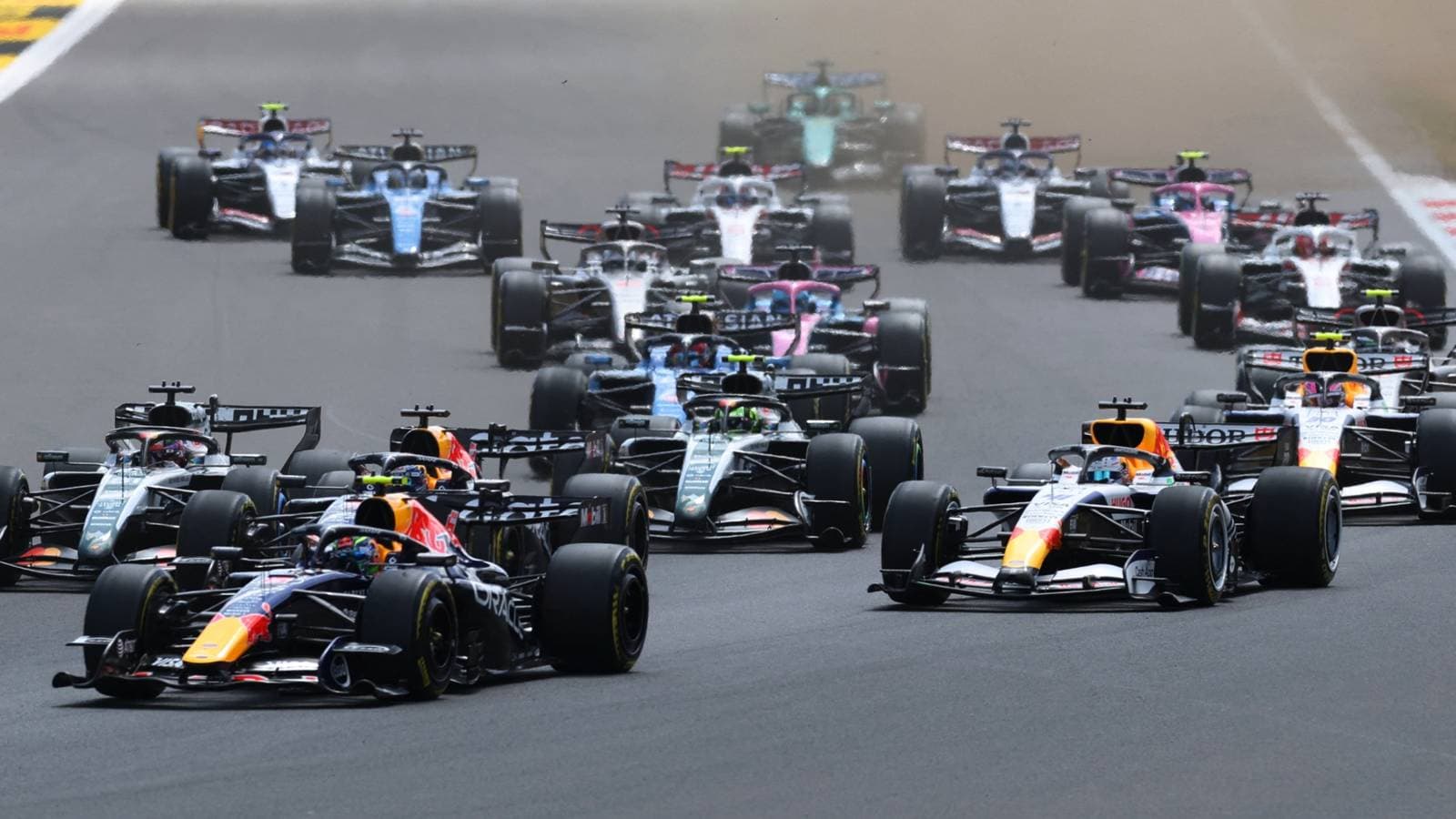
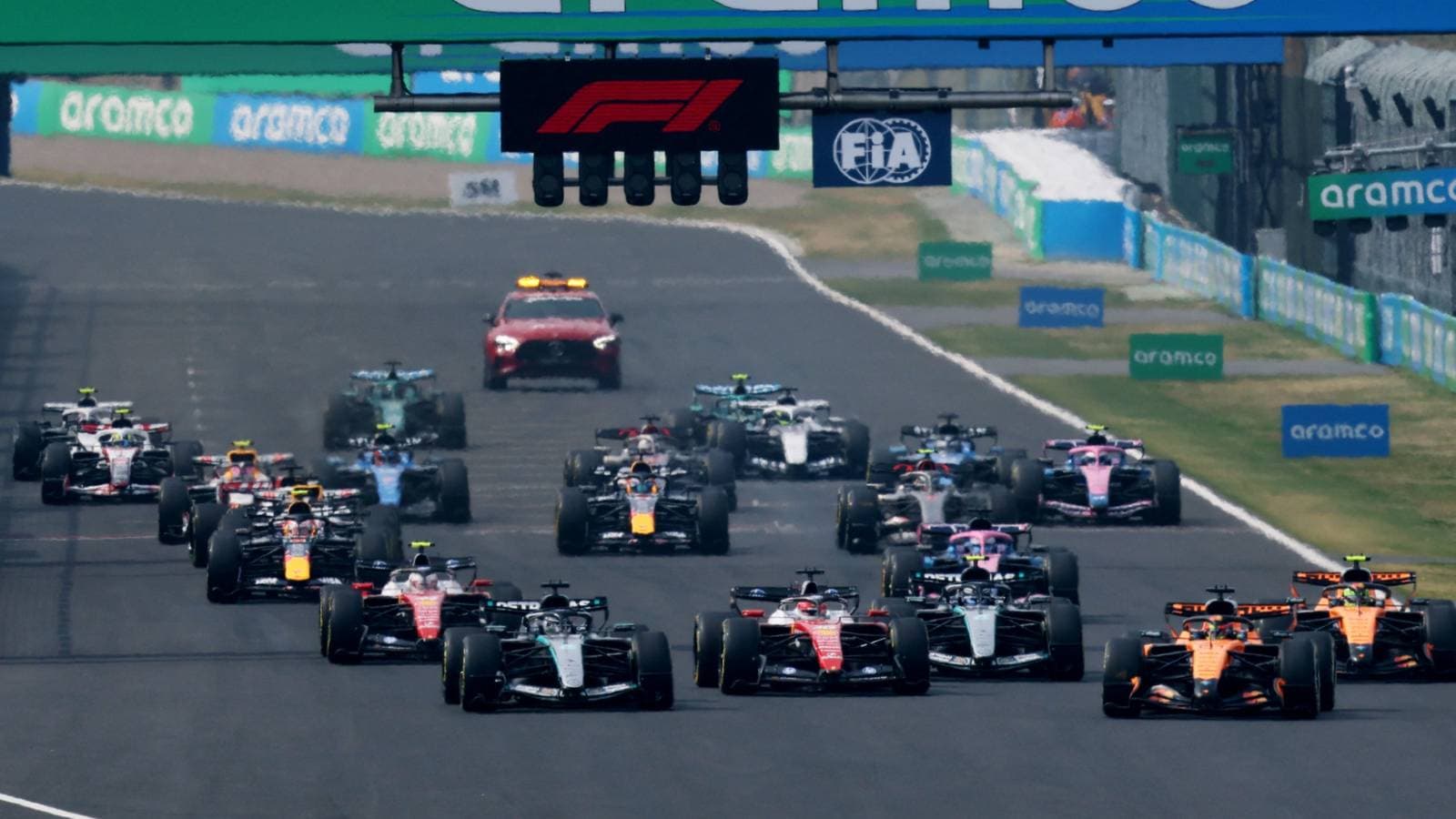
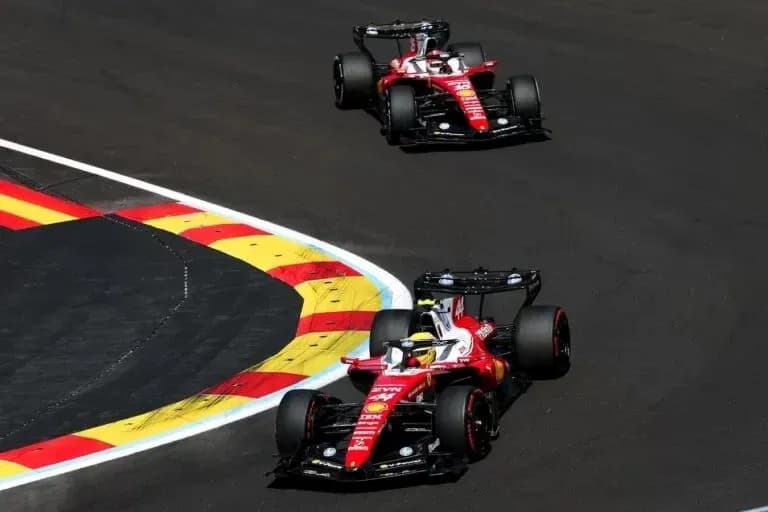
Barely a lap into the race at Madring, the seven-time world champion was wrestling not with rivals, but with his own brake pedal. While Red Bull argued over the radio with Max Verstappen about whether he should hand back a position after cutting the first‑lap chicane, Hamilton’s Ferrari was developing a problem that would quietly dictate the rest of his afternoon.
The Brit briefly benefited when Verstappen slowed to return position to Andrea Kimi Antonelli and Hamilton. The moment didn’t last. As soon as Hamilton tried to lean on the car, the brake issue bit and Verstappen simply drove back past him.
From the pit wall, Ferrari tried to fight the problem with software and settings rather than spanners.
“The pedal was long, but we tried to fix it from the pit wall, it came back, and once again,” team principal Frederic Vasseur explained afterwards. The team saw the issue flare up early – “Lap 1 or Lap 2” – and made a call that told you everything about their risk threshold with a new signing and a long race ahead.
On a circuit that punishes any weakness in braking stability, Ferrari refused to gamble. “It was too risky to go to the next lap. It would have made no sense, to take a crazy risk,” Vasseur said. With 56 laps still on the board, they chose caution over heroics.
Leclerc plays the long game on hards
Once Hamilton’s race was effectively compromised, attention switched to the other side of the garage – and a very different kind of frustration.
Charles Leclerc’s afternoon hinged on an early Virtual Safety Car. Ferrari rolled the dice: hard tyres, long first stint, and the hope that the race would be turned on its head by a full Safety Car or a red flag. The interruption never came.
Leclerc stretched the hard compound to around 49 laps, an old-school marathon run in an era of sprint sprints. The pace, crucially, held up. Vasseur was bullish about what the stint said about Ferrari’s underlying speed.
“The race was more than good, we did a stint of 49 laps with the hard and the pace was still there,” he said. Ferrari had split strategies between their cars, as many teams did – one on softer rubber, one on the hard – to cover every scenario. Leclerc led the hard‑tyre group and, in Vasseur’s eyes, had a route to something far bigger if the race had broken his way.
“With the second incident, the red flag, it was the win. With a safety car, he would have been P2, P3, nothing like P4,” Vasseur argued. To him, this was a day defined by roulette-wheel strategy and a lack of external chaos, not by a lack of pace. “On his side, the pace was good, it's the only thing that we can do on Sunday.”
The sting, though, lay elsewhere. “Honestly, if we miss something, it's more qualifying,” Vasseur admitted. Start too far back at a track like Madring and you spend Sunday paying off Saturday’s debt. Ferrari know it. Leclerc feels it every lap he spends staring at someone else’s diffuser.
A soft-tyre sting in the tail
The late twist came on the softs.
Leclerc bolted on the red‑walled tyres for the final phase, armed with grip and the theoretical chance to attack Lando Norris. On paper, it was the perfect platform for a charge. On track, it never materialised.
“On the soft at the end I couldn't really push for other reasons,” Leclerc said. The hard stint had been strong. The closing laps were not. The gap to Norris refused to melt away, even with the softer compound and fresher rubber.
Inside the cockpit, the picture wasn’t clear either. “Bryan [race engineer] and I didn't speak too much during the race because on a track like this I just wanted to have as little communication as possible,” he explained. At one stage he even asked what they were really fighting for, such was the isolation of a long tyre run without many radio calls.
When pressed on what had gone wrong with the softs, Leclerc smiled and shut the door. “No, not really, no I can't, but it's fine, I mean it will be fine for the next race,” he said, keeping the specifics in-house. The only public verdict he offered was broader: the real bill is being paid on Saturdays, not Sundays.
“Eventually where we are paying the price, it's our qualifying pace, because when you are starting further away then you get to the race and it's very difficult to make up those positions.”
No blame for Hamilton
One potential flashpoint never ignited. With Hamilton limping on Lap 1 and cutting corners as he tried to cope with the braking problem, there was a question over whether he had compromised Leclerc’s race in those opening moments.
Leclerc dismissed it.
“No, I mean he did it very, very quickly obviously,” he said. Hamilton’s issues, and the lines he was forced to take, didn’t cost the Monegasque time in any meaningful way. “He didn't hold me up and wouldn't have changed anything in my race.”
So Ferrari left Spain with two different puzzles.
On one side, a marquee signing whose race was shaped by a brake pedal that felt wrong from the very start, and a team unwilling to risk disaster so early in a long afternoon. On the other, a driver who proved the car could nurse hard tyres deep into a stint, only to be left wondering why the softs refused to deliver the final punch – and why he keeps having to launch those punches from too far back on the grid.
The speed over a race distance looks close to where Ferrari want it. The questions now sit on Saturdays, in the brake-by-wire systems, and in the hidden details of a soft-tyre stint that Leclerc isn’t yet ready to share with the outside world.