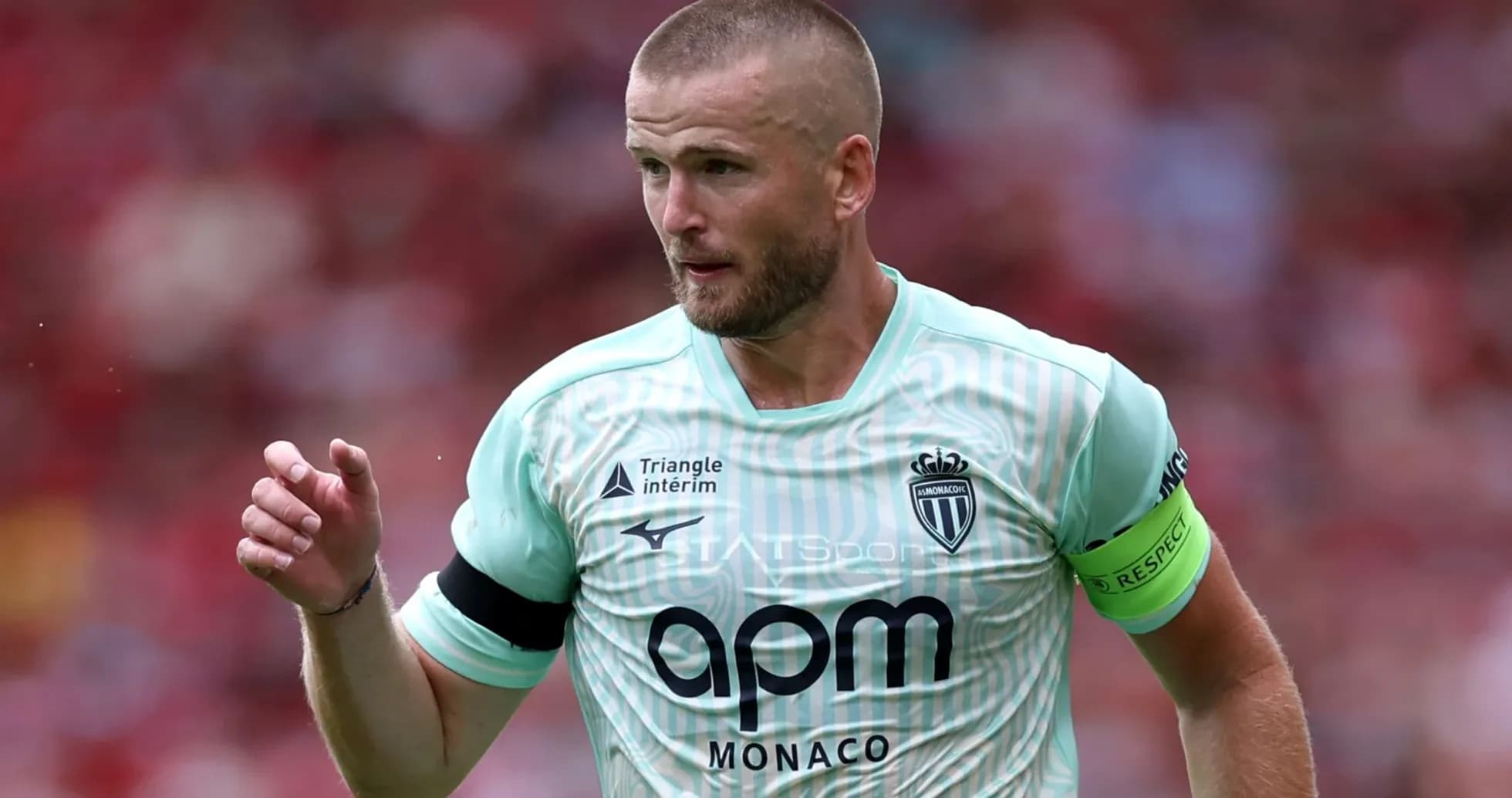
Eric Dier: From Utility Man to Captain in Monaco
Eric Dier has heard it all before. Too slow. Too inconsistent. Useful, yes, but never truly elite.
And yet, there he is in Monaco, wearing the captain’s armband, anchoring a defence in one of Europe’s most rarefied postcodes, quietly stitching together the kind of late-career revival few saw coming.
From utility man to unlikely leader
For almost a decade at Tottenham, Dier was the man managers turned to when problems needed solving. Centre-half, holding midfielder, emergency full-back – he did the lot. Across nine-and-a-half years and 365 appearances, he became part of the furniture in north London, valued inside the dressing room far more than he ever was in the wider debate about what constitutes a top-class player.
England managers trusted him too. Forty-nine caps for the Three Lions, tournament minutes, big nights, big pressure. But the whispers never really stopped: solid, yes, but was he truly of the highest level?
What nobody questioned was his attitude. Dier worked, listened, adapted. He cared about being the best possible team-mate. Harry Kane, Tottenham’s all-time leading scorer, saw that up close for years.
When Kane left Spurs for Bayern Munich in 2023 in search of the trophies that had eluded him in England, it felt like a natural break in that long-standing bond. Then January 2024 rolled around, and Bayern brought Dier to Bavaria. Old allies, new shirts, same dressing room.
He didn’t just make up the numbers. Dier left Germany as a Bundesliga champion, a title winner alongside Kane, and turned that loan into a permanent deal. The stay was short, the impact real.
A fresh start on the Riviera
The next chapter came quickly. Out of contract and out of Germany in the summer of 2025, Dier found himself in unfamiliar territory: the free agent market. Monaco, always alert to opportunity, moved.
Stade Louis II can be an unforgiving stage for those who coast. Dier did the opposite. He slotted straight into central defence, brought order, brought voice, and before long the armband followed. At 32, the so-called utility man had become the figurehead.
It has not all been smooth. Ex-Monaco defender Gilles Grimandi, speaking to GOAL, did not gloss over that reality. Dier “went through a hard time because even in Monaco it was quite complicated last season for him,” Grimandi said, before underlining the key point: “and he played well.”
In a side that had found a rhythm, Dier formed a partnership with Sadibou Sane that caught the eye. Sane, fresh from Metz and billed as one of Ligue 1’s emerging talents, impressed Grimandi too: “Sane is a great player, he's a young talent… in a few months he showed a lot of ability. I think the connection together is good.”
That blend of experience and raw potential at the heart of Monaco’s back line became one of the quiet success stories of their campaign.
The unbeaten run that had underpinned Monaco’s strong start to the season finally snapped with a 1-0 defeat at the weekend, a reminder that even the best-laid structures can creak. But the affection for Dier within the club remains strong. “I heard that people in Monaco like him a lot,” Grimandi noted. “It's a lovely story. He went through a hard time and now he looks to make a nice life being captain and playing in Monaco at this moment.”
A different kind of football city
Monaco is not London, Munich or Manchester. It doesn’t want to be.
Grimandi knows those streets well, having spent six years there before winning two Premier League titles with Arsenal. He paints a picture of a footballer’s sanctuary: “Monaco is the only place in Europe where the players know the fans and the fans don't know the players. That's what they say sometimes.”
It is a line that explains plenty. The glare is softer. The noise is lower. You can walk down the street and vanish into the crowd, even if you’re the club captain. “It's a very quiet life,” Grimandi said. “You can walk down the street, nobody will recognise you, you have a quality of life, you have security.”
For a 32-year-old who has lived through the scrutiny of Premier League and international football, that matters. The routine becomes calmer, the pressure more controlled, the margins for reflection wider.
“It's good when you're 32 and it's good when you are young,” Grimandi added, before acknowledging the trade-off. The comfort and glamour can sometimes cloud footballing ambition. “Except that sometimes it's a bit complicated, expecting more from football. It's a fantastic place to live.”
English players, he says, have long been drawn to the idea. “I remember when I was at Arsenal, most of the English players asked me a lot of questions about Monaco. It's of course a good time for him to live there.”
For Dier, that “good time” comes with responsibility. This is not semi-retirement on the Riviera. He signed a three-year contract on arrival, and with just over 18 months left on that deal, his influence still runs through the squad.
Battling the body, guiding the next wave
Last season tested him physically. Calf and hamstring injuries restricted Dier to just 13 appearances in all competitions, a frustrating tally for a player who has always defined himself by availability and effort.
Yet even in limited minutes, he made an impression. Coaches see it on the training pitch. Team-mates feel it in the dressing room. Born in England, raised in Portugal, hardened in the Premier League and the Bundesliga, Dier brings a breadth of experience few in the Monaco squad can match.
He has become a reference point for the next generation. Names like Lamine Camara and Ansu Fati look to him, not for tricks or stepovers, but for the habits that sustain a career at the top: positioning, communication, resilience, the unglamorous details that separate promise from longevity.
The narrative around Dier has shifted. Once the lightning rod for debates about what he wasn’t, he now stands as a model professional for what a modern senior player should be in a young, ambitious squad.
His story is not finished. The contract clock is ticking, the legs have miles in them, and there will be more battles with form and fitness. But as he patrols the back line at Stade Louis II, captain’s band tight around his sleeve, Dier looks less like a player clinging to relevance and more like one writing a measured, quietly defiant final act.
How many more chapters he adds in Monaco will depend on that body holding up and that hunger staying sharp. On current evidence, he is not done yet.