.svg&w=384&q=75 "logo")
Elina Svitolina's Padel Club Hit in Russian Attack Amid US Open Drama
The numbers are chilling. The image that brought them to life was personal.
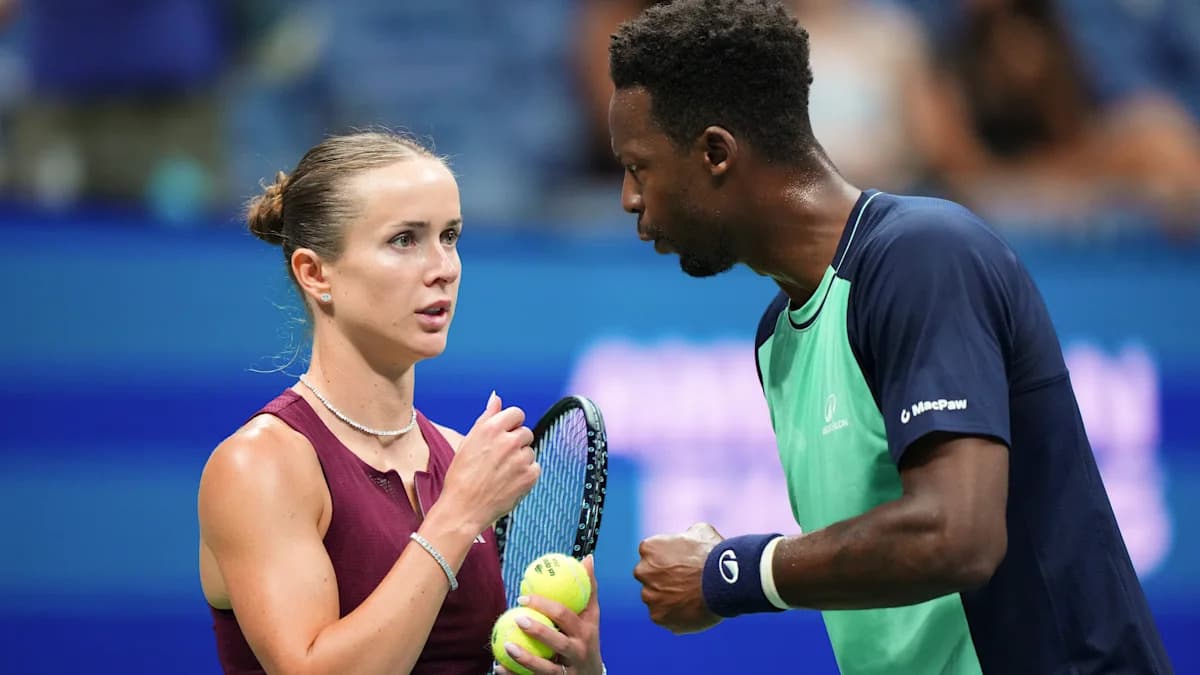
Elina Svitolina revealed that a Russian strike has hit the padel club she owns in Kyiv, turning another sports venue into rubble in a war that has already ripped through Ukrainian sport.
“As of today, 776 Ukrainian athletes and sports officials have been killed as a result of Russian aggression,” Svitolina said on Instagram. “942 sports facilities across Ukraine have been damaged or completely destroyed. Today, my club, SVITO Padel Club, became one of them.”
For Svitolina, this is no longer just a statistic sheet of loss. It is her own investment in the next generation, reduced to debris.
“Ukrainian athletes and our young generation do not have the opportunity to train and prepare for international competitions on equal terms with athletes from other countries,” she wrote, turning a personal blow into a wider warning.
Her message carried a clear call beyond the tennis world.
“With this message, I want to reach out to our international partners and friends who support and cheer for us, Ukrainian athletes, on the international stage, and ask for your support and concrete actions that can help stop the aggressor.”
While one Ukrainian star counted the cost of war at home, the sport’s present and future were locked in brutal contests under the lights of New York.
Sabalenka survives Noskova in Arthur Ashe epic
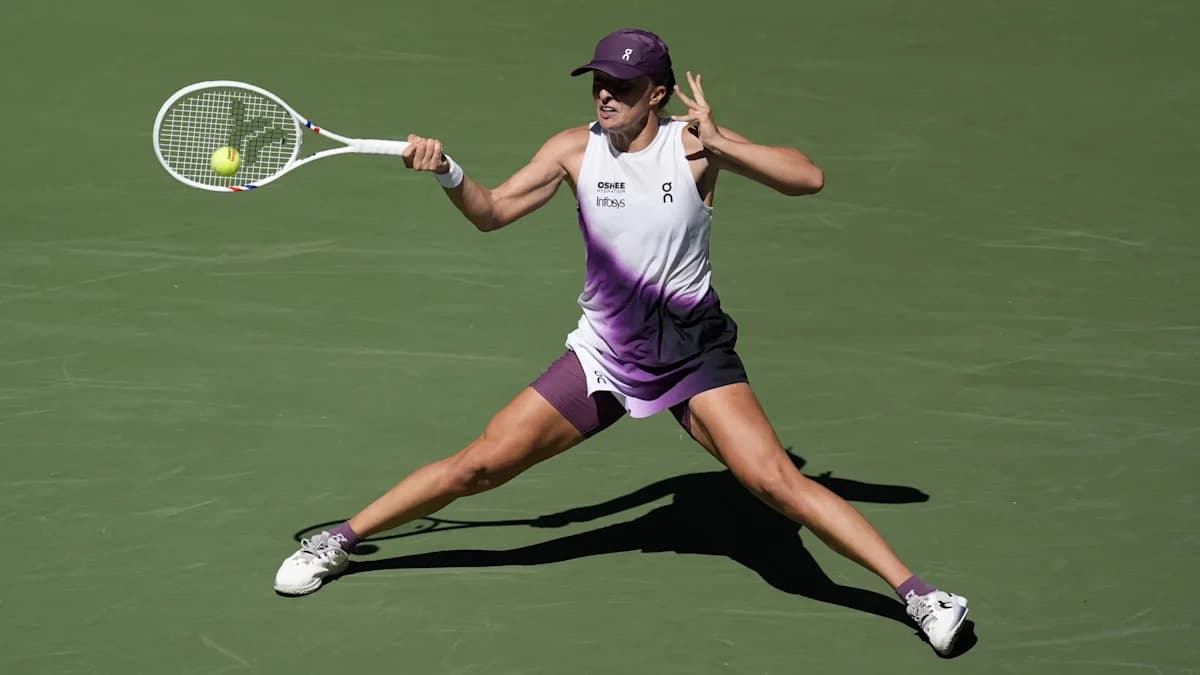
On Arthur Ashe Stadium, Aryna Sabalenka flirted with defeat and then did what champions do. She found a way.
The world No 1 and two-time defending US Open champion needed two tiebreaks and every ounce of nerve to subdue Linda Noskova 7-6(1) 3-6 7-6(10-7) in a three-hour quarter-final that swung wildly and refused to let go.
Noskova, the Wimbledon champion, led by a break in the deciding set. She then edged ahead in the final-set tiebreak. The upset felt close enough to touch.
Sabalenka ripped it away.
“What a battle. What an incredible player she is and I’m speechless right now because I was pushing myself to the limit in this match, especially in the third set,” Sabalenka said afterwards. “I honestly thought that that’s it, the match is over and probably that’s what helped me to kind of like, I don’t know, feel loose and just go after my shots.”
She sealed it with a second-serve ace, a bold closing statement on a night when her composure had wavered but never fully cracked. With it, she reached the semi-finals in Flushing Meadows for the sixth straight year, a streak of consistency that now underpins her aura as the woman to beat in New York.
Noskova, 21 and fearless, had matched Sabalenka blow for blow, dragged her into long, physical rallies and repeatedly tested the top seed’s patience. She left with a defeat that hurt, but also with proof that her game belongs at the sharp end of the biggest events.
Her plan for recovery was blunt, and very human.
“I’m going to stay for, like, three more days. I’m going to get drunk and forget about this, I guess,” she told reporters with a laugh. “I’m old enough to do that, thankfully. I love New York. I have so many places I want to go. I have a lot of great friends here. They will show me around and, you know, I will forget about it hopefully in the next couple of hours.”
There was plenty she might want to forget: the missed chances, the narrow lead in the deciding set, the edge in the tiebreak that slipped away. But there was also a performance that will echo long after the hangover fades.
Michelsen’s meltdown, Tiafoe’s fightback
On the same court, the afternoon session had already turned into a marathon.
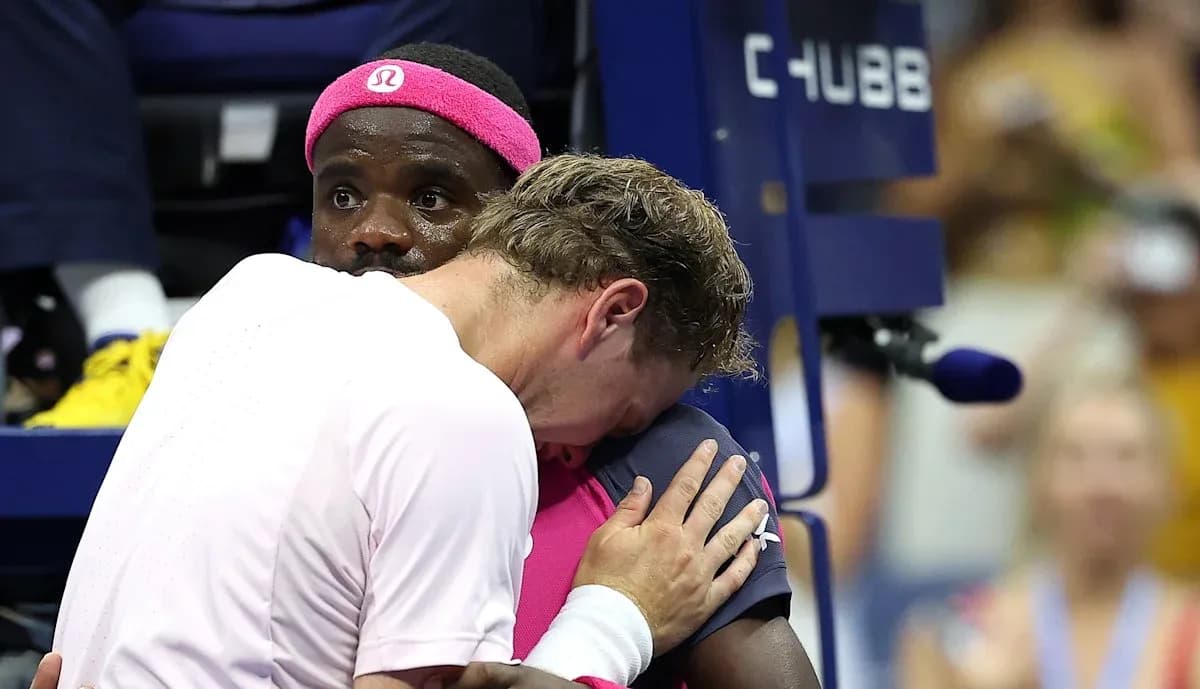
Alex Michelsen, the American young gun, stood on the brink of a statement win over compatriot Frances Tiafoe in their quarter-final. The 22-year-old had been “absolutely cruising”, taking the first two sets with relative comfort and dropping the third only 7-5 to the more seasoned No 11 seed.
Then the match twisted.
Broken early in the fourth set, Michelsen began to unravel. During one service game, he turned and unloaded on a fan sitting behind him. A couple of points later, his racquet hit the court and his frustration spilled toward his box.
“First real visible signs of irritation from Michelsen,” Jim Courier noted on the broadcast. “He has been pretty buttoned up, with only positive emotion coming out of him, until now.”
The composure that had carried him through two and a half sets started to leak away. Tiafoe, sensing life, dug in.
By the deciding fifth set, the contest had become a test of nerve as much as shot-making. Michelsen surged again, storming to a 3-0 lead. The upset was back on. The crowd could feel it.
Tiafoe pushed back.
From 3-0 down, he clawed his way to 3-3, threatening to flip the script entirely. At 3-0, Michelsen had looked ready to run away with it; at 3-3, Tiafoe suddenly seemed poised to break and turn the match on its head.
Michelsen, to his credit, steadied and held, halting the bleeding just as the momentum threatened to desert him completely.
On Tiafoe’s next service game, the tension spiked again. At 15-30, he stood on the edge of going a double break down in the decider. Courier called it “a crisis moment”. Tiafoe survived it, held serve and kept the contest alive.
They were closing in on four hours on court. The afternoon had bled into early evening — it was already 6.35pm in New York — and the schedule creaked. Once they finished, Arthur Ashe would have to be cleared and reset for a night session of Jessica Pegula v Emma Navarro followed by Ben Shelton v Carlos Alcaraz, both with the potential to go long if Shelton caught fire.
The drama refused to relent. Tiafoe finally broke back again.
“He’s hanging in there with everything he’s got now,” commentator Nick Lester said, capturing the mood as the No 11 seed threw everything into the comeback.
From a rout to a meltdown to a dogfight, the match had travelled the full emotional spectrum. For Michelsen, it was a harsh education in closing out a heavyweight under the Ashe lights. For Tiafoe, it was a test of resilience that could yet define his fortnight.
From Kyiv to Queens, from a shattered padel club to a packed Arthur Ashe, tennis lived two very different realities in a single day: one framed by war and loss, the other by survival and the thin line between glory and regret.