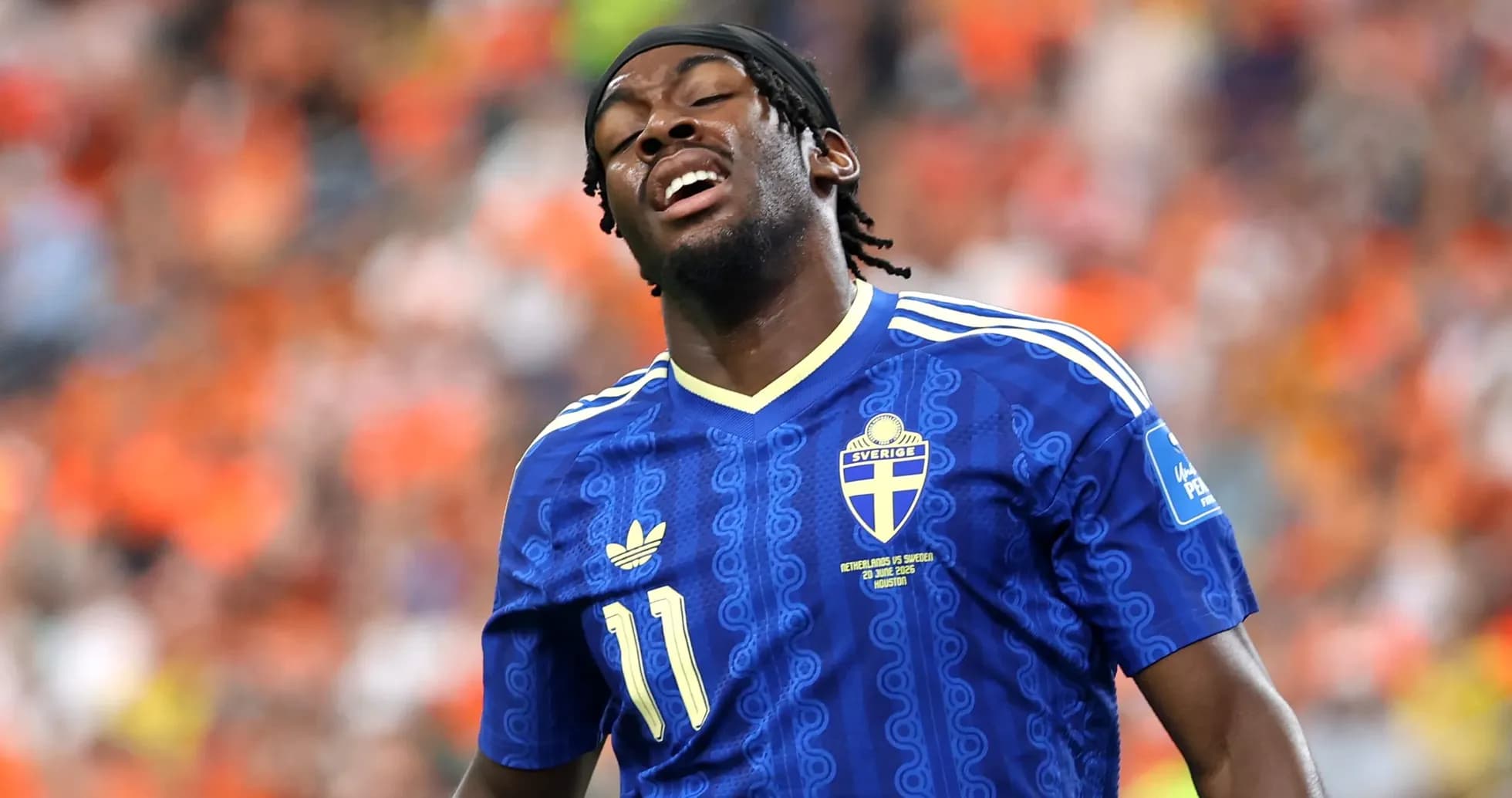
Elanga's Injury Woes Impact Sweden's UEFA Nations League Plans
Anthony Elanga’s autumn was supposed to be about lift‑off. Instead, it has stalled on the runway.
The 24-year-old winger, one of the brightest sparks of Sweden’s recent revival, has been ruled out of the upcoming UEFA Nations League fixtures after suffering an injury in the past week. The Swedish FA confirmed his absence when the squad list dropped, his name missing from a group preparing to face Romania, Poland, and Bosnia and Herzegovina in a fiercely competitive Division B campaign.
For club and country, the timing could hardly be worse.
Jaissle fears the worst
The alarm bells started ringing in the wake of The Magpies’ bruising 4-1 defeat at Leeds. Matthias Jaissle, usually measured even in defeat, cut a worried figure when asked about Elanga’s condition.
“The injury doesn't look good. We need to investigate how serious it is,” the German coach admitted, laying bare the concern inside the club. “Elanga is struggling with injury but at the moment it does not look that good. Unfortunately, he is injured. We need to investigate further and in more detail to find out how long he will be out. We will miss him and hope he is back to play quickly. It could be [long-term]. We hope not. He will get another MRI next week, and we will see.”
No sugar-coating. No attempt to play it down. One of his most explosive attacking outlets could be gone for a “significant period”, and Jaissle knows it.
Elanga had opened the season with the kind of intent that makes defenders retreat and coaches relax. Direct, sharp, relentless in transition, he offers a vertical threat that stretches games and changes the tempo in an instant. Losing that weapon is one thing for a club trying to steady itself after a heavy defeat. Losing it for the national team, on the eve of a demanding Nations League schedule, is another entirely.
Potter turns to the future
Graham Potter has not been spared by the injury list either. With Elanga out and key figures like Isak Hien and Jacob Widell Zetterström also sidelined, the Sweden manager has responded by widening the net.
An extra-large squad has been named to spread the workload and test the depth. It is part necessity, part opportunity.
Potter’s most telling decision comes in goal. Veteran Kristoffer Nordfeldt has been left out, with the door opened to younger options Melker Ellborg and Noel Tornqvist.
“I think it's a good time to look a little forward, bring in more younger goalkeepers who we need to get to know and gain a greater understanding of, while giving them the chance to gain experience at this level which is important for their development,” Potter said.
It is a clear signal: this is not just about surviving a tricky window without some of his regulars. It is about accelerating the next phase of Sweden’s evolution.
No hiding place in Division B
There will be no gentle bedding-in period for the new faces. Sweden’s group offers no soft landings.
Bosnia and Herzegovina, Poland, and Romania form a Division B pool loaded with awkward assignments and seasoned international operators. The campaign opens on September 25 against Romania in Stockholm, before Poland arrive three days later for another home test that will demand control, resilience, and goals.
Goals, at least, should still be in good supply.
Even without Elanga, the squad carries serious firepower. Liverpool’s Alexander Isak and Arsenal’s Viktor Gyökeres are expected to shoulder the attacking burden, a frontline capable of bullying defences and deciding games on their own terms. The star power remains; the margins, though, have tightened.
Potter framed the window as a balancing act between result and renewal. “We also need to continue to develop the team and build on what we established in the World Cup and a good way to do that is to win matches,” he concluded.
The message is blunt: experimentation is no excuse for stagnation.
A test of depth and direction
So Sweden move into the Nations League with a squad stretched but not stripped, ambitious but slightly bruised. Elanga’s absence removes a burst of pace and unpredictability that would have suited this group perfectly, especially on home soil where one moment of acceleration can flip an entire evening.
For Jaissle, the next MRI will shape the coming months. For Potter, the coming weeks will reveal whether Sweden’s emerging generation can carry the weight of expectation sooner than planned.
The campaign starts in Stockholm. The bigger question hangs over it: can Sweden grow while one of their most exciting players watches from the sidelines?