.svg&w=384&q=75 "logo")
Cricket Australia Opens Big Bash to Private Investment
Cricket in Australia crossed a line on Tuesday it has tiptoed around for years.
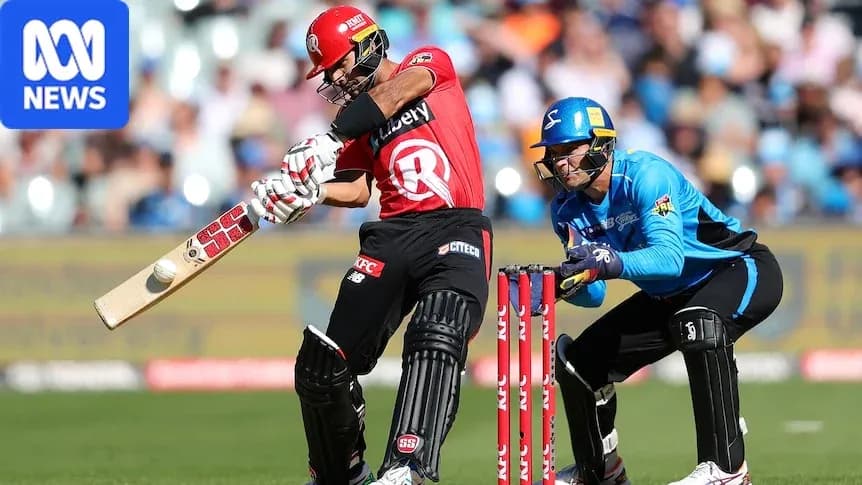
Cricket Australia (CA) confirmed it will invite private investment into the Big Bash League, starting with the sale of the Melbourne Renegades – a move the governing body is openly billing as a defining shift in how the sport is run and funded.
The CA board has signed off on a process that, if it runs to plan, will see the Renegades operating under new ownership by the 2027/28 Big Bash season. That timeline gives administrators, state bodies and potential investors three summers to thrash out the detail of what is effectively a new era for the domestic T20 competition.
Renegades first in line
The Renegades will be the test case. Their sale will serve as the template for what follows.
If the market responds strongly, CA has flagged it will “consider taking other clubs to market” under what it calls a self-determination model. In practice, that means each state member will be able to decide for itself whether to seek private backing and how far down that path it wants to go, based on what it believes is best for its own club and community.
This is not a sudden brainstorm. The idea of private ownership in the Big Bash has been argued over in boardrooms and back corridors for months, with pressure intensifying as global T20 leagues backed by private capital surged ahead.
Back in May, CA chief executive Todd Greenberg didn’t bother to sugar-coat it, describing private investment as “inevitable”. The debate sharpened again in June when Cricket Victoria began drawing up plans to sell the Renegades, effectively forcing the national body to confront the issue.
Control stays in Jolimont
For all the talk of a new frontier, CA is adamant this is not a surrender of power.
Chair Mike Baird framed the decision as a pivotal but controlled step.
“Beginning the sales process for the Renegades allows us to take the first step in a self-determination model for our members and represents a defining moment for the game,” he said.
The message is clear: money can come in, but the keys are not being handed over.
CA and its members will retain control of the levers that shape Australian cricket: international scheduling, player availability, Big Bash salary caps, branding proposals and, crucially, the reserve price for a licence to operate. No investor gets in the door unless that price is met and the governing body signs off.
That framework is designed to reassure those who fear the Big Bash could drift away from its original purpose and into the orbit of private owners with very different priorities.
A bet on growth from the top down
Baird has positioned the move as a growth play, not just for the Big Bash, but for the entire pyramid of the sport.
“Cricket Australia and its state members are united in our commitment to investing in and growing the BBL and WBBL, and to advancing the interests of cricket at every level,” he said.
The argument from CA is simple: open the door to private capital at the top, and the benefits will flow down. More money, they say, means stronger clubs, bigger audiences and the ability to keep ploughing funds into community cricket, grassroots participation, domestic and international pathways and the elite national teams.
By aligning the men’s BBL and women’s WBBL in the same conversation, CA is also signalling that any uplift in commercial value should be felt across both leagues, not just the men’s competition.
Months of wrangling, one decisive step
Behind the scenes, this has been a long, painstaking process. Baird acknowledged the sheer volume of work that has gone into reaching this point, describing “an enormous amount of analysis, discussion and collaboration over many months”.
The stakes explain the caution. Once a league opens itself to private ownership, it rarely goes back. CA knows it is not just selling a licence; it is reshaping the financial and cultural landscape of its flagship domestic product.
Now the theory meets the market. The Renegades, one of the Big Bash’s marquee city clubs, will be the first to discover how much value investors place on a slice of Australian cricket’s future – and how far the sport is willing to go to match the financial muscle of rival T20 leagues around the world.