.svg&w=384&q=75 "logo")
Champions League Draws and Transfer Market Myths: The Reality Behind the Headlines
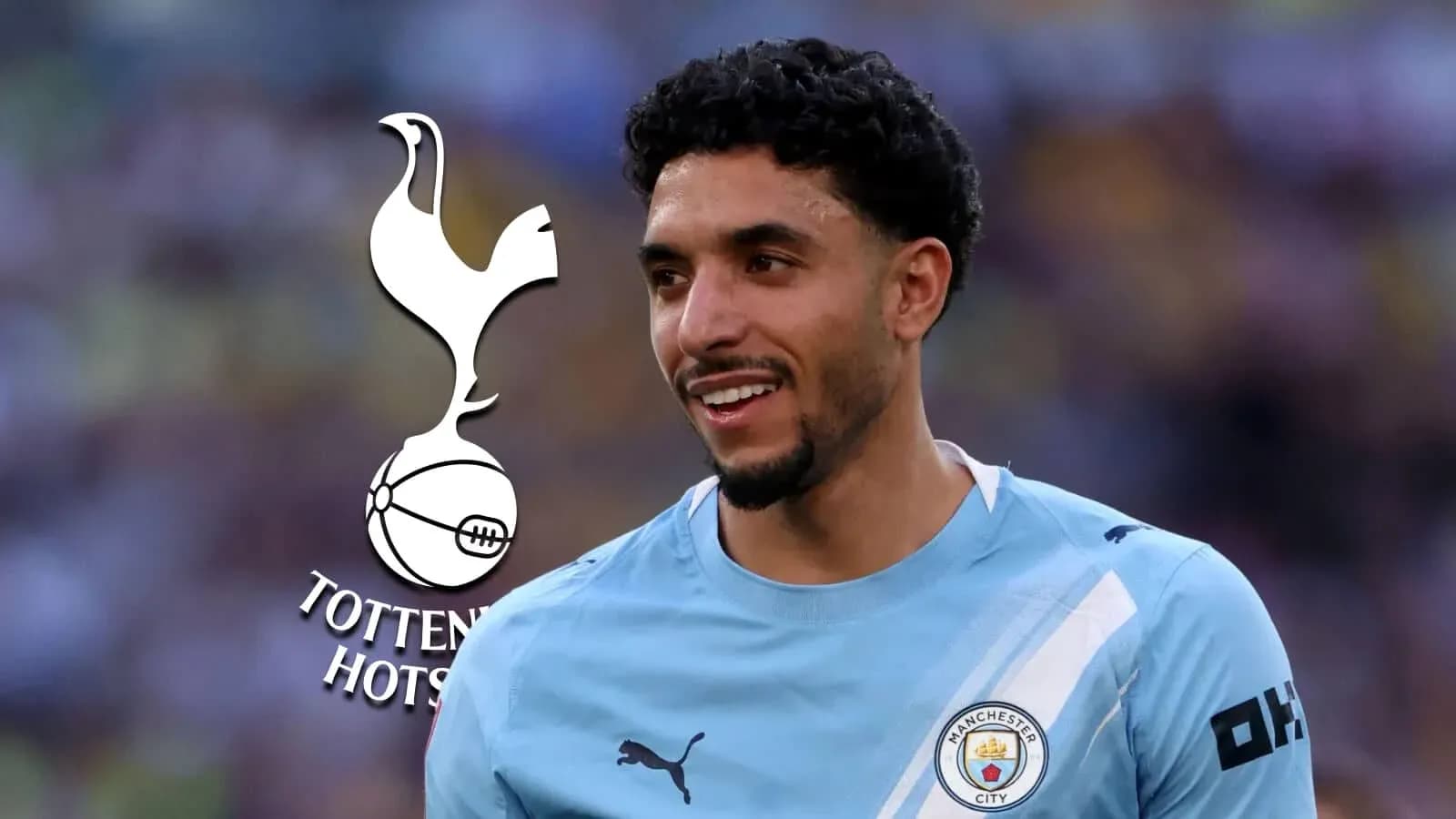
Omar Marmoush has not even pulled on a Tottenham shirt yet and already, apparently, he has suffered an “immediate blow”. The same sort of catastrophe Carlos Baleba somehow survived on his way to Manchester United.
It’s nonsense. All of it.
Nightmare fuel that isn’t
The Champions League draw dropped, and the headlines went straight for the horror genre.
- “Arsenal’s Champions League draw in full as Gunners handed nightmare fixtures.”
- “Man City handed nightmare Champions League draw with Arsenal also given tricky fixtures as Man United face old foes on return to competition – and Jose’s back at the Bridge!”
- “Champions League group phase predicted by supercomputer with Man Utd having a nightmare after horror draw.”
Everyone, it seems, has landed a “nightmare”. Everyone, somehow, is living a “horror show”.
The reality? The Champions League is stacked. There are no soft landings anymore. If you’re in it, you’re good. If you’re seeded, you’re still going to be punched in the mouth a couple of times. That’s the competition, not a computer-generated doomsday scenario.
The Man United ‘horror’ that isn’t horrific
Take Manchester United’s supposed trauma.
“MANCHESTER UNITED have been tipped to agonisingly miss out on the top eight of the Champions League league phase,” we’re told. The “boffins and brainiacs” at Football Ranked have run their model and spat out a prediction: Michael Carrick’s side to finish ninth.
Strip away the drama and what are you left with? United, in this scenario, would be the highest-ranked seeded team in the knockout play-offs, facing the weakest unseeded opponent. An advantage, in other words. A cushion.
Some nightmare.
Liverpool, stealth and selective memory
Jeremy Cross, in the Daily Mirror, makes a fair overarching point: Liverpool, once the model of smart recruitment while Manchester United lurched from mistake to mistake, have slipped towards the same kind of farce in recent windows.
But then comes the myth-making.
“In that same period, Liverpool conducted their own business with ruthless stealth. Big targets were kept under the radar, until a deal was so close to being completed it would be made public.
This happened with the likes of Virgil Van Dijk, Alexis Mac Allister, Alisson and Luis Diaz, to name but a few.”
It’s a nice story. It just doesn’t survive contact with the facts.
Liverpool’s pursuit of Virgil van Dijk was so “under the radar” that Southampton reported them to the Premier League for an illegal approach, forcing Liverpool into a public apology. That wasn’t ruthless stealth. That was a very loud, very messy courtship that backfired before it was salvaged.
The deals for Alexis Mac Allister, Alisson and Luis Diaz were well executed, yes, but not some mystical cloak-and-dagger operation that other clubs are too dim to replicate. They were good signings, not spy novels.
The Barcola ‘desperation’ that never was
Then comes the Bradley Barcola section, and the piece veers into the surreal.
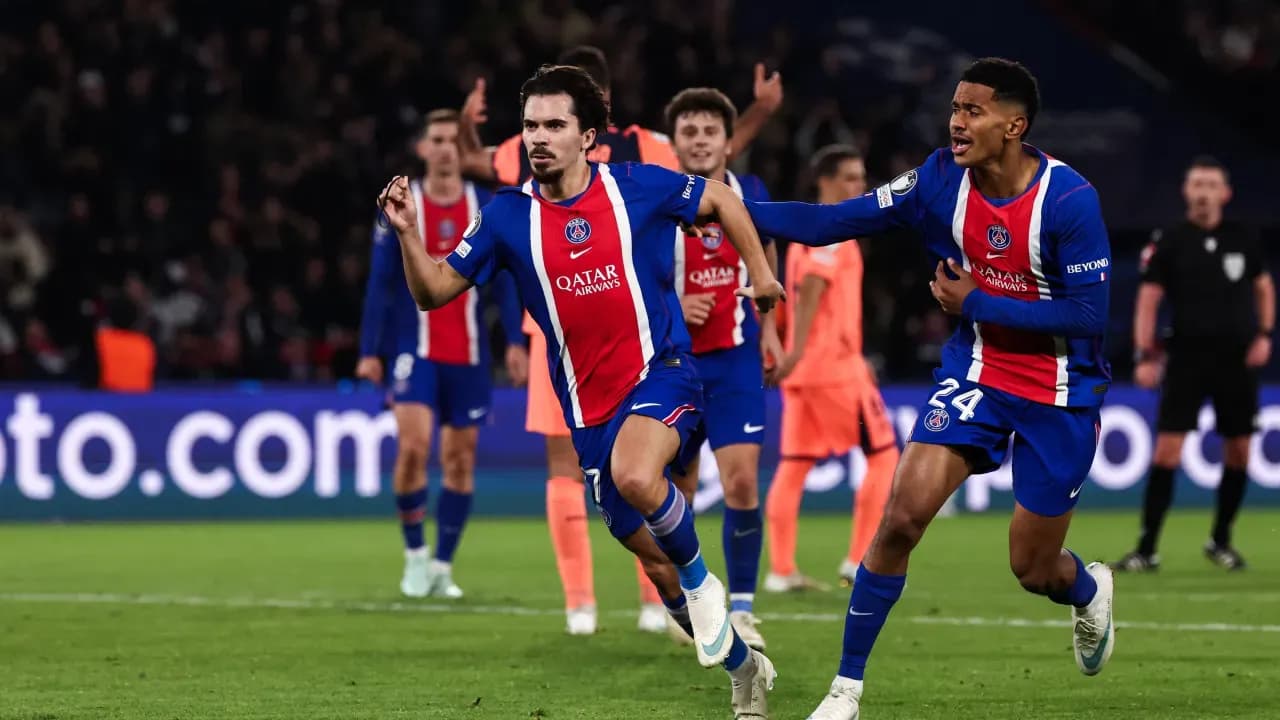
“Negotiations are taking place with PSG about a deal for Bradley Barcola, with a deal likely to come close to the fee paid to Newcastle for Isak.
Under normal circumstances, such a move would leave supporters feeling overwhelmed excitement.
The problem is, Liverpool have turned to Barcola in desperation less than a week before the transfer window closes, having pulled out of the bidding for Brighton’s Yankuba Minteh.”
Desperation? Less than a week to go? Liverpool have been trying to prise Barcola away from PSG all summer. This is not some panicked late-night rummage through the bargain bin. It’s a long, high-stakes negotiation over a player valued at around £120m.
Deals of that size do not happen on a Tuesday afternoon because everyone feels decisive. They drag. They stall. They get noisy. They are complicated. Cross, of all people, should know this; his reporting on Elliot Anderson’s move tied itself in knots as the saga twisted and turned.
Shirt numbers and ‘immediate blows’
Then we arrive at the Omar Marmoush drama.
“Omar Marmoush to suffer immediate Tottenham blow after Man City £60m transfer breakthrough.”
The style will be familiar to anyone who clocked the Carlos Baleba headlines before his move to Manchester United. The “immediate blow” is never a torn ligament or a failed medical. It’s always something gloriously trivial.
This time? The number on the back of a shirt.
“Moving to Tottenham will give Marmoush the opportunity to play more regularly, having only made eight Premier League starts for City last season. However, he won’t have everything his own way when he arrives in the capital.
That’s because he will need to pick a different shirt number, with his preferred No 7 already occupied by Xavi Simons.”
That’s it. That’s the crisis. Marmoush, a £60m forward, will have to choose a different number because Xavi Simons already has 7.
No loss of playing time. No positional rethink. No tactical downgrade. Just a different digit on the kit.
You can almost picture the legal team scouring his contract for an escape clause: return to Manchester City, barely play, but keep the 7. A fantasy, of course, but no more absurd than treating a squad number as a career-defining setback.
One man’s ‘bizarre’ is another man’s ‘dream’
The shirt-number obsession doesn’t stop there.
“Bradley Barcola set to wear bizarre unused shirt number at Liverpool,” screams one headline.
“Bradley Barcola can wear dream shirt number at Liverpool after PSG transfer agreement reached,” counters another.
Same player. Same shirt. Same number. One outlet calls it “bizarre”, another sells it as a “dream”. The reality is simple: fans care about numbers, players often do too, and newspapers know it’s an easy click. But dressing it up as psychological trauma or fairytale destiny is pure theatre.
Ronaldo, United and a stall nobody wanted
Samuel Luckhurst is right to highlight a glaring issue at Manchester United: they still have not sold a single first-team player this summer. That is a failure of planning and execution, especially when you compare them to other elite clubs who move on fringe players with ruthless efficiency.
His closing argument, though, misses the mark.
“Even one of the greatest, Cristiano Ronaldo, was burnt by his association with United.
When Ronaldo effectively filed for divorce with his November 2022 interview with the sycophantic Piers Morgan, Morgan said: ‘If it was just about money, you’d be in Saudi Arabia.’
Saudi was the only place to offer Ronaldo a home. Even he did not have shoppers flocking to United’s stall.”
The problem was not that United’s “stall” suddenly turned toxic because of the badge. Ronaldo did not lack suitors because of his association with Manchester United. He lacked suitors because, by then, he had revealed himself as a 37-year-old, wildly expensive, self-absorbed forward who publicly torched his own dressing room and manager.
No serious European club wanted to pay astronomical wages for a player who demanded to be the centre of everything while offering diminishing returns. Of course United couldn’t shift him. That has nothing to do with the current difficulty of moving on Joshua Zirkzee or anyone else and everything to do with Ronaldo’s own choices and profile at that stage of his career.
Hype, horror and what actually matters
Strip away the noise and a pattern emerges.
Champions League draws become “nightmares”. Long-planned transfer pursuits are branded “desperate”. Shirt numbers are “immediate blows”. A failure to sell a 37-year-old Ronaldo on huge wages is held up as proof that nobody shops at Old Trafford anymore.
The game itself is dramatic enough. The football is intense enough. Players fight for careers, clubs gamble on hundreds of millions, managers walk a tightrope every week.
They don’t need the horror-movie script on top.
Omar Marmoush will be judged on goals, movement, and how he fits into Tottenham’s attack, not on whether he wears 7, 17 or 77. Bradley Barcola will be judged on what he does on the pitch, not on whether his number is “bizarre” or “dreamlike”. Manchester United will be judged on whether they finally learn to sell as well as they buy.
The rest is just noise. The season will decide who really has something to fear.