.svg&w=384&q=75 "logo")
Celtic and Rangers Sanctioned: Next Cup Matches Behind Closed Doors
Celtic and Rangers have been hit with one of the most severe sanctions Scottish football has seen in years: their next home Scottish Cup ties will be played in empty stadiums.
The Scottish Football Association delivered the verdict after a disciplinary hearing into the chaotic scenes that followed Celtic’s quarter-final win at Ibrox in March, when a dramatic penalty shoot-out spilled from tension into disorder.
Closed doors for Glasgow giants
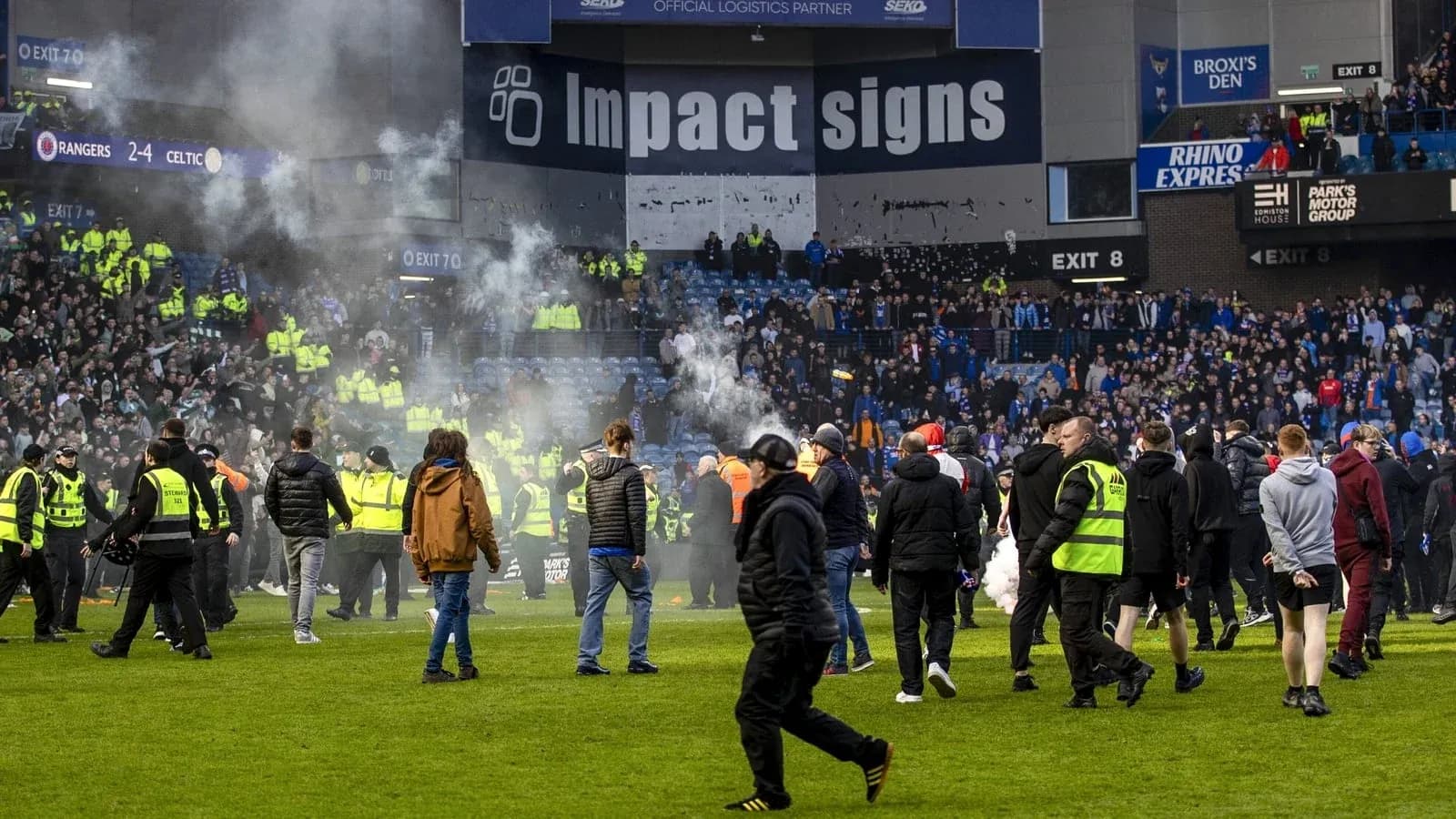
The images from that afternoon have lingered. Celtic supporters poured on to the pitch in celebration after the shoot-out success. Rangers fans then surged forward, charging on to the field to confront them. Police made dozens of arrests as officers and stewards battled to restore order on a day that was supposed to be about football, not flashpoints.
An independent review into those scenes later reached a stark conclusion: “crushing” and “life-threatening violence” were narrowly avoided. That phrase has hung heavily over this case and clearly shaped the SFA’s stance.
The punishment is twofold. Celtic and Rangers must each play their next home Scottish Cup match behind closed doors, stripping one of the sport’s most intense fixtures of its defining element – the crowd. On top of that, both clubs have been ordered to pay their opponents £100,000 in compensation for the loss of shared gate receipts.
The warning is just as sharp as the sanction. Any repeat of crowd trouble at Scottish Cup ties involving either club in the next two seasons will trigger another closed-door punishment.
Both clubs admitted charges relating to unacceptable conduct from supporters. The SFA has chosen to make this case a line in the sand.
Celtic bristle at “disproportionate” verdict
Inside Celtic Park, the reaction was immediate and angry. The club said it was “shocked” by the decision and the scale of the penalty.
“We are shocked by this disproportionate punishment for a relatively small incursion by Celtic supporters at a moment of emotion and celebration,” read a club statement.
Celtic stressed that they do not excuse fans entering the field of play and pointed to previous action taken against offenders. The club, though, insisted the panel should have weighed the context more carefully – both in terms of the nature of their supporters’ behaviour and the fact that Celtic were the away side at Ibrox, not in charge of stadium safety.
“Another important distinction is that, on this occasion, Celtic were not the home club, responsible for stadium safety arrangements,” the statement continued, underlining a point the club clearly feels has been overlooked.
Celtic now intend to study the written reasons once they are released before deciding on their next move. Appeal or acceptance, scrutiny or rapprochement – that decision will shape the tone between club and governing body in the weeks ahead.
For now, the message from Hampden is unmistakable. In a rivalry where noise, colour and emotion often spill to the brink, the SFA has chosen the most powerful deterrent it has: silence.