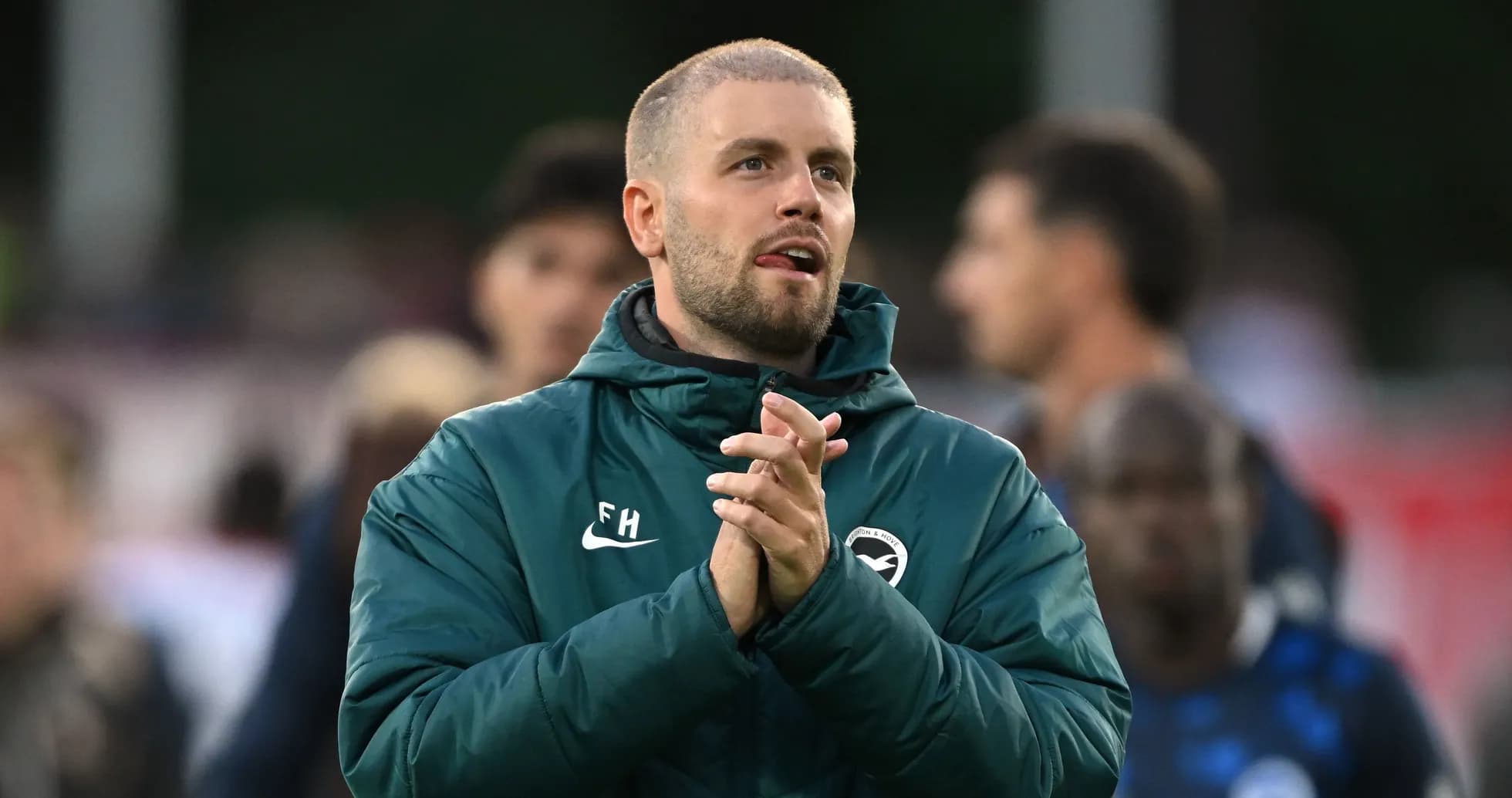
Brighton’s 3-0 Victory: Hürzeler’s Tactical Revolution
Back in March, Fabian Hürzeler walked into a press room and detonated a grenade.
"There was only one team today that tried to play football," he snapped after a 1-0 defeat to Arsenal. His Brighton side had outplayed the league leaders in almost every metric, yet left empty-handed thanks to one flash of Bukayo Saka brilliance and one Bart Verbruggen mistake. Arsenal got the points; Brighton got the moral victory. Hürzeler wasn’t interested in that.
He went straight for Mikel Arteta’s philosophy, questioning not just the performance but the very idea of how a champion should play. “I will never be a coach who tries to win like that,” he said. It was a pointed jab at a club on top of the Premier League and a manager celebrated as a stylist.
Fast-forward to last weekend. Same teams. Same managers. Very different story.
This time, Brighton didn’t just “try to play football.” They ripped Arsenal apart with it.
At a snarling Falmer Stadium, Hürzeler’s side produced a 3-0 demolition of the previously unbeaten leaders, a result that felt less like an upset and more like a manifesto. This was the football he had promised in March, now fully weaponised.
Brighton didn’t just beat Arsenal. They dismantled them.
Pressing as a Weapon, Not a Buzzword
From the first whistle, Brighton’s intent was brutal and clear. They didn’t allow Arsenal to breathe, let alone build.
The front line hunted in packs, often chasing Arsenal’s defenders right back into their own penalty area. Passing lanes vanished. The man on the ball constantly faced a blue-and-white swarm. When Arsenal finally resorted to long, hopeful punts, Brighton were already waiting.
David Raya’s opening quarter of an hour told the story. Under relentless pressure, he misplaced three of his first seven passes. Every short option was suffocated. The “safe” ball out wide to Jurrien Timber or Riccardo Calafiori came with a Brighton shirt attached. The alternative was an aimless launch towards the centre circle.
Brighton feasted on it.
They recorded nine regains in the final third – the highest number an Arsenal side has conceded since Liverpool matched that figure in December 2023. Across the season, Brighton now sit on 35 final-third regains, eight more than Everton, the next-best Premier League side in that category.
This wasn’t chaos. It was choreography.
“What was decisive was that every player, when he went into a duel, always had the feeling that one of his team-mates was behind him,” Hürzeler said afterwards, clearly delighted with the precision of the press. “If one player was beaten, the next was there. The question is: can you rely on each other on the pitch? Do you trust each other? Does everyone know their role at set-pieces? Are you always alert and fully there in every situation and every moment of the game?”
Against Arsenal, the answers were obvious.
From Soft Underbelly to Steel Spine
When Hürzeler arrived on the south coast in the summer of 2024, Brighton’s back line was a glaring weak point. Technically gifted opponents sliced them open too easily. The club hierarchy handed the 33-year-old a five-year contract, accepting that his ideas would need time to bed in.
The transformation has accelerated faster than anyone expected.
The balance between attack and defence, once Brighton’s great dilemma, now looks increasingly settled. In eight competitive matches this season, they have already kept five clean sheets. Last year, they needed twice as many games to reach that mark.
“The most important thing is not to concede any goals at the back,” Hürzeler has stressed. His side are starting to live that mantra.
And while the defence has tightened, the attack has exploded. Brighton now boast the best offensive record in the league: 16 goals in their first five Premier League fixtures. Only Manchester City’s 2022/23 juggernaut has ever started faster in the competition, with 19.
This is no longer the Brighton that simply entertains neutrals. This is a Brighton that hurts you.
The Right Pieces in the Right System
The squad has been quietly, and cleverly, reshaped around Hürzeler’s demands.
Chema Andres, signed late in the window from VfB Stuttgart, is a perfect example. Almost two metres tall, rugged in the challenge but quick enough to cover ground, he is built for this system. When opponents go long to escape the press, he hoovers up second balls. When the press fails to snap shut, he has the pace to protect the space behind.
Luka Vuskovic, recruited from Tottenham Hotspur for €55 million, has wasted no time justifying that fee. The former Hamburg defender has already become a nailed-on starter, adding composure and aggression to the back line.
But the heartbeat of this team sits further forward.
Pascal Groß, once pushed to the fringes at Borussia Dortmund, has been reborn on the south coast. At 35, he is leading the Premier League scoring charts after five matchdays with three goals and four assists, ahead of names like Erling Haaland and Florian Wirtz. Against Arsenal, he again set the tone: the opener on 31 minutes, then the assist for Chema’s clincher on 57.
“I feel very good, very comfortable. It’s a good mixture of fitness, experience and the work with Fabian Hürzeler, a coach who uses me in a way that allows my strengths to come to the fore,” Groß told kicker, explaining his renaissance. The numbers back him up, but they still don’t quite capture his influence.
Above all, he is thriving with greater freedom in the final third, encouraged to interpret his role more aggressively and more instinctively.
“He is like good wine. The older he gets, the better he becomes,” Hürzeler has said. The coach talks about the invisible details Groß brings: the small decisions, the leadership, the way he binds a multicultural dressing room into a single unit. “He has the ability to create social cohesion between all our players. We have so many different nationalities and nations, and he has a feel for all these dynamics.”
On the pitch, that chemistry is now visible in every coordinated press, every rotation in midfield, every wave of support when the ball is won high.
Arteta Feels the Squeeze – and Extends a Hand
This time, there was no angry monologue from Hürzeler after the final whistle. He didn’t need one. The game had spoken for him.
Brighton moved up to third in the table with their third win of the campaign, and Arsenal had played straight into the German’s script. Across 90 minutes, they rarely found a way out of the suffocating pressure.
Arteta, who had previously dismissed Hürzeler’s March comments with sarcasm and a touch of mockery, faced the media with a very different tone.
“From the very first throw-in,” he admitted, he could feel Brighton’s extreme pressing. “The technical errors in our own half; we didn’t observe any of the principles of play that you have to follow to get out of those man-against-man situations. We were constantly defending.”
There was no war of words this time, only respect.
“I am here to give my opinion, to stand up for my club and to get the best out of my players. What happened is over. That is in the past. I have enormous respect for Fabian and for what he has achieved. What Brighton as a club are doing under him is simply remarkable,” Arteta said.
The handshake between the two coaches felt symbolic. In March, Hürzeler had railed against a version of Arsenal he refused to emulate. In September, his Brighton had imposed their own idea of football on that same Arsenal and won 3-0.
The question now is no longer whether Hürzeler’s principles can work at this level.
It’s how far they can take Brighton in a league that has just watched them dismantle its leaders.