.svg&w=384&q=75 "logo")
Botic van de Zandschulp's Epic Comeback into US Open Quarterfinals
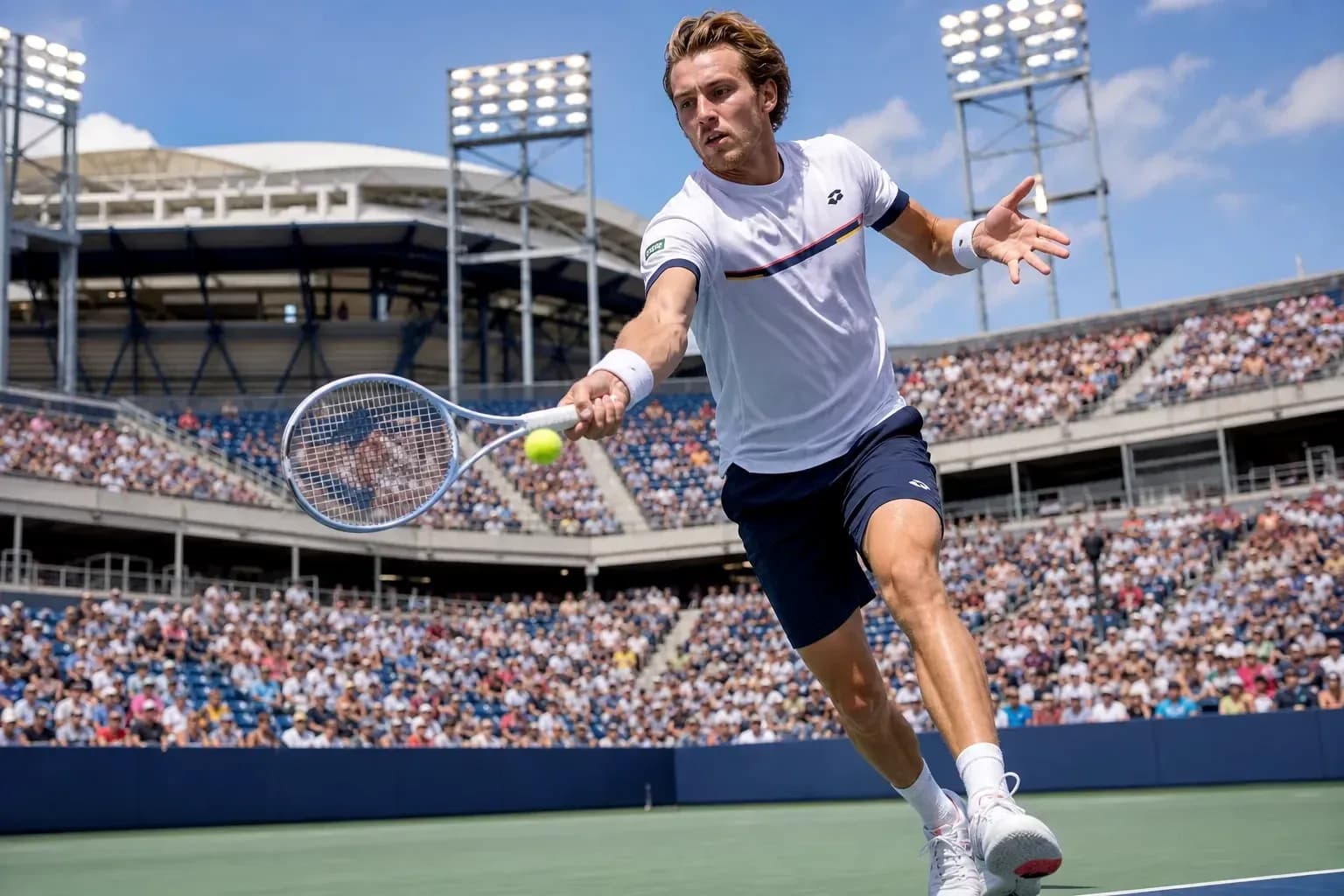
Botic van de Zandschulp walked off Louis Armstrong Stadium looking like a man who had been through a five-hour interrogation. In a way, he had. For 5 hours and 13 minutes, the Dutchman wrestled with Arthur Gea, the scoreboard, and his own nerve – and somehow emerged with a place in the US Open quarterfinals.
The 30-year-old came back from two sets down, saved a match point, and finally broke French resistance in a marathon that now stands as the fourth-longest match in tournament history. The final scoreline – 3:6, 6:7 (0), 7:6 (7), 7:6 (3), 6:4 – only hints at the chaos that came before it.
From straight-sets exit to classic comeback
For two sets, van de Zandschulp looked headed for the exit. Gea controlled the tempo, took the opener 6:3, then tightened the screw in a second-set tiebreak, where the Dutchman failed to win a single point. A 7:6 (0) breaker at a Grand Slam is a statement. Gea had the match by the throat.
The pressure peaked in the third-set tiebreak. Gea earned a match point. One swing away from history, one clean strike from becoming the first lucky loser ever to reach a Grand Slam men’s singles quarterfinal.
Van de Zandschulp refused to fold. He wiped away the match point, edged the breaker 9–7, and cracked the match open. The escape changed everything. The Frenchman, who had played with freedom for two sets, suddenly carried the weight of what he was about to achieve. The Dutchman, who had been hanging on, now had something to chase.
The fourth set followed the new script. Both men held firm until another tiebreak, but this time van de Zandschulp took control early and never let it slip, closing it out 7:6 (3). From two sets down to level at two-all, he had dragged Gea into a place no lucky loser wants to be: a deciding set against a seasoned campaigner who has already walked this path in New York.
The fifth was about nerve and legs. Van de Zandschulp found the crucial break and guarded it, closing the set 6:4 to complete a comeback that will sit alongside his best work on these courts. This is his second US Open quarterfinal, three years after his breakthrough run in 2021, and it comes in the wake of a strong second-round win over Alex de Minaur that had already hinted at something stirring in his game.
Gea’s near-miss and a lost slice of history
For Gea, the defeat will sting long after the jet lag fades. The Frenchman only entered the main draw as a lucky loser, stepping in when 2022 US Open finalist Casper Ruud withdrew with a back injury. From that twist of fate, he built a genuine shot at history.
No male lucky loser has ever reached the last eight of a Grand Slam singles draw. Gea stood a point away from rewriting that line in the record books. One more forehand, one more first serve, and the story might have been his.
Instead, van de Zandschulp’s survival instinct denied him. Gea leaves New York with a career-altering run, but also with the knowledge that he had the quarterfinals – and a piece of tennis history – on his racquet.
Blockx makes Belgian history, Khachanov digs deep
Elsewhere in the men’s draw, Alexander Blockx carved out a landmark of his own. Seeded 28th, the Belgian beat 24th seed Francisco Cerundolo 6:3, 4:6, 7:5, 7:5 to become the first player from Belgium ever to reach the US Open quarterfinals.
It was the kind of match that tests composure more than shot-making. Twice Blockx had to hold his nerve late in sets, twice he did, snatching both the third and fourth by 7:5. Each time Cerundolo threatened to wrestle back control, Blockx answered with heavier hitting and cleaner decision-making in the closing games.
Karen Khachanov took the long road. The Russian needed five sets to subdue American Learner Tien, seeded 14th, winning 7:5, 4:6, 6:7 (6), 6:1, 6:4. When Tien edged a tight third-set tiebreak, the home crowd sensed an upset. Khachanov responded with a ruthless fourth set, 6:1, and then managed the decider with the authority of a man who has spent years deep in the second week of majors.
Blockx and Khachanov now collide in the quarterfinals, a clash between a Belgian making new ground for his country and a Russian used to this altitude of the sport.
Van de Zandschulp waits on his own last-eight assignment, carrying the scars and belief that only a five-hour epic can provide. After a night like this, who will want to see his name next to theirs in the quarterfinal draw?