Barcelona's 2026-27 Captains: A Blend of Youth and Experience
Barcelona have named their five captains for the 2026-27 season, and the list says as much about the club’s identity as it does about its hierarchy.
Hansi Flick has cut through the usual ceremony. Rather than waiting for a slow-burning dressing-room process to anoint his leaders, the German coach stepped in and personally appointed Raphinha and Pedri as his primary captains. The other three armbands went to a vote among the players, with Eric Garcia, Frenkie de Jong and Lamine Yamal emerging from the ballot.
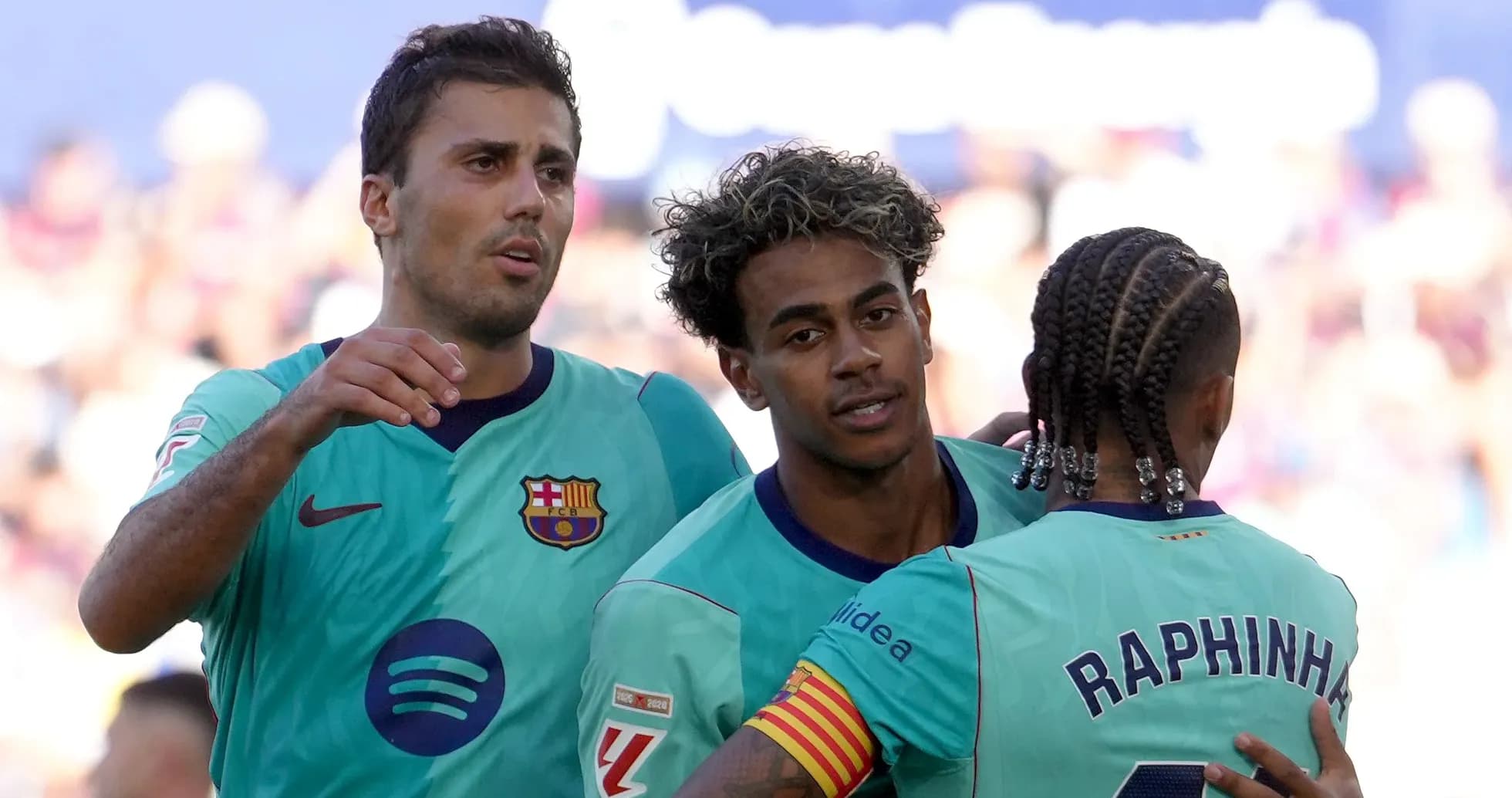
That last name stops you. Yamal, 19 years old, wearing the responsibility that once belonged to Carles Puyol and Andrés Iniesta. His elevation is striking enough. The absence of Rodri is even more so.
Here is a €76.5m signing, fresh from captaining Spain to a World Cup, arriving from Manchester City with the kind of leadership résumé most players never touch. Yet he will start his first full season at Camp Nou without an official armband.
There is a logic to it – a very Barcelona logic. According to The Athletic, the dressing-room vote leans heavily on club seniority rather than total career mileage. Yamal, for all his youth, is already in his third season in the first team. Rodri only walked through the doors in mid-August. In a club obsessed with continuity and belonging, that matters.
The hierarchy on paper, though, is not the same as the hierarchy on the pitch.
Rodri’s influence has landed quickly and decisively. Flick, who knows a midfield general when he sees one, did not bother to hide his admiration after the Spaniard’s first start against Valencia. The coach praised his structure, his work with and without the ball, the sense he gives to Barcelona’s attacking play. It sounded less like a polite welcome and more like a statement of dependence.
You can see why. With Rodri in the middle, Barcelona look ordered, adult, less frantic. He dictates tempo, plugs gaps, guides younger teammates into the right spaces. The armband is missing from his sleeve; the authority is not.
Even on the bench, he has been impossible to ignore. During the 5-0 dismantling of Valencia, television cameras picked up Rodri leaning towards Pau Cubarsi and delivering a blunt assessment: “They’re really weak, they haven’t got past the halfway line.” The remark was meant for a teenager at his side, not for a national audience.
Once he realised those words had gone public, the response was immediate and telling. Rodri phoned Valencia captain Jose Gaya personally to apologise. He then addressed the issue in a public statement after Barcelona’s Champions League win over Feyenoord. No PR spin, no delay. Just a senior professional cleaning up his own mess.
That is leadership without a vote.
Inside the club, the picture is already clear. Rodri may not sit in the official captaincy group, but staff and players see him as a central pillar in a very young squad. His relationship with 19-year-old defensive midfielder Marc Bernal underlines it. The two have already shared minutes together, with Bernal coming on to partner the former City star in recent wins over Feyenoord and Levante. For a teenager trying to learn one of the most demanding roles on the pitch, there are few better guides than a World Cup-winning pivot.
This is where Barcelona’s tradition collides with their present reality. The armband, in this club, is not a reward for global status. It is a symbol of years spent living the institution from the inside – La Masia, the first-team dressing room, the weight of the badge. On that front, Rodri simply has not had time to build the roots that Yamal, Pedri or De Jong already possess.
Yet the team’s needs are immediate. Flick is steering a squad stacked with prodigious talent but short on hardened winners. Rodri walks in as both: a serial champion and a natural organiser. Whether or not his name appears on the official leadership list, his voice will carry.
It will need to. Barcelona are about to hit one of those stretches that define seasons and expose illusions.
Across 12 brutal days next month, Flick’s side must travel to Galatasaray, Real Betis and Paris Saint-Germain. Three hostile environments, three different tactical puzzles, little room for rotation. The run ends with an El Clasico at Camp Nou on October 25, a fixture that can tilt a title race and reframe a campaign in 90 minutes.
For Rodri, that night carries an extra edge. He turned down serious interest from Jose Mourinho’s Real Madrid to sign for Barcelona this summer, a decision that will not be forgotten in the Spanish capital. Every touch, every duel, every command he barks in that game will be judged through that lens.
By then, the armband question may feel irrelevant. What will matter is whether Barcelona’s young core can lean on the experience they bought for €76.5m – and whether the man who did not win the vote ends up leading them through the season’s first real storm anyway.