.svg&w=384&q=75 "logo")
Aryna Sabalenka Survives Thrilling US Open Quarterfinal
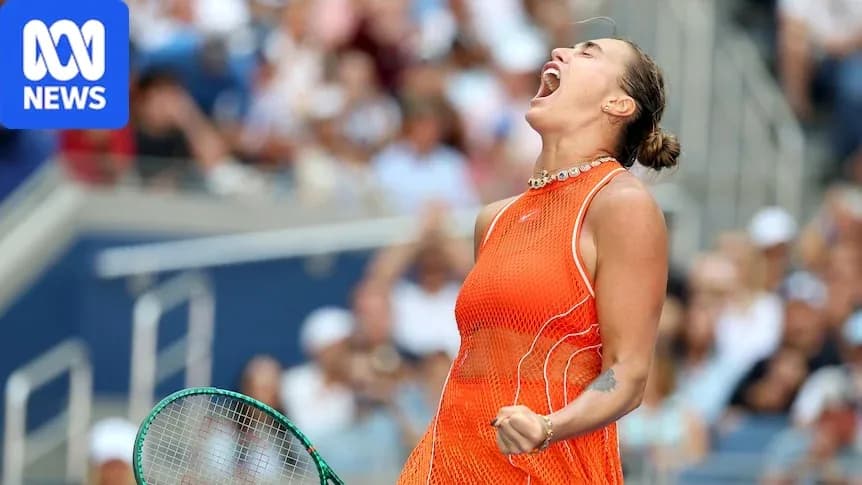
Aryna Sabalenka stared at the scoreboard, down 2-4 in the third, and admitted later she thought it was done.
It wasn’t. Not even close.
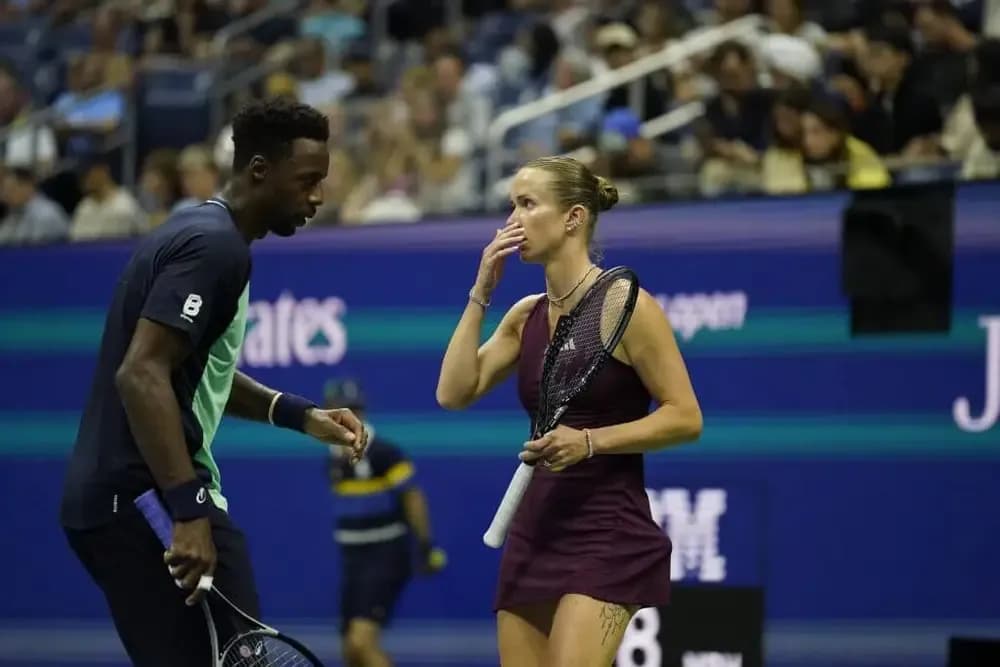
The world number one clawed herself back from the brink to outlast Wimbledon champion Linda Noskova 7-6(7-1), 3-6, 7-6(10-7) in a brutal, high‑quality US Open quarterfinal, booking a place in the semifinals at Flushing Meadows for the sixth straight year.
Six years. Six semifinals. That’s Serena Williams territory, and Sabalenka has just stepped into it, matching the American’s 2011–2016 run, during which Serena collected three of her six US Open titles.
A champion pushed to the edge
This was nothing like Sabalenka’s serene march through the earlier rounds. The two-time defending champion hadn’t dropped a set all tournament. Noskova made sure that streak ended.
The Czech sixth seed arrived with a live arm and no fear, and she played like it. She cracked 18 aces, bullied Sabalenka’s second serve, and saved seven of nine break points. For long stretches, she was the one dictating, the one threatening to rip up the script.
Sabalenka struck first, breaking in the second game with a forehand so clean Noskova didn’t even move. It looked ominous. Yet Noskova absorbed the hit, settled, and punched back, breaking in the ninth with a pair of heavy baseline blows that pinned the top seed behind the court.
The set moved to a tiebreak. That’s Sabalenka’s territory. Earlier this year she strung together a record 21 consecutive tiebreak wins at the slams, and she slipped straight into that familiar mode again. She tore through the breaker, racing to six unanswered points and closing it out 7-1 with the certainty of a player who trusts her game when the margins tighten.
Noskova didn’t flinch. She reloaded.
Noskova swings, Sabalenka staggers
The second set flipped the feel of the night.
Sabalenka’s power, so overwhelming in the opener, suddenly scattered. Her first serve percentage dipped, the errors crept in, and Noskova’s serve became a wall. The Czech began holding with authority, then pounced when the door opened.
At 3-2, Sabalenka double‑faulted to hand over a break, gifting Noskova a 4-2 lead. The Wimbledon champion didn’t waste it. She locked down her service games, kept Sabalenka on the stretch, and closed the set 6-3 to level the match. The defending champion, who had looked untouchable all fortnight, was now in a full‑blown fight.
The pressure mounted early in the decider. Sabalenka, searching for the lines and missing too often, tossed in another pair of double faults midway through the set. Noskova pounced again, breaking and surging ahead 4-2. Sabalenka screamed in frustration. The crowd sensed the upset building.
On the other side of the net, Noskova looked composed, measured, like a player ready to take out the world number one on one of tennis’s biggest stages.
Sabalenka, by her own admission, thought it might be over.
Letting go, locking in
That thought may have saved her.
“In the third set I honestly thought, ‘That’s it, the match is over,’” she said afterward. “Probably that’s what helped me to kind of feel loose and just go after my shots.”
Freed from the weight of expectation, she swung. Hard.
Serving at 2-4, Sabalenka began to find her range again, stepping inside the baseline and flattening out her groundstrokes. The errors that had plagued her started to shrink. The roar after each winner grew louder. Noskova, so solid for so long, finally blinked.
Sabalenka broke back in the eighth game, ripping returns, forcing the Czech into rushed swings and tighter margins. The match, once in Noskova’s hands, suddenly hung in the balance again.
They traded holds to 6-6. One more tiebreak. One more test of nerve.
Tiebreak royalty
Sabalenka thrives in chaos. The deciding breaker turned into her stage again.
She leaned on her serve, took the ball early, and made Noskova feel every ounce of pressure that comes with trying to finish off the world number one. The rallies grew heavier, the noise inside the stadium sharper, every point a mini-battle.
Noskova kept swinging, but the looseness that had defined her best passages faded. Sabalenka, by contrast, looked like herself again—measured aggression, big targets, big moments.
At 9-7 in the tiebreak, the Belarusian stepped up to the line with the ball in her hand and the match on her racquet. One last ace sealed it, a clean strike to end a three‑set war and ignite the crowd.
She turned to the stands and gave them their due, crediting the fans for lifting her through the tightest match she has faced at this year’s US Open. The numbers back that up: she has now won 21 of her past 22 matches at the year-end grand slam, and she is still chasing a third straight title in New York.
“What a battle. What an incredible player she is,” Sabalenka said of Noskova. “I’m speechless right now because I was pushing myself to the limit this match. Super happy to get this win.”
History made, more on the line
With this victory, Sabalenka’s sixth consecutive semifinal in New York ties her with Serena’s remarkable run. The comparison is unavoidable now. Serena turned that consistency into a dynasty. Sabalenka is halfway to a three‑peat.
Next up is the winner of the all‑American showdown between third seed Jessica Pegula and 26th seed Emma Navarro. Different styles, different threats, but the same question hangs over the draw.
If this is Sabalenka when she thinks the match is over, what happens when she believes it’s hers to take?