.svg&w=384&q=75 "logo")
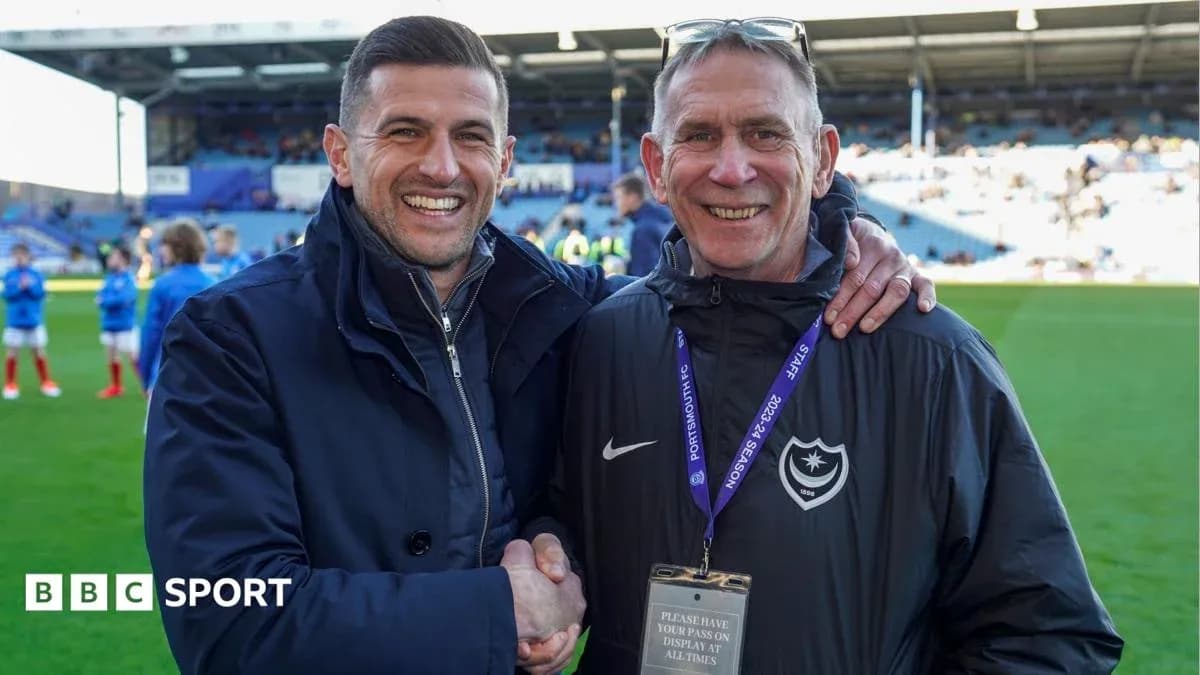
Alan Knight: A Legendary Goalkeeper for Portsmouth Football Club
Alan Knight, the goalkeeper who came to embody Portsmouth Football Club for more than two decades, has died aged 65 after being diagnosed with prostate cancer earlier this year.
For many on the south coast, he was simply “The Legend”. Not as a marketing slogan, but as a lived truth.
A one-club giant
Knight’s career at Fratton Park barely seems believable in the modern game. Twenty-two years in the first team. An extraordinary 801 appearances between 1978 and 2000, a record for a goalkeeper at a single English club and a span that carried him across four different decades in Pompey colours.
He first appeared as a raw 16-year-old in 1978, thrown into the old Division Three against Rotherham. He marked his debut with a clean sheet. From that moment, Portsmouth had their goalkeeper, and they would keep him for a generation.
Knight did not just stay; he climbed with the club. He represented Pompey in all four divisions, a rare constant through the turbulence that defined the lower leagues in those years. There were three promotion-winning campaigns along the way, including the Division Three title and, most memorably, the 1986-87 season, when Portsmouth finally fought their way back to the top flight after 28 years away.
That side carried a city’s hope. Knight stood behind it all, a familiar figure in goal as Pompey rejoined English football’s elite.
The last line, for a lifetime
By the time his final appearance arrived, on 3 January 2000, Knight was 38. Fittingly, it came in the grind of league football, a 2-1 Division One defeat at Norwich. Not a fairytale ending, perhaps, but a typical one: another hard shift, another afternoon in goal for the only club he ever truly belonged to.
That outing confirmed his unique status. No other Portsmouth player has represented the club across four different decades. He did, in boots and gloves that seemed to belong as much to the stadium as the stands themselves.
Supporters responded in kind. “The Legend” was not a nickname handed out lightly at Fratton Park. It was earned in mud, rain, and promotion battles, in saves that kept seasons alive and in the quiet reliability of a man who simply refused to go away.
Beyond the posts
When the gloves finally came off, Knight did not walk away. He moved into coaching and ambassadorial roles at Portsmouth, still serving the club whose badge had been on his chest since his teens.
Recognition followed. He was awarded an MBE after retirement and granted the Freedom of the City of Portsmouth, formal honours for a man who had already long held the freedom of its streets in the eyes of those who filled the Fratton End.
In 2024, Knight spoke publicly after being diagnosed with prostate cancer. He described the moment of discovery as a “massive shock”, but he chose to talk about it to push others to seek help if they noticed symptoms. It was typical of his approach: confront the danger, stand tall, and try to protect others.
He joined a group of men playing walking football in Portsmouth, a different kind of team, but still a dressing room of sorts. He explained how that environment, that shared experience, helped them process their diagnoses together.
“Once you get diagnosed, once the cancer word is used, it just changes everything,” he said. The goalkeeper who had spent his life as the last line of defence suddenly needed a different kind of support. “The support network, having your mates around you – family first and foremost – but then to have your mates and your team-mates around you is huge. It gives you that lift when you can be slipping into that bit of depression.”
A legacy that won’t leave Fratton Park
Knight’s story is not one of fleeting brilliance or transfer-fee headlines. It is something rarer now: a footballer welded to a club, a city and a set of stands that watched him grow from teenager to veteran without ever changing colours.
Portsmouth will move on, as clubs always do. New goalkeepers will stand where he once did, under those same floodlights, in front of those same unforgiving, adoring fans.
But there will only ever be one man they called “The Legend”.