2026 Spanish Grand Prix Review: A Flat Race at Madring
The 2026 Spanish Grand Prix drifted by like a parade, the result never really in doubt. The spectacle was in the grandstands and around the IFEMA complex; on track, Madrid’s shiny new Madring layout was exposed under the harsh light of a full race distance.
Drivers loved the city. The circuit? That’s another matter.
A bold idea that produced a flat race
The Madring is an unusual hybrid: part permanent facility, part repurposed public roads looping in and out of the IFEMA conference centre in north-east Madrid. On paper, that gave designer Jarno Zaffelli a rare luxury for a street venue – a partial blank slate.
He was bullish before the weekend. Testing, he said, had been “very positive”. He spoke of flow, of character, of building a street track that wouldn’t be boring. In some ways, he got what he wanted. The place looked spectacular. The atmosphere was praised almost universally.
Fernando Alonso, Carlos Sainz, Lewis Hamilton, Arvid Lindblad – all talked up the setting and the buzz around Madrid’s first F1 weekend. Off-track, it felt like a hit.
On-track, the drivers’ verdict was brutal.
Lindblad admitted it “wasn’t the most exciting race”. Gabriel Bortoleto, asked if it was as dull to drive as it was to watch, didn’t sugar-coat it: “Yeah, I almost fell asleep as well.”
Esteban Ocon pointed at the tyres. With little degradation and no graining on Sunday, strategy evaporated and the field locked into formation.
“It was like 120% from as soon as you pitted to the end,” he said. With no tyre drop-off, there was no jeopardy. “If we had a race on Friday, it would have been much better.”
The pressure fell, inevitably, on the layout.
Narrow, blind, and nowhere to go
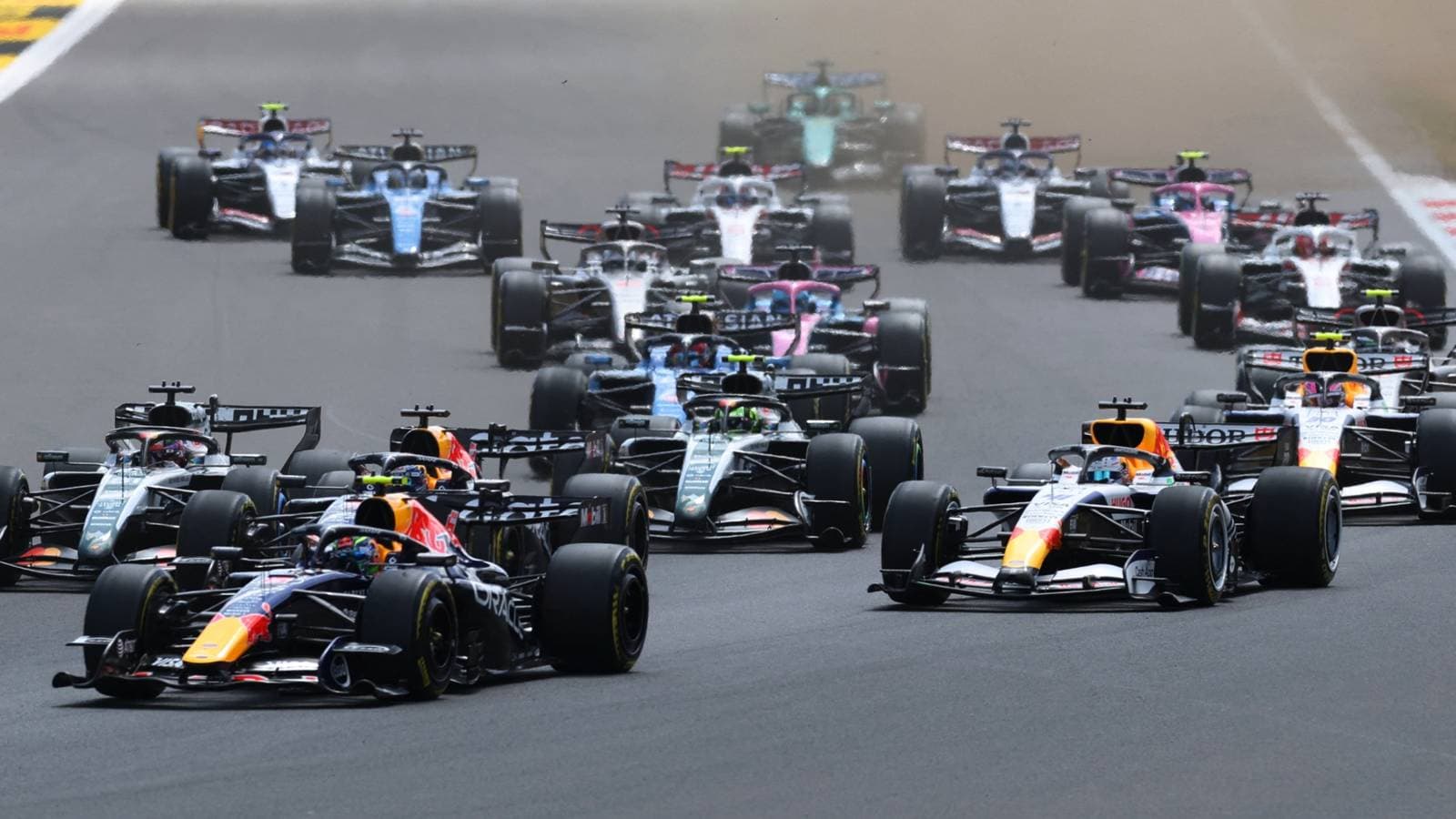
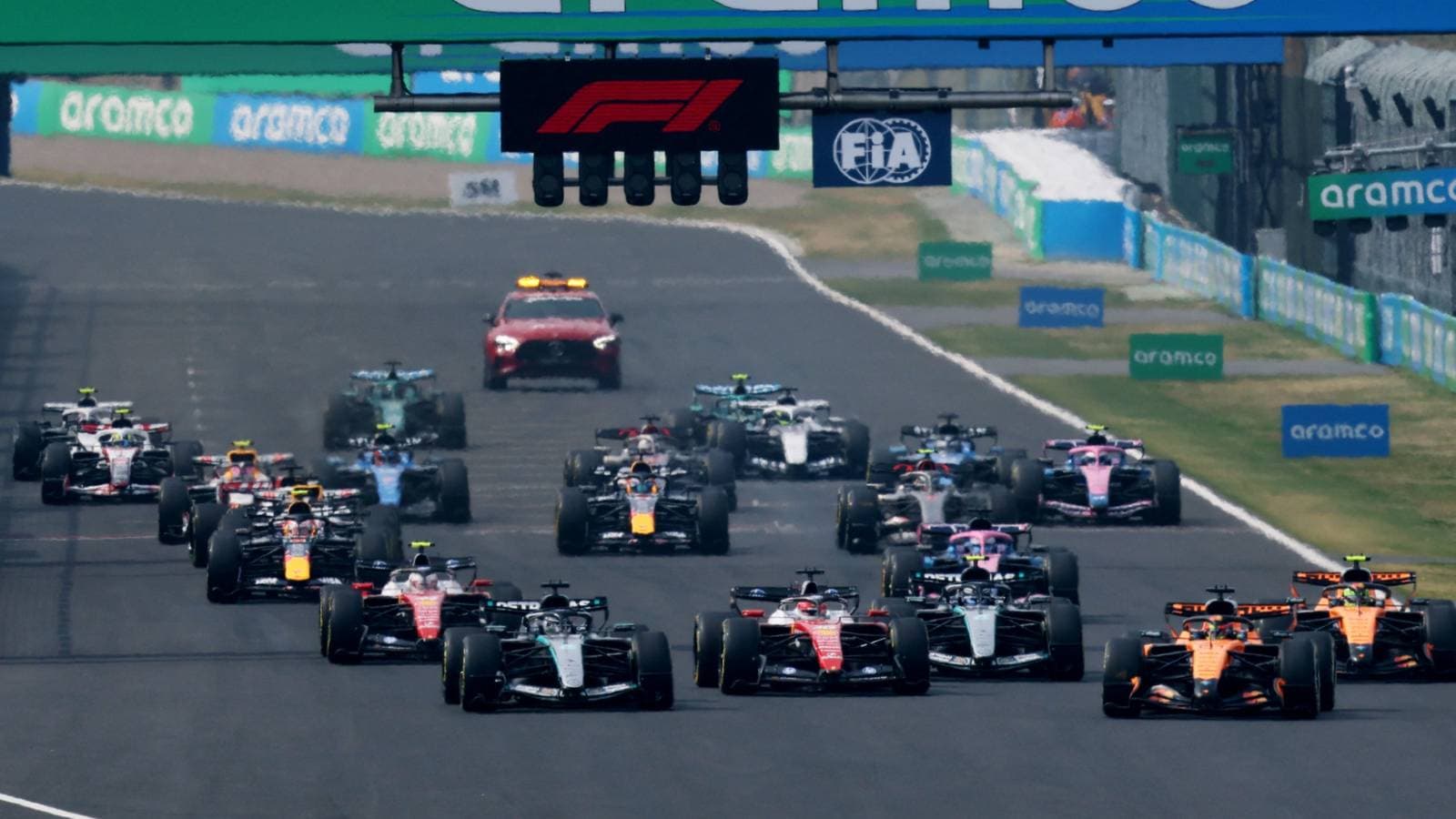
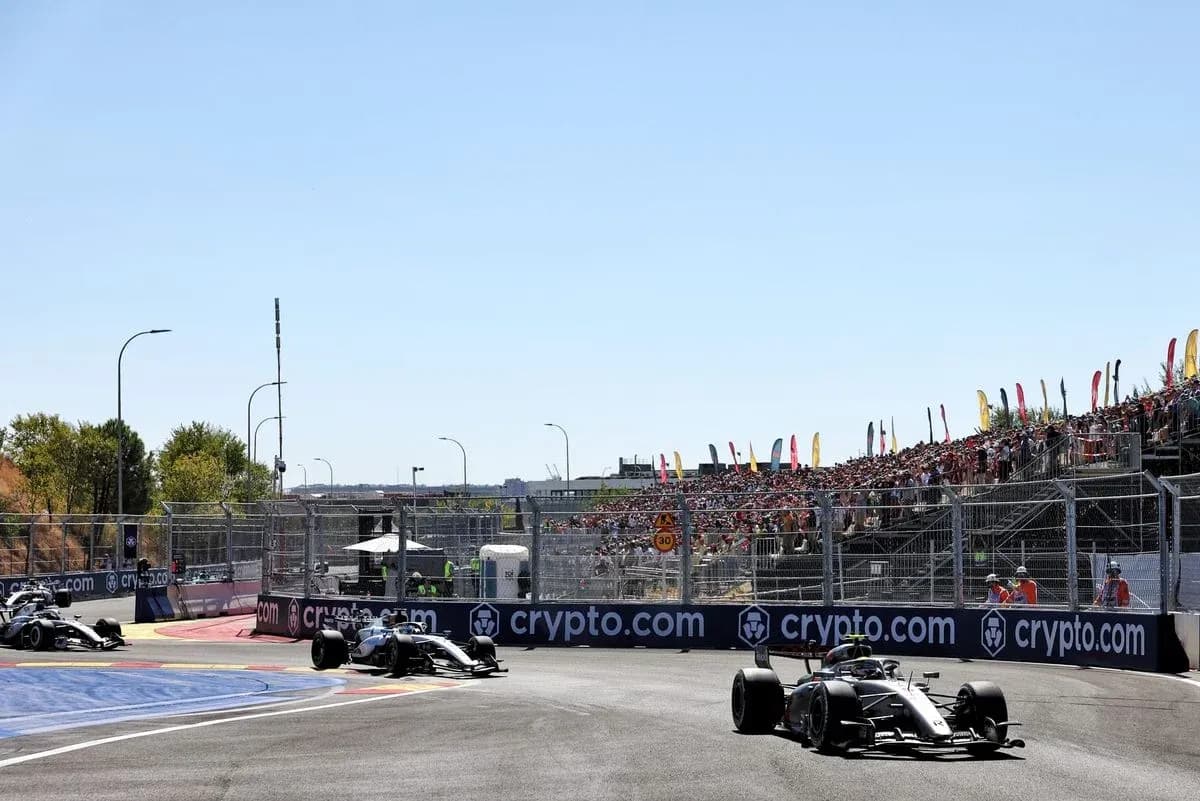
Max Verstappen’s trip across the escape road at the opening chicane on lap one captured the problem in a single shot: cars bunched together, nowhere to go, no real racing line to fight over. The Turn 5-6 chicane quickly became a symbol of the frustration – too tight, too narrow, too clumsy for modern F1 machinery.
The sequence after the banked La Monumental corner didn’t fare much better. A chain of left-handers, walls looming, little space, little visibility.
“I don’t know how someone looks at this design and goes, mint!” Lando Norris fired in the press conference.
Drivers complained that many corners were effectively blind. Sainz, usually measured in public, grouped Madrid with Jeddah and Baku as circuits where visibility and safety sit on a knife-edge.
“Same as in Jeddah and Baku, it’s poor,” he said. He stressed that the FIA seems content to keep pushing in that direction for new venues, while the drivers keep asking for safety to be improved.
“We’re going to go towards these circuits because going at 260km/h, 270km/h on esses that you cannot see through is definitely eye-opening and definitely makes you question how safe everything is.”
Alonso, never one to waste a punchline, took aim at the much-hyped La Monumental banking. The corner was supposed to be a defining feature. Instead, with this generation of cars and energy deployment, it became a flat-out non-event.
He joked that his Aston Martin press officer, Michael Clayton, could have taken it flat. “You go flat with no deployment,” Alonso said, lamenting that in such a “very nice circuit” the driver’s influence in key sections was “just nothing”.
Where are the overtakes?
Strip away the atmosphere and the architecture and one central flaw remains: the Madring doesn’t give drivers a clear way to attack.
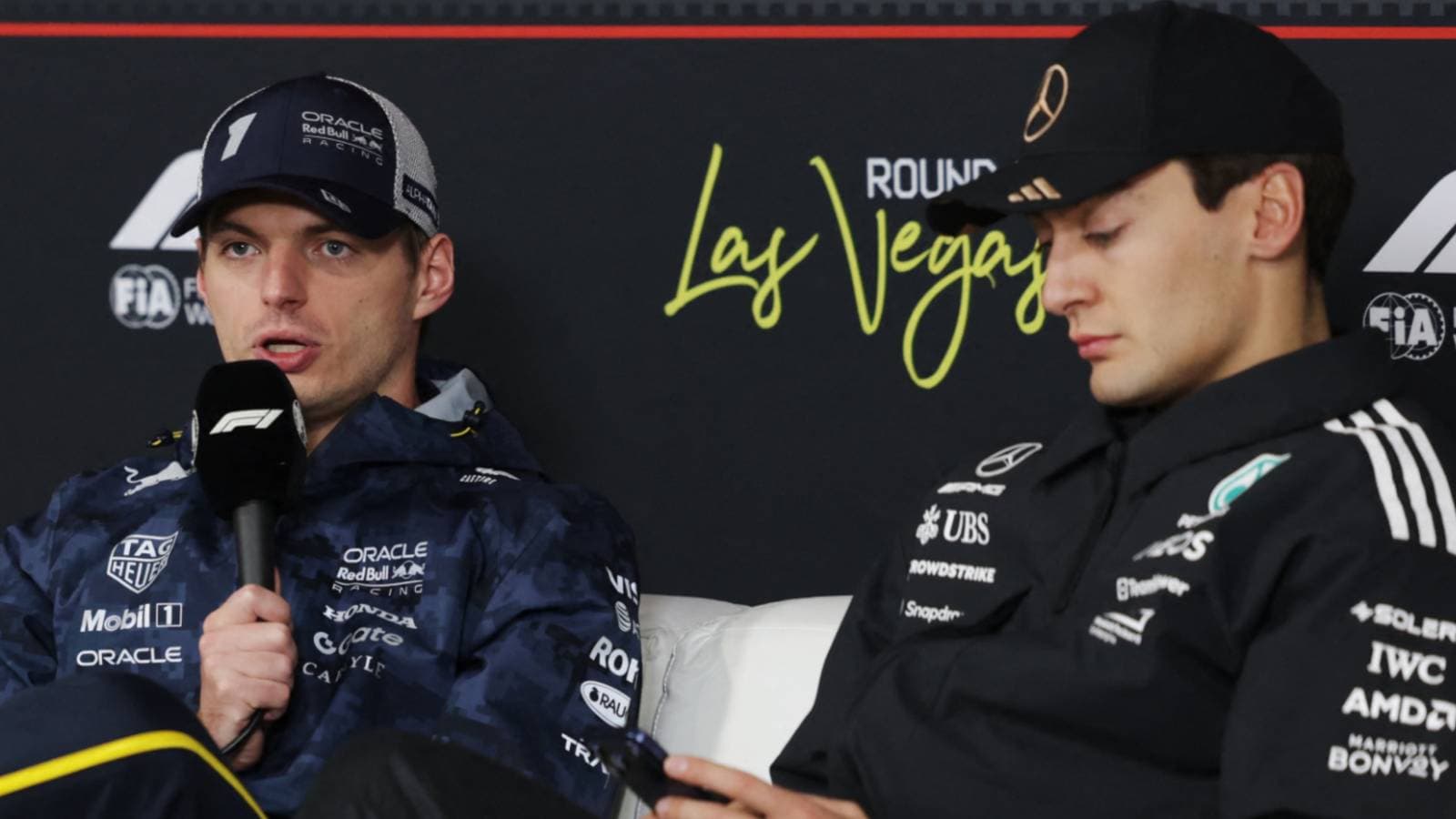
George Russell boiled it down to basics.
“At the end of a long straight, you need a clear opportunity to overtake,” he said. Madrid’s longest straight feeds into a tight roundabout-style section, with no big braking zone to dive into. The layout simply strangles the one place where the cars are properly stretched out.
Norris was more blunt. “They should get rid of [Turns] 18-19 – useless.”
His fix was simple in concept: draw a straight line from Turn 17 to Turn 20 and turn it into a proper, wide-entry hairpin, something akin to Turn 1 or Turn 10 in Austin. A big, open braking zone where drivers can commit, fan out, and fight.
“You create much better opportunities for everyone and you’ll be able to enjoy the race,” he said. Beyond that, he flagged more complex surgery around Turns 5, 6, 7 – the heart of the current overtaking dead zone.
Valtteri Bottas backed the criticism. After the longest straight, he said, it was “quite easy” to defend, which is exactly what you don’t want. He also homed in on the blind nature of sectors two and three.
“Sometimes it’s a bit sketchy, unnecessarily blind in places,” he said, drawing a parallel with the first trip to Saudi Arabia, where similar issues were later eased by moving walls and opening up sightlines. Madrid, he suggested, could follow that template.
Turn 5, in particular, became the lightning rod. On paper, it’s a heavy braking zone into a chicane. In reality, the bumpy approach, high kerbs and narrow funnel make it a no-go area for serious lunges.
Alex Albon pointed to the junior categories as evidence.
He noted that F3 and F2 drivers were constantly going side by side through the chicane and then arguing over who should give the place back. That corner, he said, “needs the most work”.
Bortoleto went further and questioned why the Turn 5-6 chicane exists in that form at all. With today’s wide, long F1 cars, he argued, the geometry simply doesn’t make sense. “If it was 1990s cars, maybe you could put something,” he said. “But it’s not like this anymore.”
Verstappen, echoing Alonso’s disappointment with La Monumental, felt even the banking had been used the wrong way round. “It’s cool, the banking,” he said, but argued it should have started with more banking and then flattened out, rather than the current profile.
Street circuits vs modern F1
Beneath the specific gripes about Turn 5, Turn 18, blind kinks and neutered banking lies a deeper tension: the mismatch between modern F1 cars and tight, wall-lined layouts.
Verstappen didn’t hide his bias.
“I’m not a fan of street circuits, so that will never change,” he said. He praised the organisation and the build, but when it comes to driving, he’d always rather be at Spa.
Alonso, again, ended up in a similar place. “I still prefer normal circuits,” he said. On permanent tracks, he argued, you truly push the limits of the car. On a street circuit, you live at “95%” because the track can always surprise you – a bump, a wall, a blind crest.
It’s a telling contrast. Formula 1 wants the drama and skyline shots of city races. The drivers want visibility, big braking zones and the space to race.
In Madrid, that clash played out in real time.
The criticism hasn’t just gone into the void. Changes for the next Spanish Grand Prix are already being discussed, and the drivers have made it abundantly clear where they think the scalpel should go: open up the sightlines, create at least one genuine overtaking corner at the end of a proper straight, rethink the fussy chicanes.
The Madring has the backdrop, the crowds and the ambition. The question now is simple: will it be brave enough to redesign its racing heart?