.svg&w=384&q=75 "logo")
Vaibhav Sooryavanshi: The 15-Year-Old Cricket Sensation Redefining Leadership
At 15, most cricketers are still learning where to stand in the field. Vaibhav Sooryavanshi is already telling internationals when to bowl and when to review.
At the MA Chidambaram Stadium, in the heat and history of a Duleep Trophy final, the East Zone vice-captain played like a veteran trapped in a teenager’s frame. East Zone had already crushed South Zone under a mountainous 708, built around captain Ishan Kishan’s towering 270. The contest looked one-sided on the scoreboard, but South’s reply had begun to steady. The game needed a jolt.
The youngest leader on the park supplied it. Twice.
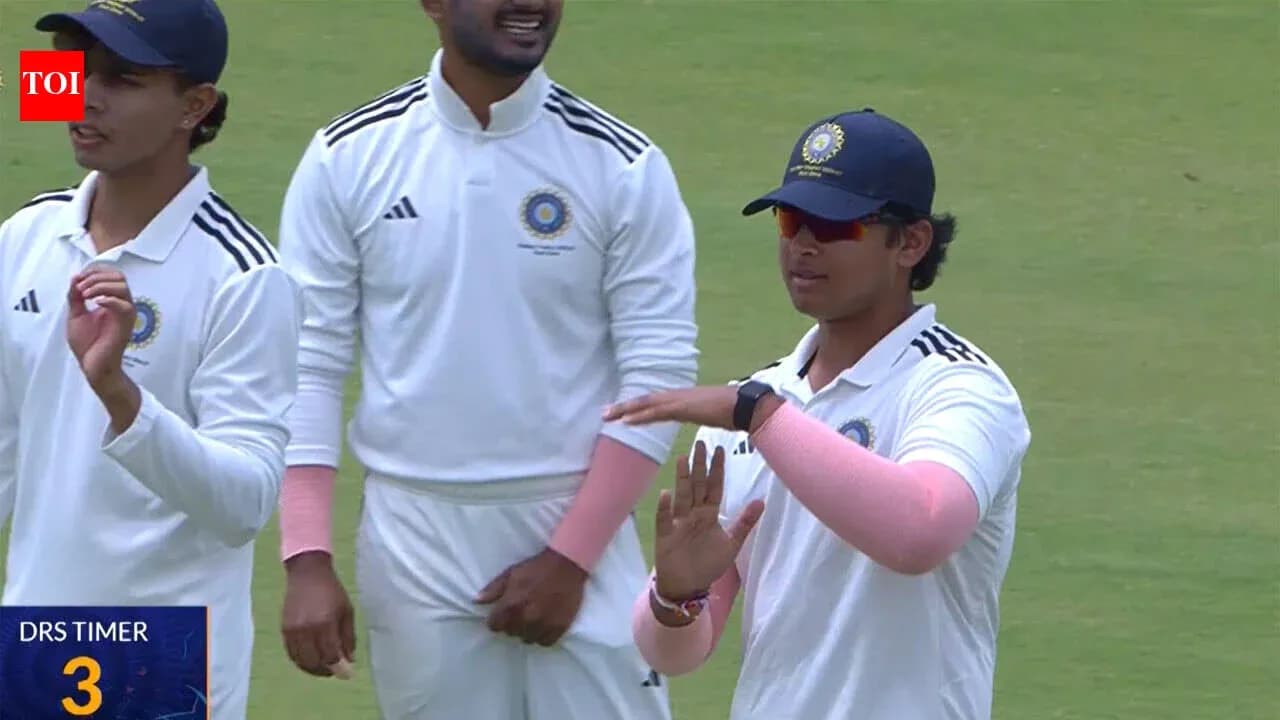
A teenager’s finger on the DRS trigger
Ricky Bhui thought he had wriggled free.
Mukesh Kumar angled one down leg, Bhui glanced, the fielders went up, and the umpire stayed stone still. On most days, that’s where the story ends: a half-hearted look, a shrug, the bowler walks back. Not with Sooryavanshi lurking at short leg and refusing to let it go.
He was convinced. He urged Kishan to roll the dice with the Decision Review System. No dithering, no deference to age or experience. Just conviction.
UltraEdge told the rest. A clear spike as the ball brushed the bat, Kumar Kushagra completing the catch behind. Bhui gone, South’s resistance dented, and a 15-year-old had just swung a crucial call in a major final.
The moment travelled quickly. BCCI’s social media team clipped the audio and posted it with the line: “Take it... take it. Vaibhav Sooryavanshi urges the captain to take the review, and it turns out to be successful.” It wasn’t just a quirky soundbite. It was evidence of a teenager reading the game faster than players twice his age.
Under pressure, he didn’t hide behind seniority. He owned the decision.
Standing in as captain, thinking like one
The afternoon session rolled on. South Zone reached 174/4 and, for the first time in the innings, the chase felt organised. Tea was minutes away. The ball had gone a little soft. Kishan had stepped off the field. A lull loomed.
Sooryavanshi, temporarily in charge, refused to drift into the break.
Mohammed Shami had already put in a demanding spell. He’d bowled seven overs early, gone off, come back briefly after lunch, and even needed treatment to his neck from the physio. Many young stand-ins would have turned to a part-timer or held Shami back for the new ball.
Sooryavanshi went the other way. He brought the veteran back for a short, sharp burst, gambling on one more crack before tea.
The move landed perfectly.
Shami, all experience and skill, lured Smaran Ravichandran—last season’s leading run-scorer in the Ranji Trophy—into a drive outside off. The edge carried to Kushagra. Again, the on-field umpire said not out. This time Kushagra pushed hard for the review, and Sooryavanshi backed his keeper.
UltraEdge flickered. Another spike. Another key dismissal. Ravichandran gone for South’s hopes, the score suddenly 176/5, and once more the teenager had his fingerprints all over the breakthrough.
He hadn’t just worn the captain’s armband for a few overs. He’d used it.
A pattern, not a one-off
This wasn’t some lucky streak in a single final. Across the Duleep Trophy, Sooryavanshi has turned DRS into a quiet weapon.
In the semifinal against Central Zone in Bengaluru, he’d stepped in with similar clarity. Aryan Juyal, on 46, pushed hard at Mukesh Kumar outside off. A loud appeal followed, the umpire shook his head, and uncertainty spread across the field. Should they review? Was there enough to risk it?
Time ticked down. The hesitation grew. Then, at the last moment, Sooryavanshi cut through the doubt and called for the review.
UltraEdge again confirmed what his instinct had already decided: a faint edge, a big wicket, and another moment where the youngest player on the field saw the game in slow motion while everyone else scrambled.
These calls don’t show up in the scorecard as runs or wickets. They live in the margins, in the pressure points of a four-day game. Yet in a tight campaign, they can tilt a season.
More than just a batting prodigy
For most followers of Indian domestic cricket, Sooryavanshi’s name first surfaced for his batting. A teenage prospect, weight of runs, the usual tags. But this Duleep Trophy has started to reveal a different layer: a cricketer who wants the ball, wants the decisions, wants the responsibility.
He’s even joked about it. In a video for BCCI Domestic, he spoke about being thrown the ball when nothing was happening. “Opponent team's wickets weren't falling, so I was asked to bowl two or three overs. Ishan Bhaiya felt like he was taking a risk, but he didn't know that I am a wicket-taker,” he said, laughing.
The line was light-hearted, but the intent behind it wasn’t. He sees himself as a wicket-taker, a problem-solver, not just a kid filling a spot in the XI.
In Chennai, that mindset played out in real time. He read angles behind the stumps, sensed moments before intervals, and understood when to unleash a battle-hardened seamer for one last burst. The numbers—two successful reviews, one inspired bowling change—tell only part of the story.
The rest sits in how a 15-year-old has already started to shape matches in a competition that has long been a proving ground for India’s next generation. If this is how he thinks the game now, what happens when experience finally catches up with his instinct?