.svg&w=384&q=75 "logo")
The Premier League Tax: A New Era of English Football Transfers
There was a time when the premium in English football was on the passport. Now it is on the postcode.
If you are already in the Premier League, you cost more. A lot more.
This summer, the average fee for a player moving from one Premier League club to another hit £39.4m. For players arriving from abroad, the average was £20.2m. Same market, same window, double the price if you are already inside the bubble.
Kieran Maguire, professor of football finance at the University of Liverpool, has a neat phrase for it: “a Premier League tax”.
The new marketplace: England buying England
The numbers tell the story of a league increasingly trading with itself.
High-value deals – transfers worth £40m or more – have exploded. In 2022 there were 13 such moves. This summer there were 27.
Two years ago, seven of those big deals were with clubs on the continent and six were between Premier League sides. That balance has been flipped and then some.
This year, nine £40m-plus transfers involved European clubs. Between English clubs? Eighteen. Treble the number from two years ago. The total domestic spend has more than doubled as well.
The Premier League still sends more money out of England overall, but at the top end, the really heavy fees are increasingly staying in-house. The richest league in football is feeding itself.
Maguire points to the way English clubs now work the global market. The scouting net is wide, the data deep, and the recruitment earlier.
“We've got a new tranche of clubs, sort of the algorithm kids, who are recruiting from the international markets,” he explains. They identify talent abroad, bring it in relatively cheap, and then sell the best of it on to the Big Six.
Carlos Baleba is the model case. Brighton picked him up from Lille for £23m. Three years later, Manchester United paid £70m. Brighton did the risk. United paid the tax.
“It has effectively created a recruitment area, sort of a petri dish, to determine which of the overseas players can deliver in the Premier League, and then it's a win-win for all the parties,” Maguire says.
Win-win, yes. But also a closed loop that only this league can sustain.
Deals only the Premier League makes
Some transfers now look almost unique to England’s financial ecosystem.
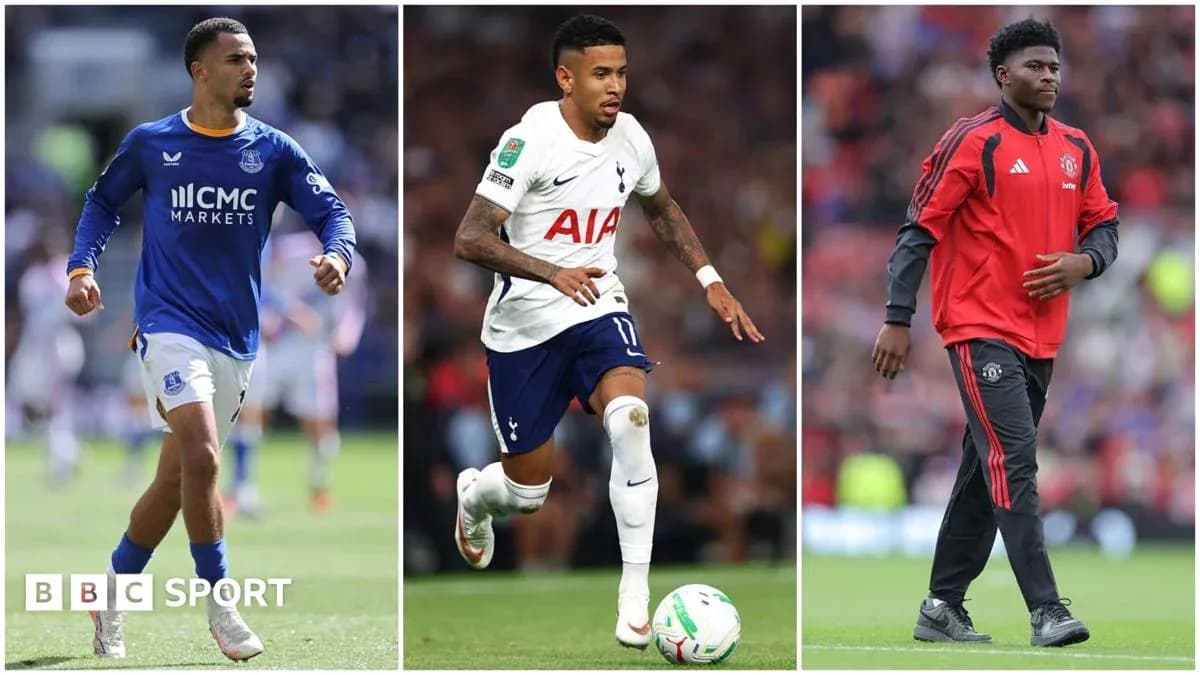
Would a European club really have given Manchester City the £75m Tottenham spent on Savio? Would anyone outside the Premier League have paid Everton £65m for Iliman Ndiaye? Or matched the £85m West Ham received from Spurs for Mateus Fernandes?
The evidence suggests not. Across Europe this summer, only seven signings of £40m or more were done between clubs on the continent – and every one of those came from Barcelona, Bayern Munich or Paris St-Germain.
Trevor Watkins, former Bournemouth chairman and now a sports lawyer, sees a division that is no longer just about leagues, but about economies.
“The revenues dwarf what other leagues generate,” he told BBC 5 Live Breakfast. “And what you see this year is a lot of deals between clubs in England.
“A lot of money going down to lower leagues, but also between Premier League sides because, to be honest, they're probably the only ones that will pay the wages or pay the fees.”
The Premier League has become a financial ecosystem of its own. The rest of Europe is increasingly on the outside looking in.
When the spreadsheet matters more than the player
Inside that ecosystem, the transfer market has become a numbers game where a player’s value on the pitch can feel secondary to his value on the balance sheet.
Profit on player sales is no longer just a bonus. It is a central pillar of squad building, because it dictates how much a club can reinvest without falling foul of financial rules.
The mechanics are dry, but the impact is huge.
Take Elliot Anderson. Nottingham Forest paid Newcastle £35m for him. They then sold him to Manchester City for £116m. Simple maths would suggest an £81m profit.
The reality is different. That original £35m is spread across the length of his Forest contract. When he left, around £21m of that fee remained on the books. Against a sale of £116m, that produces a book profit of £95m.
Under the Premier League’s new squad cost ratio (SCR) rules, that £95m profit is then averaged over three years, giving Forest £31.67m per season to offset against their costs.
Clubs can no longer cash in on one big sale for a quick fix – whether to fund a single extravagant window or to dodge an immediate breach of financial regulations. The rules stretch the benefit out, forcing clubs to think long term and, crucially, to chase higher and higher fees to keep that rolling profit number strong.
SCR is calculated over a season, but the profits are smoothed over three years. The bigger the fee, the bigger the average. That is why prices keep climbing.
And it is why the richest clubs, with the most commercial muscle, are best placed to live in this world.
Big Six, bigger gap
The Premier League’s traditional heavyweights – Arsenal, Chelsea, Liverpool, Manchester City, Manchester United and Tottenham – spent £1.658bn on players this summer.
They can do that because they have already “future-proofed” themselves, as Maguire puts it, by ramping up revenues away from the pitch.
“Spurs is a classic example,” he says. “Spurs now have a multi-function, multi-sport stadium, of which the football club is the biggest part.
“It is a reward for those clubs that have expanded their stadiums, or thought outside of the box in terms of trying to generate additional revenues.”
For the other 14 clubs, who still collectively spent £1.833bn, the equation is different. They cannot simply lean on vast global commercial deals or giant matchday incomes. They have to trade.
Player sales are not just a line of income. They are survival strategy and growth plan rolled into one.
Aston Villa and Newcastle are the clearest examples this summer. Between them, they completed five deals worth £40m or more, but only after bringing in hundreds of millions from outgoing transfers. Sell well, then spend big. Fail to sell, and the ceiling drops.
Europe feels the squeeze
Every pound that stays inside the Premier League is a pound that does not flow to the continent. Yet the inflationary effect does not respect borders.
La Liga’s corporate general director, Javier Gomez, has already sounded the alarm, criticising what he calls a “loss-making model which is an issue exclusive to the Premier League”.
“It has other consequences,” he warned. “It inflates the entire sector – it inflates the Premier League, the Bundesliga, the French League, and eventually us as well.”
Some of Europe’s traditional giants already know the feeling. They still have the history, the trophies, the global fanbases. But when it comes to competing for players with the top Premier League clubs, they are often outgunned.
“With the exception of some of the global brands within football, and I think you'd look at Real Madrid, Barcelona, PSG and Bayern Munich, the Premier League can outspend anyone and everyone,” Maguire says.
The latest Deloitte Money League underlines that dominance: 14 Premier League sides sit among the 30 biggest clubs in world football. Real Madrid, Barcelona, PSG and Bayern Munich top the list, but Liverpool lead six English clubs that complete the top 10.
For clubs outside that elite, the landscape has shifted dramatically.
Andre Villas-Boas, now president of FC Porto, describes a new reality where the Portuguese champions are no longer fighting Manchester City or Liverpool for emerging talent – they are fighting Coventry and Brentford.
“For Porto, it means we are competing for talent not with Man City or Liverpool but with (the likes of) Coventry and Brentford, without any disrespect,” he says.
“The fact that they have this spending power makes it difficult for us.
The Premier League is set apart from all the rest, which means English clubs are becoming more and more dominant of European competitions.”
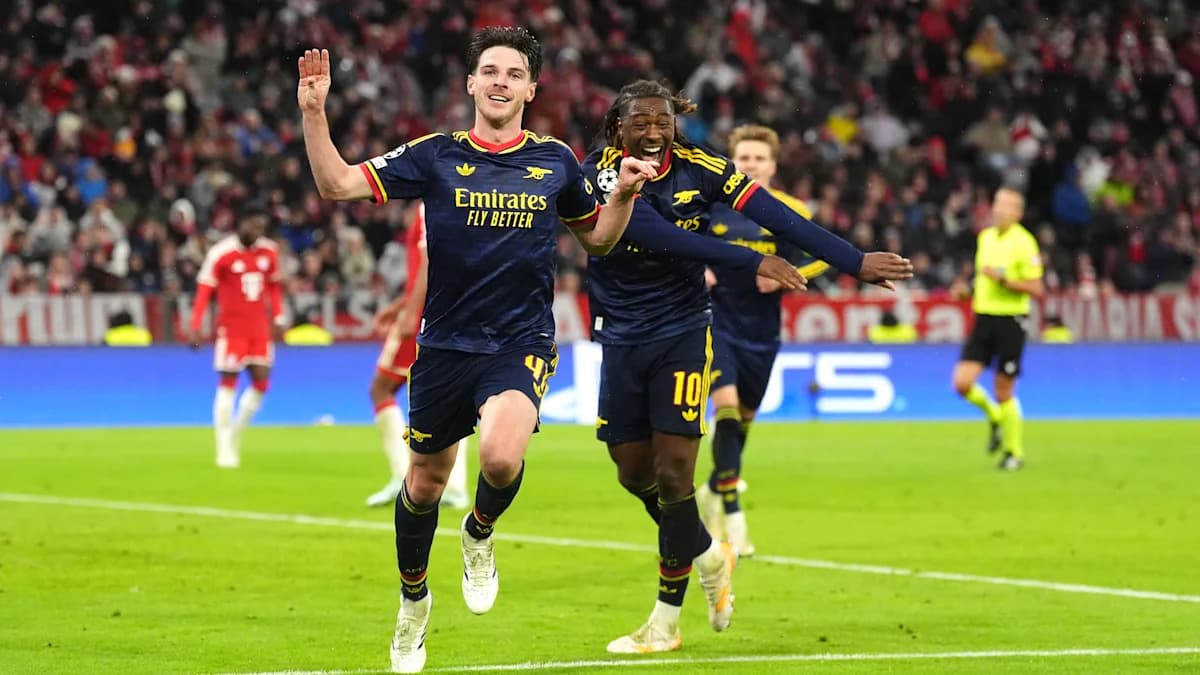
Last season, Aston Villa lifted the Europa League and Crystal Palace won the Conference League. Arsenal reached the Champions League final, only to be beaten by PSG. English clubs are not just rich; they are increasingly successful on the pitch as well.
A bubble that will not burst – yet
Every summer, the same question hovers over the Premier League’s transfer window: is this the year the bubble bursts?
The answer, again, is no.
Spending records fall. Domestic deals grow fatter. Clubs lean ever harder into the logic of SCR, of amortisation, of book profit. The league’s financial gravity pulls talent, and money, towards England and keeps it there.
The risk is obvious. As the Premier League’s internal market inflates, the rest of Europe strains to keep up, and the gaps – in wages, in fees, in trophies – keep widening.
The bubble holds. For now.
The real test is not whether it bursts, but how long the rest of the game can live in its shadow.