.svg&w=384&q=75 "logo")
Emilio Gay's 60: A Statement for England's Opening Role
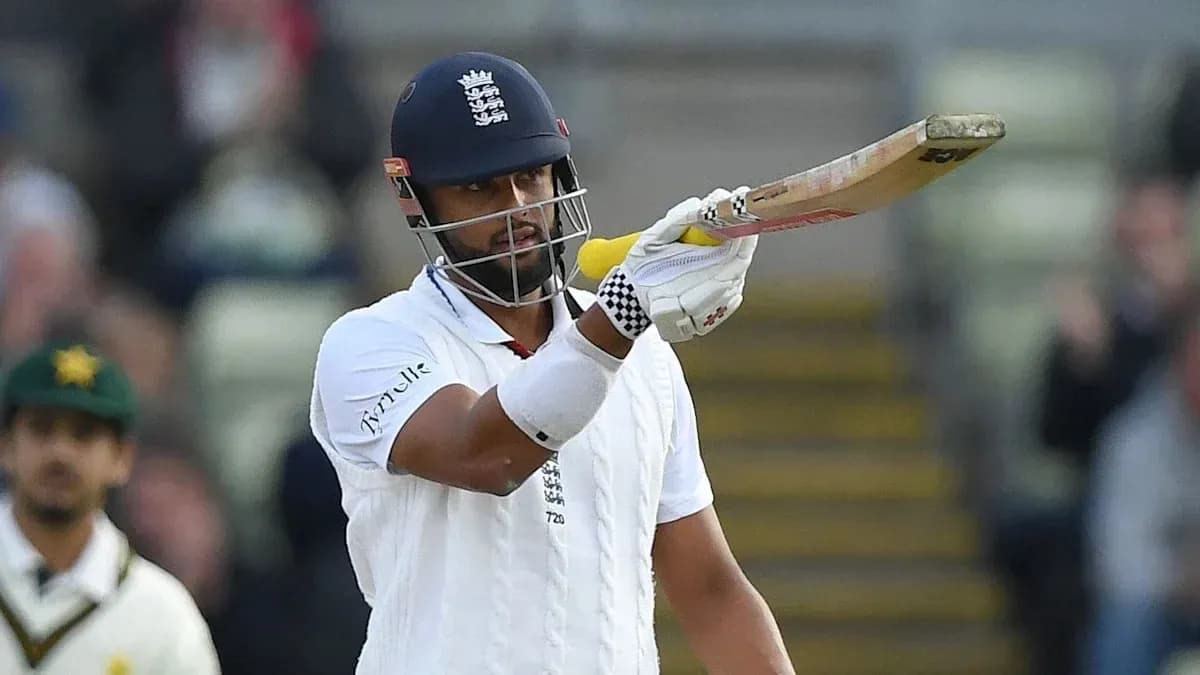
Emilio Gay walked off at Edgbaston with only 60 to his name, but with something far more valuable tucked under his arm: the conviction of Sir Alastair Cook that he should open for England in South Africa this winter.
On a day when Pakistan’s batting folded for 133 and the ball again bossed the English summer, Gay’s 60 from 114 balls looked bigger than the number on the scoreboard. It looked like a statement. It looked like an opener learning how to live at this level.
Cook’s seal of approval
Cook knows that terrain better than anyone. Nearly 12,000 Test runs at the top of the order give his verdict a particular weight, and he has seen enough.
“I think Emilio Gay's played really nicely. I would say he's confident and intense,” he told Test Match Special, before going a step further. Gay, he argued, has “done enough” to be on the plane to South Africa and to open the batting there.
What has impressed Cook is not a glittering average – 261 runs at 26.1 will never leap off a page – but the way those runs have been earned. On difficult surfaces, against a ball that has rarely gone soft, Gay has shown what Cook recognises instantly: stubbornness, a hard edge, the will to make it count once he’s in.
“He is definitely a run-getter when he gets in,” Cook said. That’s the line that lingers. It’s the compliment every opener wants from England’s greatest modern one.
Technique built for survival
The numbers behind Gay’s method tell their own story. CricViz data shows he has left or defended 61% of the pace deliveries he has faced since his debut against New Zealand in June. No England opener has bettered that in a home summer since Dom Sibley in 2020, who was up at 68%.
On Wednesday, the discipline went up another notch. Gay left or defended 65 balls, repeatedly letting deliveries pass or meeting them under his eyes. Cook picked up on that detail in particular: he “likes how late he defends the ball,” a small technical note that in Test cricket often separates survival from nicking off.
Gay’s innings built slowly, then grew teeth. The first 12 runs of his fifty took 43 balls. The next 38 came from 52. Once he had earned the right to play, he did not waste it.
He struck nine fours and, tellingly, 68% of his Test runs have come in boundaries – the joint-highest proportion of any England batter with at least 250 red-ball runs. This is not a strokeless blocker clinging on. It is an opener who soaks up pressure, then cashes in.
Cook likes the balance.
“If you take Gay's innings, and what I've seen of him, he's not hunting that drive too often. He waits for it to come into there,” he said. The drive is a weapon, not a reflex. Gay scores off the back foot through the off side, he works the leg side, times the ball through mid-wicket. “He does have an all-round game. He's not limited to the off side.”
For an England side that has burned through openers who either fenced at everything or refused to score, that blend of patience and range is not nothing.
A chance missed – and a flaw exposed
Yet this was not a perfect day. The chance was there for Gay to turn a classy 60 into a defining first Test hundred. Former captain Michael Vaughan could see it unfolding.
“Emilio Gay found his balance early. He had it hard at the start and then he found his flow,” Vaughan said. Then came the sting. “He'll be really disappointed to get out for 60. He'll be desperate to get his first Test match century and I thought it was on today.”
It wasn’t a mystery ball that did for him. Razaullah Khan found a touch of extra pace, Gay’s concentration dipped just enough, and he dragged on. The dismissal cut deeper because it played into a pattern analysts have already flagged.
Gay has struggled against back-of-a-length bowling. Seven of his dismissals have come in the 7–9 metre range, an uncomfortable zone where he can neither press fully forward nor rock easily back. For all the praise, that is the technical knot he will need to untie if he is to move from promising to permanent.
On this day, it cost him three figures. As Vaughan put it, “That extra little bit of pace from Razaullah and a little lack of concentration at the end of the day has cost him.”
A rare constant in a brutal summer
Context matters. This has been a brutal home summer for batters. Only Ben Duckett has reached three figures for England across six home Tests. Bowlers have dictated, averages have shrunk, and pretty techniques have been shredded by relentless movement.
Within that storm, Gay has been one of the few top-order players to find a way to keep contributing. Only Harry Brook, with six, has passed 30 more often than Gay’s five. These are not huge scores, but they are repeatable starts in an environment where many have not lasted long enough to blink.
That resilience has not gone unnoticed in the dressing room. Seamer Josh Tongue pointed straight to the work behind it.
“The one thing I've seen in Emilio is he trains really hard in the nets. He'll bat for ages, putting a lot of hard work in, and it's shown on the pitch,” Tongue said.
Last week at Lord’s, Gay suffered what Tongue called “two quite horrible dismissals.” Lesser characters can carry those scars. Gay came back on a tricky Edgbaston pitch and batted, in Tongue’s words, “unbelievable.”
He still walked off furious with himself. “He was obviously really disappointed with how he got out. It's not a nice feeling, chopping on, but he's put the team in a really good position for tomorrow.”
That is the duality of his summer: progress and frustration, promise and unfinished business.
South Africa and the selection fight
There is a twist to all this. Pakistan’s flimsy first-innings 133 means this could be Gay’s last Test knock of the English summer. If England do not need to bat long again, the selectors will have to judge him on what he has already shown.
The winter tour of South Africa looms, and with Jacob Bethell expected to return from injury, the battle for top-order spots tightens. Jordan Cox, Dan Lawrence and Gay are effectively jostling for two places.
On raw numbers alone, the case is not overwhelming. On character, on method, on how he has handled a viciously difficult set of conditions, it starts to look stronger. Cook is clear: on better pitches in South Africa, with the ball less menacing, Gay’s game should travel and his ceiling should rise.
He has left well, defended late, scored with authority once set, and shown he can grind through tough spells without losing his intent. He has also revealed a clear area for improvement that opponents will target.
So the question for England now is simple, and it will not be answered by another net session or another county scorecard. Do they back the opener who has learned to fight on the hardest tracks, or turn again to someone new?
For Cook, the answer is already written. For Gay, the next chapter depends on whether the selectors see what he has just proved at Edgbaston: that sometimes a hard-earned 60 can say more about a future than an easy hundred.