Eddie Howe Emerges as Top Contender for Manchester United
Eddie Howe has emerged as the leading choice inside Manchester United’s reshaped hierarchy to replace Michael Carrick, should the club decide the experiment is over.
Jason Wilcox, the director of football entrusted with reshaping the post-Sir Alex era, is understood to favour Howe ahead of a growing list of contenders. The attraction is obvious: deep, hard-earned Premier League experience and a recent track record of dragging a sleeping giant back into relevance.
Howe at the head of the queue
Howe has been out of work since leaving Newcastle in late July, stepping away to take a break from the game. It was framed as a pause, not a retirement. Those close to the situation believe he would take a very different view if United called.
For Wilcox, Howe’s body of work speaks louder than any presentation. At Newcastle, he walked into a club drifting under Steve Bruce, 19th in the table and winless in their first 14 league games of the 2021–22 season. By the end of that campaign, Newcastle had surged to 11th, winning 12 of their final 18 matches. Relegation talk disappeared. Ambition returned.
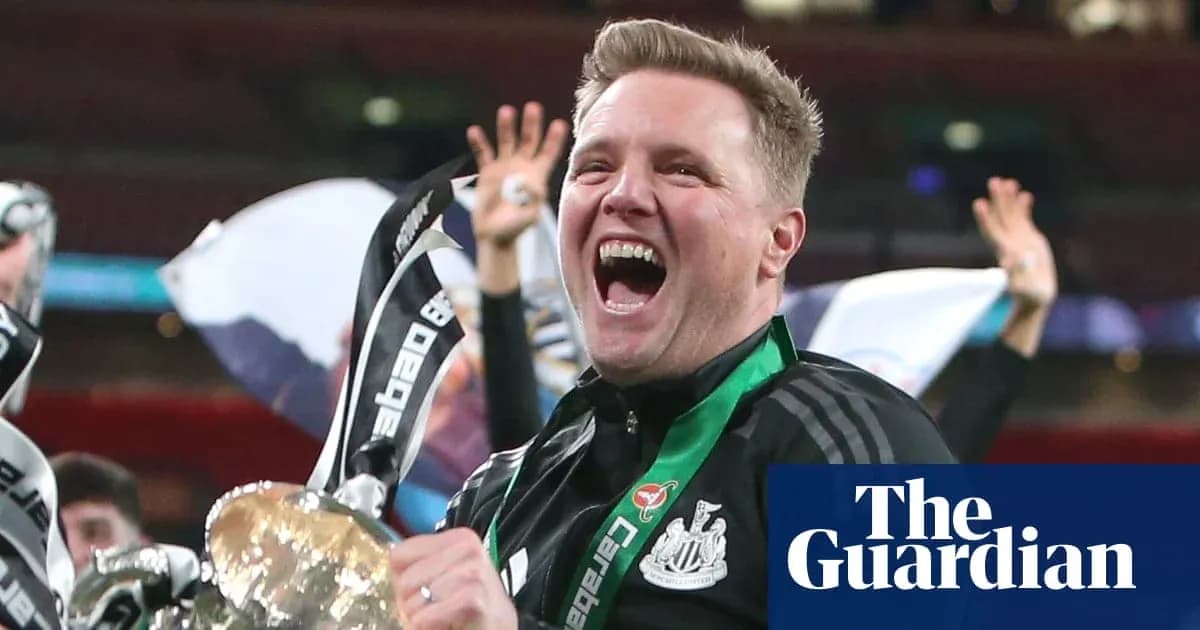
The revival did not stop there. Howe guided Newcastle back into the Champions League in 2023, ending a 20-year absence from Europe’s top table, then repeated qualification two seasons later. Domestically, he delivered something even more precious to Tyneside: a trophy. Newcastle lifted the 2025 Carabao Cup, their first domestic silverware in 70 years, under his watch.
This was not a one-off miracle either. Before Newcastle, Howe had already proved he could live – and compete – in the Premier League with Bournemouth, keeping them in the top flight across five seasons from 2015. That volume of English top-tier experience is exactly what Wilcox values as United try to stop lurching from one reset to the next.
Money, power and preferences
Unai Emery is another name admired at Old Trafford. The Aston Villa manager’s work in Birmingham has not gone unnoticed. But Villa would demand around £20m in compensation to even start a conversation, a figure that makes Howe a more economical option at a time when United’s new regime is trying to show sharper financial discipline.
Julian Nagelsmann, the former Germany and Bayern Munich coach, has his own backer inside the club. Christopher Vivell, United’s head of recruitment, is understood to rate the 37-year-old extremely highly. Nagelsmann’s tactical reputation and age make him an attractive long-term project.
Yet inside the new structure, Wilcox’s word is expected to carry particular weight with Sir Jim Ratcliffe, whose INEOS group now controls football policy. If Ratcliffe wants stability, Premier League know-how and a coach who has already proved he can handle an ownership project with sky-high expectations, Howe fits the brief more snugly than most.
Carrick on the brink
All of this unfolds with Michael Carrick still in the dugout – for now.
United’s start to the season has been their worst since 1986. Two wins from 11 games have left the 45-year-old under intense scrutiny and pushed the club back into familiar crisis territory. He is expected to remain in charge for Sunday’s visit of Bournemouth and is scheduled to face the media on Friday, but everyone around the club knows the numbers. They are brutal.
The mood is not helped by the sense of drift. Performances have lacked conviction, results have drained confidence, and the fanbase has grown restless. The discussion has already moved from “if” to “when” for many supporters. Inside the club, the tone is more measured, but the reality is the same: Carrick’s job is in the balance.
If United decide to act, they want to be ready. That is why names are being lined up, preferences debated, compensation costs weighed. Howe, fresh from his Newcastle spell and open to a return, stands at the front of that queue.
A club looking to its future
Away from the dugout drama, United are also asking supporters to help shape the club’s physical future. The club has launched a survey inviting fans to give their views on the design of a proposed new 100,000-seat stadium.
The questionnaire will go to season-ticket holders, cup season-ticket holders, executive club members, official members, supporters who have bought hospitality at Old Trafford in the past three years and those on the season-ticket waiting list. It is a rare moment where the club’s long-term vision feels tangible: a vast new arena, a fresh identity, a statement of intent.
So United stand at a crossroads on two fronts. One decision will determine who leads the team out next month. The other will shape where that team plays for decades.
If Wilcox gets his way, the man walking into that future, under the glare of a rebuilt Old Trafford, could be Eddie Howe.