.svg&w=384&q=75 "logo")
The Evolution of the Champions League: From Knockouts to Super League
On 16 September 1987, Diego Maradona’s Napoli walked into the white heat of La Quinta del Buitre’s Real Madrid and were gone almost as soon as they arrived. A 2-0 defeat at the Bernabéu, a 1-1 draw back at the San Paolo, and one of Europe’s great entertainers had been quietly shown the door in the first round of the European Cup.
Silvio Berlusconi watched all this and bristled. Not just at the sight of a heavyweight being dumped out before the competition had even found its rhythm, but at the thought that his own AC Milan might suffer the same fate. Early exits meant lost revenue, lost prestige, and less of the heavyweight theatre he craved. So he began to push a different vision: a European super league, a closed shop for the elite.
That grand project never quite materialised. Uefa, rattled all the same, moved first. Five years later, the Champions League arrived, a rebrand with a purpose: keep the big clubs around longer, guarantee more big nights, squeeze more value out of the continent’s biggest names.
Even that, of course, only opened the door to more. One place per country for champions became two, then three, then four. In some leagues, it’s now five. The logic is the same every time: more of the richest clubs, more of their games, more often. And now comes the Swiss model, the latest and purest expression of the Berlusconi doctrine. A sprawling league phase, heavy on fixtures, light on jeopardy. Fewer sudden deaths, more scheduled blockbusters.
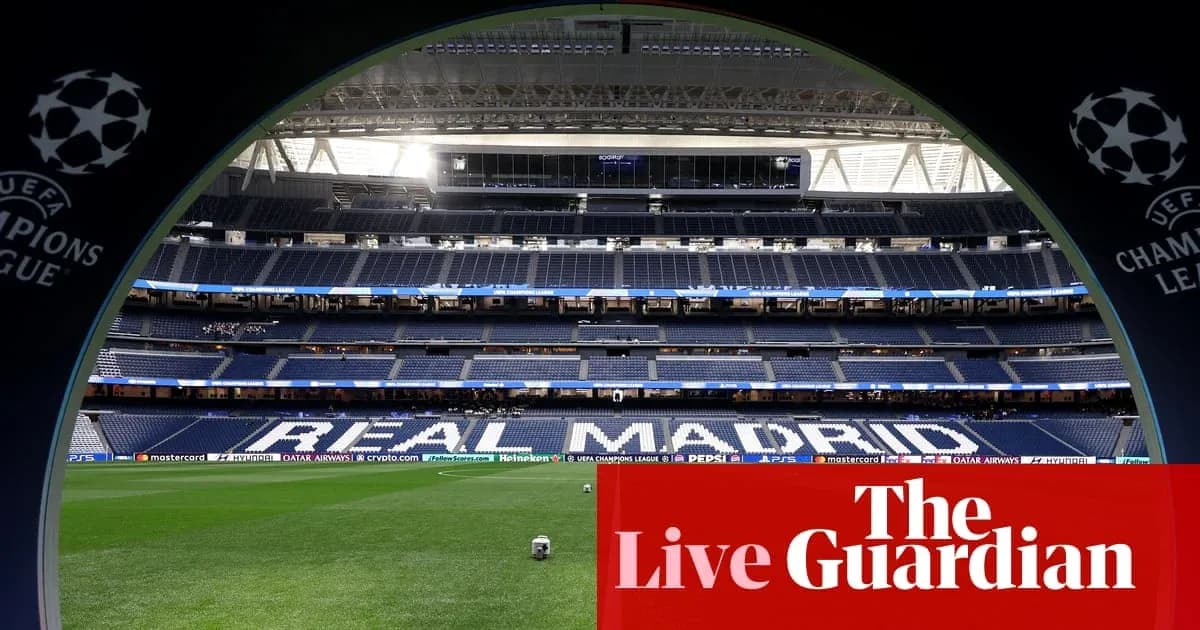
Gabriel Hanot, the journalist who first imagined a simple, brutal continental knock-out competition, would look at this and weep. The romance of the straight shootout has been traded for a season-long content stream. Yet here we are, with no real option but to lean in and relish nights like Real Madrid v Internazionale.
And how easy that is. Football’s excess has a way of seducing its critics. Real Madrid against Inter, under the lights, offers its own irresistible subplots. José Mourinho, back on another touchline, walks into what feels like his latest last chance, trying to summon the old electricity. Across from him, Cristian Chivu, once his player and now Inter’s coach, attempts to build something of his own at the club where Mourinho carved a legend.
That alone would be enough to command attention. It isn’t all, though. Borussia Dortmund, with the Yellow Wall roaring at the Westfalen, roll out one of Europe’s most intriguing young players in Konstantinos Karetsas, the 18-year-old midfielder who has burst into the side with a swagger that belies his age. Villarreal stand in their way, an awkward, technical opponent who rarely make life simple for anyone.
Elsewhere, Porto v Manchester City offers another angle on the modern game’s hierarchy: a historic powerhouse against the era’s most finely tuned machine. Lille v Real Betis promises its own chaos and colour, a meeting of sides who tend to play with the handbrake off and live with the consequences later.
What any of these results will truly mean in the long arc of this newly shaped Champions League is harder to pin down. The format blurs the stakes, stretches out the tension, turns the old knife-edge nights into part of a longer, richer schedule. But meaning has been replaced by magnitude. Millions will still lock in, looking for flashes of genius, collapses under pressure, and those small moments that cut through the noise.
And while Europe takes centre stage, the domestic grind refuses to step aside. The League Cup hums into life across England, a competition that has become a testing ground, a proving stage, and occasionally a lifeline. Kick-offs at 7.45pm and 8pm BST there, 8pm BST in the Champions League. Different trophies, different priorities, one long evening of football.
So the calendar swells, the formats contort, and the purists grumble. Yet the screen will still glow, the stadiums will still fill, and Real Madrid v Internazionale will still feel like an event. The question isn’t whether people will watch. It’s how long the game can keep stretching itself before even nights like this start to feel ordinary.