Carrick Faces Critical Decision: Remove Fernandes' Captaincy?
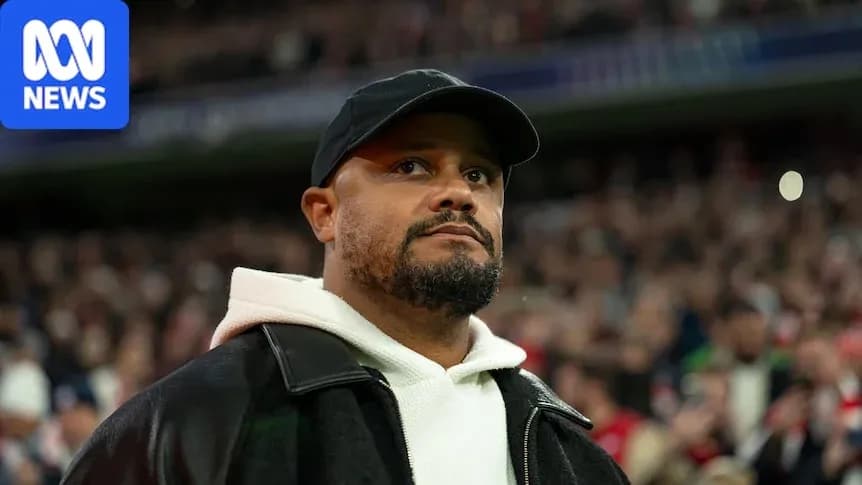
When Bournemouth walk out at Old Trafford for Sunday’s 2pm kick-off, the scoreline will only be half the story. The real drama hangs around one decision: does Michael Carrick dare to take the captain’s armband off Bruno Fernandes and, in doing so, redraw the power lines inside Manchester United?
On Friday, Carrick pointedly refused to rule it out. No warm assurances. No public backing. Just a clear hint that everything is on the table after the 4-1 humiliation at Como.
That defeat did more than bruise pride. It exposed a fracture. Fernandes, five-times United player of the year, went public with his irritation at the gameplan. “It’s a decision from the staff to not press man-to-man and sometimes leave space behind and try to get the ball, wait for them, but sometimes when you give space to these teams they get confidence,” he said in the Lombardy rain.
That is not a vague gripe. It is a direct questioning of the manager’s approach, in front of the world. A challenge to authority.
Carrick either meets that challenge head-on or he accepts lame-duck status.
Cashing In to Start Again
Behind the immediate storm lies a colder calculation. Fernandes and Lisandro Martínez, described internally as fellow mutineers, are both out of contract at the end of the season, with United holding an extra year’s option in each case. Their recent behaviour points one way: towards the exit.
United’s hierarchy must decide whether January becomes the moment to accelerate the reset. Accept around £40m for Fernandes and £25m for Martínez, and suddenly there is serious money to reinvest as a new era begins to take shape.
It would be ruthless. It might also be necessary. If Carrick moves against them now – strips the captaincy, drops them, or both – he will be doing more than picking a team. He will be sending a message to the dressing room and, perhaps, doing a favour for whoever eventually succeeds him.
If he ducks it, the players will read that too.
A Fractured Bond in the Rain
Seven hundred United fans travelled to Lombardy in midweek. They stood in relentless rain and watched their team collapse against Cesc Fàbregas’s Como side. No shape, no fight, no control. Just a horror show.
They will still turn up on Sunday. They always do. They will sing, they will hope, they will look for a sign that the players feel what they feel.
Carrick often talks about supporters as the club’s lifeblood. It sounds right. It sounds true. But the performances at Como and elsewhere ask a harder question: do all of his players really believe that? Do they play like it?
A manager can tweak systems and shuffle lineups. He can also lay down a creed. If Carrick wants to avoid repeats of that night in Como, he has to make it non‑negotiable inside the dressing room that United’s players connect with their fans – not with gestures, but with running, risk and responsibility.
Time to Play With Joy Again
Right now, Old Trafford feels a long way from its heritage. Sir Alex Ferguson’s flying wingers. Sir Matt Busby’s holy trinity of Best, Law and Charlton. The old roar of “attack, attack, attack”. All of it belongs to a tradition that Carrick himself admitted on Friday has been “lost”.
Yet the memory of what his team can be is not distant. On 17 January 2026, in his first game of this second spell, Carrick sent out a side that went straight for Manchester City’s throat. From the opening whistle, they suffocated Pep Guardiola’s men, refused to let them breathe and stormed to a 2-0 win that sent United supporters into the night bouncing.
That was the template last season: a side with a bounce, with belief, with enough swagger to finish third. The smile has gone now. In its place sits a heavy, familiar gloom, the same atmosphere Carrick blew away when he replaced Ruben Amorim.
He cannot afford to let that fog settle again. United need their cavalier edge back, not as nostalgia but as a live, weekly threat.
A System Built on the Wrong Pieces
Part of this season’s malaise is tactical. Carrick has tried to shift United into a more possession-based side, a team that dominates the ball and dictates tempo. The idea is coherent. The execution is not.
Youri Tielemans, signed to help orchestrate that style, simply does not have the legs to command a central midfield in this setup. So he has been nudged higher, into the No 10 role. Kobbie Mainoo, who does have the engine and intelligence to run the middle, is injured. And Fernandes, whose energy is never in doubt, roams so wildly out of position that gaps appear where the crucial passing options should be.
The result is a team that wants to control games but keeps leaving the very zones that allow control completely unmanned.
Until that is fixed – by selection, by structure, or by personnel changes in January – United will continue to look like a side caught between identities.
Trust the Kids, Jolt the Seniors
The senior core is not delivering. Fernandes, Luke Shaw, Harry Maguire, Diogo Dalot, Marcus Rashford, Amad Diallo and Martínez form a long-serving spine. They also form a group whose performances have sagged into something close to staleness.
One way to jolt them is obvious, if uncomfortable: play the kids.
“Play the kids instead” is often dismissed as a cliché, but clichés endure because they carry a shard of truth. Young players arrive with nothing to lose, no scars, no entitlement. They run. They smile. They can change the mood of an entire stadium.
Shea Lacey, a sharp, direct wide player. Harry Amass, a promising left-back. The Fletcher twins – Jack, a crafty No 10, and Tyler, a defensive midfielder. All are 19. Between them they have just 22 senior appearances.
None of them, on current evidence, could be significantly worse than some of the established names ahead of them. Any of them could inject the urgency and innocence this squad so obviously lacks.
If Carrick wants to wake his senior men up, there are few louder alarms than dropping them for teenagers.
An Attack Starved of Ideas
The numbers are damning. In seven of their 11 matches this season, United have scored either once or not at all. They have only 10 goals in seven league games. In the Champions League, they have managed five in three outings – four of those against Sabah, the weakest side in the group.
Strip away the statistics and the picture is even bleaker. At Como there was no discernible pattern of play, no sustained control, barely a handful of real chances. This is not a blip. It is a trend.
Keep attacking like this and United will be staring at a relegation fight, not a top‑four race.
The irony is that the squad contains forwards who would thrive in a looser, more instinctive framework. Matheus Cunha and Bryan Mbeumo, among others, are built for quick transitions, sharp combinations and an aggressive, front-foot mentality.
Last season, that kind of approach brought scalps: City, Arsenal, Chelsea, Liverpool. United played like a side that believed it could hurt anyone. The fear factor was back, at least in flashes.
That threat has evaporated. The task now is stark and simple: restore an attacking style that terrifies opponents again.
On Sunday, Bournemouth arrive at Old Trafford. For Carrick, it is not just another league fixture. It is a referendum on his authority, his ideas and his courage to reshape a dressing room that no longer looks convinced.