.svg&w=384&q=75 "logo")
Carlos Alcaraz Steps Back from Grand Slam Revenue Campaign
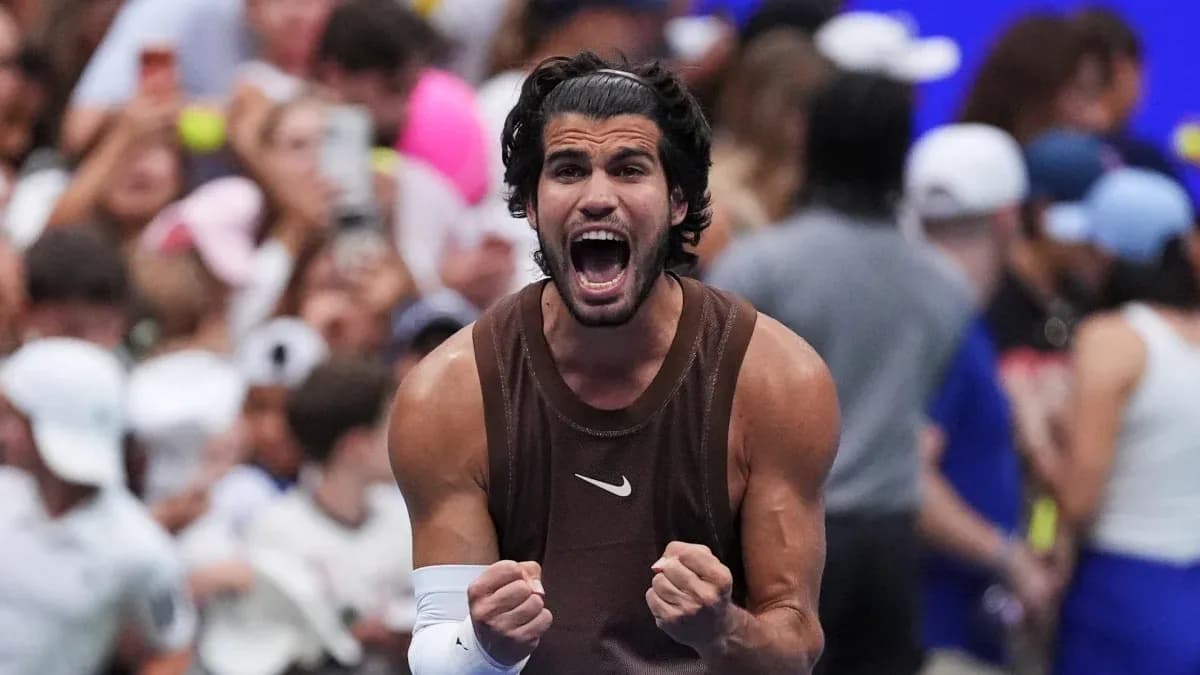
Carlos Alcaraz has walked back into New York looking like a Grand Slam threat again. But while his forehand is back on the Arthur Ashe stage, his place in one of tennis’ biggest power plays has shifted sharply off it.
According to The Times, Alcaraz’s long-time agent Albert Molina informed the group behind the Grand Slam revenue campaign shortly before the US Open that the Spaniard would no longer be involved. Just like that, one of the movement’s most influential faces stepped away.
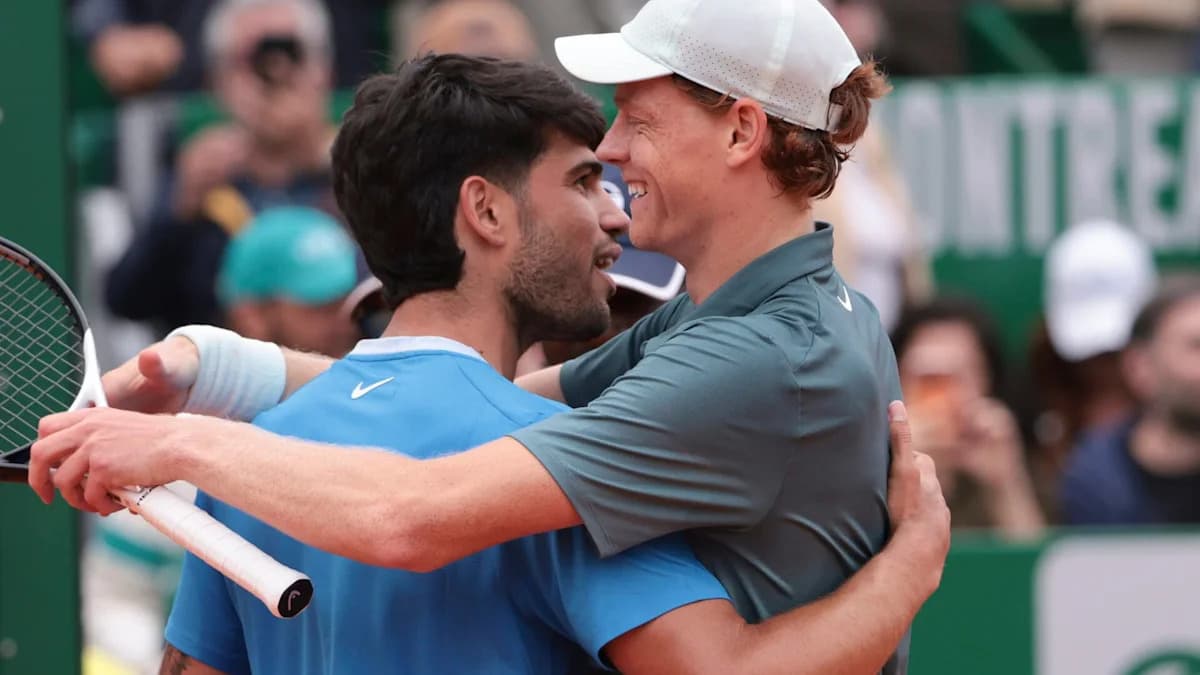
This was no fringe project. The campaign had pulled together some of the sport’s heaviest hitters — Aryna Sabalenka, Jannik Sinner, Coco Gauff among them — around a simple, pointed idea: players deserve a bigger cut of Grand Slam revenue, stronger welfare protections and a louder voice in how the tour is run.
Alcaraz had been part of that push. His name gave it weight. His age gave it a future.
Now his public stance has narrowed to something more personal and, for him, more urgent: survival in a calendar that keeps demanding more.
“In the future, I’m going to take some breaks, some long breaks,” he said. “Maybe not four months, but one month, two months, missing some tournaments, because it’s impossible to play them all.”
For a 22-year-old already carrying the expectations of a generation, that is not a throwaway line. It is a recalibration.
A movement loses a marquee name
The player-led revenue campaign launched in March 2025 with a clear target: lift the athletes’ share of Grand Slam income to 22% by 2030. The tension simmered through 2025, then boiled over into public view during the 2026 season.
Sinner, one of its most vocal standard-bearers, framed it bluntly.
“It’s more about respect, you know?” he said. “Because I think we give much more than what we are getting back.”
That sentiment translated into visible protest. At Roland Garros, players scaled back their pre-tournament media duties in a coordinated move, a symbolic nod to the percentage of Grand Slam revenue they believed they were actually seeing.
The majors responded, at least partially. Wimbledon pushed its prize fund up to £64.2 million. The US Open lifted total player compensation by 20% to $108 million and introduced a $2 million Player Support Program aimed at easing the strain on those outside the sport’s elite.
The four Slams also agreed to create a Grand Slam Player Council, a formal platform that players had long argued was overdue.
Alcaraz’s reported exit from the campaign does not mean he suddenly opposes any of that. There has been no suggestion he has turned against the goals or the principles behind them.
But it does strip the movement of one of its brightest symbols. This was a campaign built on the image of unity at the very top of the game. Losing a multi‑major champion in his prime changes that picture instantly.
Injury, absence and a different kind of calculation
His shift in focus is easy to trace. A wrist injury wiped out both Roland Garros and Wimbledon for Alcaraz and kept him off the tour for almost five months. For a player who had seemed to live on court, the silence was jarring.
The questions came quickly. What would he look like after such a long layoff? Would the explosiveness still be there? Would the wrist hold?
His tennis has answered most of that already in New York.
Alcaraz powered into the US Open quarterfinals with wins over Roman Safiullin, Jaime Faria, Wu Yibing and Tommy Paul. The Paul match, in particular, underlined the gap between contender and chasing pack.
“It felt like he’s playing at a completely different level than me,” Paul admitted.
Alcaraz sounded like a player who had heard the doubts and dismissed them with a shrug.
“So it probably doesn’t matter that I was out for four months and a half,” he said. “Every time that I come here, I play my best.”
The results back him up. The swagger is back. The shot-making has not dimmed.
But the layoff has clearly left a mark of a different kind. Missing two majors is a harsh tutor. It has taught him what happens when the body finally pushes back.
Alcaraz is still chasing the sport’s biggest trophies. He is still a central figure every time a Slam begins. He is simply no longer pretending he can chase everything, everywhere, all year.
The Grand Slam revenue fight will roll on without him. His own battle now runs on a narrower track: how to stretch a brilliant career across a brutal calendar without breaking in the process.