.svg&w=384&q=75 "logo")
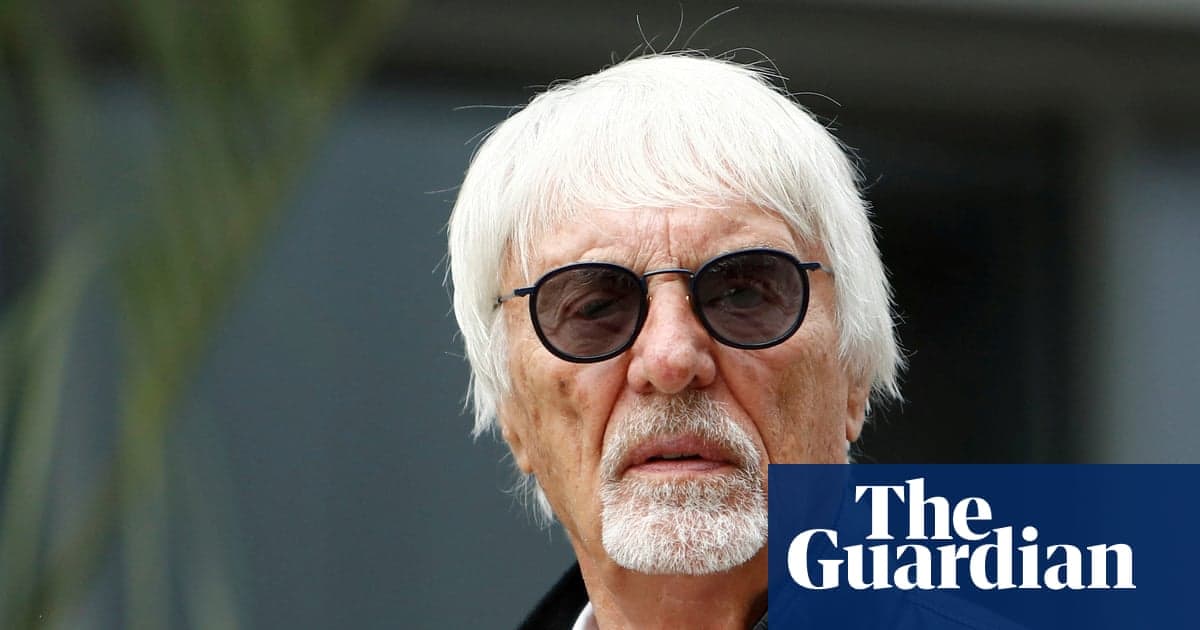
Bernie Ecclestone Detained in Portugal Over Shotgun Incident
Bernie Ecclestone, the man who once ran Formula One with an iron grip, spent part of his Monday in the hands of Portuguese authorities after customs officers found an undocumented shotgun in his possession.
The 95-year-old was detained at Tires Aerodrome in Cascais, just outside Lisbon, shortly after his private jet touched down. A routine inspection of the aircraft and its passengers led officials to the firearm, which Ecclestone acknowledged was his. He was taken aside and questioned.
Under Portuguese procedure, the shotgun was seized and Ecclestone was formally made a defendant in criminal proceedings. What happens next is unclear; the case now moves into the hands of the justice system.
Ecclestone, speaking to PA Media, pushed back at suggestions he had been arrested. “No,” he said. “The police were very helpful and doing all they could to stop us from having to do what we had to do.”
He then laid out his version of events in detail.
Ecclestone said he had flown to Portugal to take part in a clay pigeon shooting competition, an invitation that came at short notice after his wife, Fabiana, met a participant while travelling back from Brazil.
“He said he was entering into a clay pigeon competition,” Ecclestone recalled. Fabiana relayed the idea to him. “Why don’t you turn up and join?” she suggested. Ecclestone agreed.
With that, he decided to bring a shotgun he already owns in Switzerland, a weapon he said had been imported there “properly” because the couple occasionally shoot clay pigeons in the country.
He described a smooth passage through customs at Tires. “The people know me very well,” he said. Asked if he had anything to declare, Ecclestone replied: “No, nothing really, just all the usual personal things.”
Then the tone of the day changed.
As he walked out, one of his entourage told him the police wanted to see him. Ecclestone went to them. “What can I do for you?” he asked. The response: they wanted information about the gun he had brought into Portugal.
Ecclestone said he did not even open the case. He told officers it was a shotgun and explained why he had it. The officials then asked for the “blue book” for the firearm, a document they described as a kind of passport for the weapon.
“I don’t know, I have never heard about a blue book in my life,” Ecclestone said he told them. The officers insisted anyone with such a gun should carry the book. They also took his passport.
Ecclestone said he explained that he bought the gun in England and took it into Switzerland “through all the normal channels”, but the questioning circled back to the same point: “Where is the blue book?”
According to Ecclestone, four officers were involved in the exchange. “What you have done is try to import a gun into the country,” they told him. He rejected that. “I have not tried to do that. I have come through customs, and here I am with you.”
The standoff rolled on until customs became involved again. Ecclestone said the customs officer told him he would need to surrender the gun in Lisbon. Only then could officials decide whether it could be imported, temporarily or otherwise, with duty paid if required.
“So I said, ‘Well we’d better do that’,” Ecclestone recounted.
It is not the first time Ecclestone’s travel plans have been disrupted by a firearm.
In May 2022, Brazilian police arrested him at Viracopos Airport in Campinas after an X-ray scan of his luggage reportedly revealed an undeclared LW Seecamp .32-calibre pistol. He admitted owning the gun but said he did not know it was in his bag. He posted bail at the airport and was released to continue his journey to Switzerland.
Portugal has become a more significant backdrop to Ecclestone’s life in recent years. His wife, Fabiana Flosi, has been linked to the purchase of a property around 15 miles west of Lisbon, reported to be the most expensive private house sale in the country at about £35m.
For a man whose influence once stretched across every paddock and pit lane in Formula One, these brushes with airport security mark a strikingly different kind of scrutiny.
Ecclestone’s association with F1 goes back to the 1950s, when he first appeared as a driver and businessman before becoming a team owner. He then moved into the corridors of power, emerging as the key architect of the sport’s commercial boom, negotiating television rights, sponsorships and race deals that turned grand prix racing into a global spectacle.
His official reign ended in 2017 when Liberty Media took over the championship’s commercial rights and moved the series into a new era. Yet Ecclestone’s shadow has never entirely left the grid. His role in transforming F1 into a mass-market phenomenon remains etched into the sport’s history.
Now, at 95, the man who once dictated terms to governments and race promoters alike waits to see how Portuguese authorities will rule on a single shotgun and a missing blue book.