.svg&w=384&q=75 "logo")
Ballon d'Or 2026: Spanish Coaches Dominate Men's Nominees
The Ballon d'Or stage will belong to the players, as it always does. But in London, two months from now, a different kind of spotlight will cut through the noise. Ten coaches, ten very different stories, one question: who gets to be called the best coach of 2026?
The shortlist is out. The debate starts now.
A Men’s List Painted Red and Yellow
Look at the men’s nominees and one theme slaps you in the face: Spain.
Of the five names, four are Spanish:
- Mikel Arteta (Arsenal)
- Luis de la Fuente (Spanish national team)
- Unai Emery (Aston Villa)
- Luis Enrique (Paris Saint-Germain)
- Vincent Kompany (Bayern Munich)
This is not a quirk of the voting system. It’s not a statistical oddity. It’s a reflection of where the power lies in modern coaching.
Spain is setting the tempo. On the pitch and in the dugout.
Arteta finally dragged Arsenal over the Premier League finish line and took them all the way to a Champions League final. That alone would define most managerial careers. For him, it feels like the foundation rather than the peak.
Luis Enrique went one better in Europe. Again. A repeat Champions League triumph with Paris Saint-Germain, a club that has spent years trying to align its star power with genuine footballing authority. He gave them that. Back-to-back European crowns carry serious weight in any Ballon d'Or conversation.
Then there’s Unai Emery. The Europa League specialist did it again, this time with Aston Villa. Turning Villa into continental winners is not a footnote; it’s a statement. A club that had been drifting is now lifting European silverware under a coach who simply does not stop collecting trophies.
And yet, looming above them all is Luis de la Fuente.
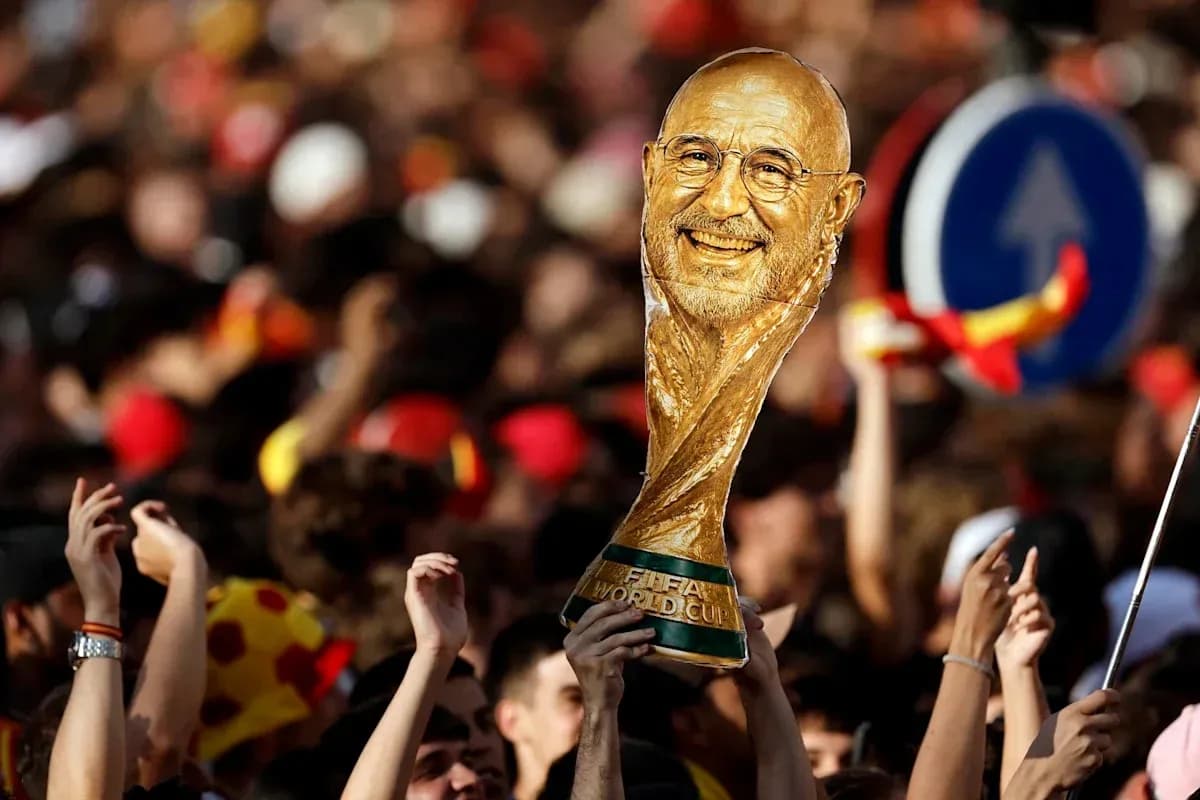
International football still holds a unique aura. De la Fuente claimed the biggest prize in the sport with Spain. When you win the top international title, your candidacy for any coaching award moves into a different category. He will walk into the ceremony as a clear favorite, his achievement framed by a golden glow that club coaches spend years trying to replicate.
Standing in the middle of this Spanish storm is one outlier.
Vincent Kompany, the lone Belgian on the list, has taken Bayern Munich and made them ruthless again. A domestic double – Bundesliga and DFB Pokal – is never dismissed in Bavaria, it’s demanded. But it’s the manner of Bayern’s football under Kompany that keeps his name in the frame: dominant, front-foot, and unmistakably influenced by his education under Pep Guardiola.
Even here, the Spanish touch lingers. Kompany’s ideas carry Guardiola’s fingerprints, a reminder that even the non-Spanish nominee on this list is shaped by Spain’s coaching revolution.
So the question hangs over the rest of the world: how did Spain build this coaching empire, and how long can anyone else afford to ignore it?
A New Queen Awaits on the Women’s Side
On the women’s side, there is no defending champion. No repeat winner. No familiar name waiting to reclaim the throne.
Whoever wins will be a first-time holder of the coach’s Ballon d'Or.
The nominees:
- Jonatan Giráldez Costas (OL Lyonnes)
- Andrée Jeglertz (Manchester City)
- Nils Nielsen (Japanese national team)
- Pere Romeu (FC Barcelona)
- Elena Sadiku (BK Häcken)
Every single one of them arrives with a suitcase full of trophies.
Jonatan Giráldez Costas turned OL Lyonnes into a domestic wrecking ball. French Championship, French Cup, French League Cup – a clean sweep in one of the toughest environments in women’s football. That kind of dominance doesn’t go unnoticed.
Andrée Jeglertz did something similar in England. Winning the WSL and the FA Cup with Manchester City is not a gentle stroll through the calendar. It means surviving the grind of a league that gets sharper every year, then lifting a major cup on top of it. A double that carries real authority.
Nils Nielsen’s case is different. No club badge next to his name right now, but a major international title on his CV. He led Japan to the Asian Cup, a tournament that demands tactical clarity and emotional control over a short, intense period. In international football, you don’t get second chances; Nielsen didn’t need one.
Elena Sadiku’s work with BK Häcken brought a Europa Cup to the Swedish club. It’s the kind of achievement that pushes both coach and club into a higher conversation, a signal that Häcken can sit at the European table and not just make up the numbers.
Then there is Pere Romeu at FC Barcelona.
“Juggernaut” barely covers it. Romeu oversaw a season that reads like a collector’s dream: UEFA Women’s Champions League, Spanish Cup, La Liga, Spanish Super Cup. Four major trophies, one relentless machine. When the voters look at sheer volume of silverware, his name will be hard to ignore.
Every candidate has a case. Every candidate has history to make.
In London, one man and one woman will walk away as the coaching standard-bearers of 2026. With Spain’s fingerprints all over the men’s list and a fresh champion guaranteed in the women’s game, this year’s coaching Ballon d'Or doesn’t just reward success.
It tells us where the game is heading – and who is leading it there.