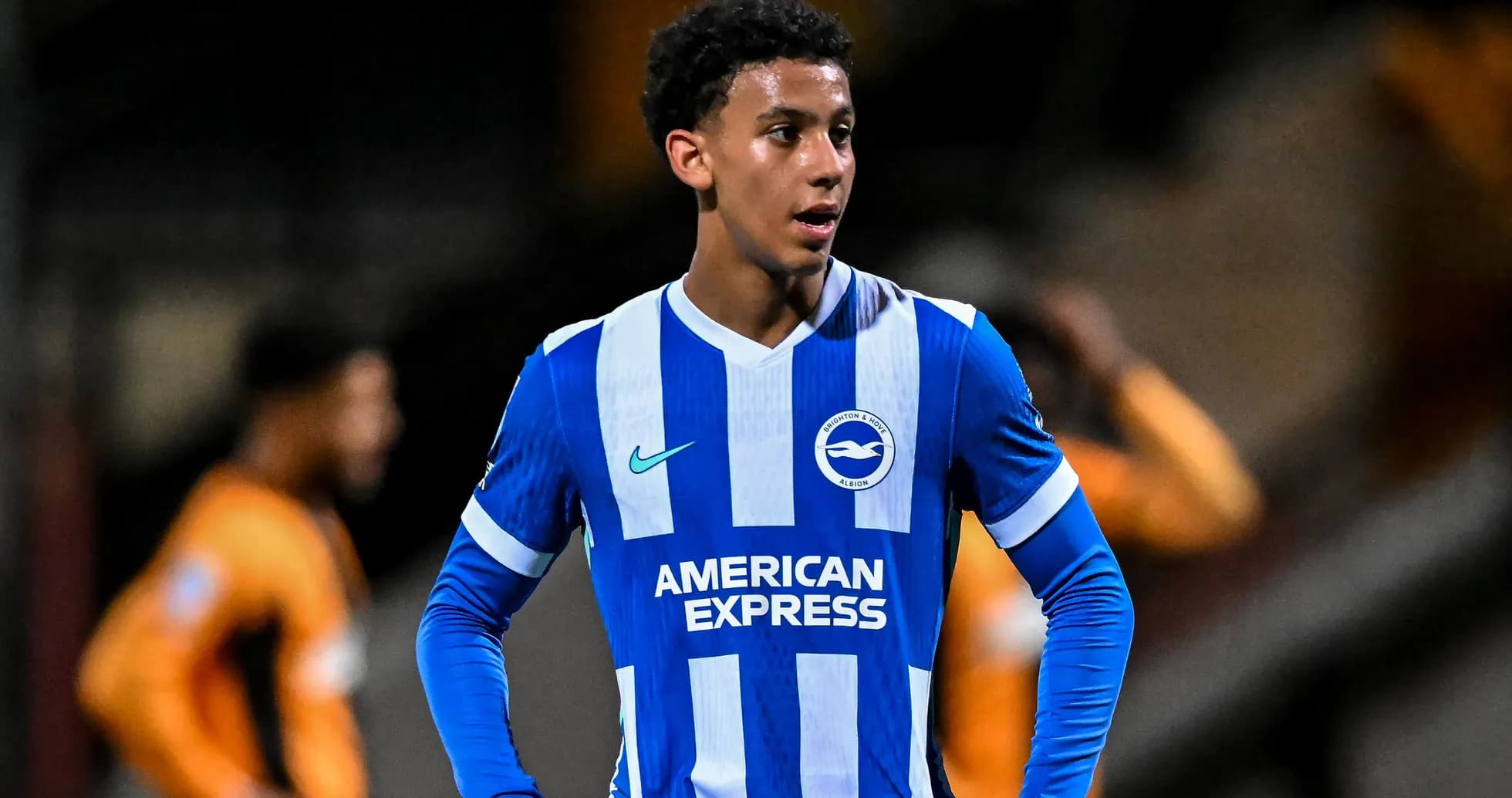
Younes Ibrahim: Brighton's Rising Star in Academy Football
Last Sunday did not feel like academy football.
Less than two days earlier, Younes Ibrahim had lit up the under-21s with a superb goal, his name bouncing around Brighton’s youth channels and fan accounts. Then came the message every young player dreams of and few truly expect.
You’re with the first team tomorrow.
No ceremonial pat on the head. No token inclusion to fill a space on the bench. Fabian Hürzeler and his staff have built a reputation on something far more ruthless: if you’re in, it’s because they think you’re ready. Brighton do not indulge in sentiment. This is the club that sold Moisés Caicedo for £115 million, waved off Alexis Mac Allister and Marc Cucurella at the right moment, and kept the conveyor belt moving without blinking.
So when Ibrahim’s name appeared among the substitutes in an official match, it carried weight. He did not play a minute, yet the message was unmistakable.
We see you. And we’ll be seeing more of you soon.
Numbers that demand attention
Brighton’s faith is not built on a flash in the pan. Ibrahim has already featured in three games for the youth sides across competitions this 2026–27 season, with a goal and an assist to show for it. Solid returns, but not the full story.
The real surge came last season.
Nine goals. Five assists. Those are not just tidy numbers; they are the statistics of a player who bends games his way. He did it from multiple roles too: operating as a striker, drifting wide as a winger, and dropping deep as a false nine. Between the lines, he finds pockets of space and punishes defenders who lose concentration for even a moment.
This is not a poacher waiting in the box. This is a forward who reads the game, links play, and stretches backlines in ways that make coaches take notice.
A long road, not a sudden rise
Ibrahim’s emergence is not the romantic tale of a boy who came from nowhere. It is the product of slow, deliberate steps.
He started in the modest surroundings of Luton Town’s academy, where he learned the basics of English football’s discipline and structure. From there, he jumped into the intensity of Chelsea’s academy, one of Europe’s most competitive proving grounds. At Cobham, he met different styles, different cultures, and the relentless pace that defines elite youth football in England.
The true turning point, though, came when he chose Brighton.
On paper, dropping from Chelsea’s academy to Brighton’s under-15s looked like a step down. In reality, it was a calculated leap forward. Brighton offer something few English clubs can match: a clear, visible, and trusted pathway from academy pitch to Premier League stadium.
Ibrahim moved through that pathway like a player ticking off a plan. Under-15. Under-18. Under-21. At every level he showed not only skill, but the ability to grow physically, to absorb tactical demands, and to handle the mental pressure that comes with being earmarked as “one to watch.”
Contract signed, project confirmed
Last July brought the first concrete reward. Ibrahim signed his first professional contract with Brighton, a landmark moment for any teenager, and a line in the sand for club and player alike.
Academy director Ian Buckman framed it in the language that defines Brighton’s model: an exciting moment for the players and their families, and a recognition of the work done so far. The message beneath the polite words was clear: this is not the finish line; this is the starting gun.
From here, the responsibility shifts. The club have shown their hand. The rest is up to the player.
Four nations, one decision
What makes Ibrahim’s story stretch beyond Brighton’s training ground is not only his talent, but his passport.
Born in Australia, he is eligible for the Socceroos. Eight years in England open the door to the Three Lions. Egyptian and Moroccan heritage bring two more national teams into the frame: the Pharaohs and the Atlas Lions.
Four different football cultures. Four federations tracking the same name.
Australia are searching for a long-term focal point in attack. England do not ignore Premier League prospects, especially ones schooled in a system like Brighton’s. Egypt and Morocco have made it a priority to attract dual-nationality talent from Europe, and Ibrahim fits that strategy perfectly.
He has not chosen yet. At 18, that restraint might be his smartest decision of all.
The priority now is not a flag. It is minutes. It is turning that first appearance on the bench into a debut, then a first start, then a first Premier League goal. Once that happens, the dynamic changes. The knock on the door will not come from his side. It will come from theirs.
From Sydney to the south coast
That afternoon against Coventry, Ibrahim’s name on the teamsheet was more than a line under “substitutes.” It signalled the launch of a project years in the making.
A journey that began in Sydney’s youth pitches. That sharpened in London’s academies. That now finds its stage on England’s south coast, in a club that has made a habit of turning promise into profit, and prospects into internationals.
Brighton believe Younes Ibrahim is next.
The only question now is not whether he will play at the highest level, but which anthem will be playing when he finally walks out onto the international stage.